Whenever talk turns to launching a product business, most beginners picture the same terrifying scenario: taking out a multi-million-ruble loan, renting a dusty warehouse in an industrial zone, cramming it floor-to-ceiling with boxes from China, and praying the trend doesn't die while the shipping container sits in customs. Add logistics bills, warehouse staff salaries, cash-flow gaps, and the constant dread of getting stuck with dead stock — no wonder nine out of ten people quit before they even finish their business plan.
In reality, the rules on classifieds have changed completely. In a detailed 90-minute video breakdown, entrepreneur and practitioner Serob, creator of PRO Business on Avito, proved on live numbers that you don't need to buy a single ruble of inventory to hit 500,000 rubles in net monthly profit this autumn.
I studied his playbook closely, double-checked all the unit economics, and laid out the mechanics of the season's five highest-margin niches. Below is a complete roadmap for autumn product sales: from picking a niche and negotiating with wholesalers to exact margin math, chat scripts, and legal protection against returns.
The Myth of Million-Ruble Investments and Avito Dropshipping Architecture
At the heart of this system is classic agency dropshipping, adapted to modern classifieds and Avito's built-in tools. You don't spend your own money buying stock and you never freeze working capital. Your job is to act as a high-converting marketing bridge between a wholesale warehouse, factory, tire shop, or auto salvage yard and the end retail buyer.
Here's how the chain works step by step:
- You find a reliable wholesale depot or local supplier in your region whose warehouse is packed with inventory but who has zero systematic online marketing.
- You visit the site in person, pitch the owner on a partnership, and lock in your agency commission or the right to sell at an agreed markup.
- You shoot clean, authentic photos and videos of actual stock right on the warehouse floor using a smartphone in natural light.
- You publish high-converting Avito listings and generate a steady stream of inbound leads.
- You handle calls and messages, qualify the buyer, confirm technical specs, and close the order.
- You pass the ready order to the supplier: either the buyer picks it up directly at the warehouse (where payment is settled), or the supplier ships it via Avito Delivery or a partner freight carrier.
- You pocket your net margin with zero warehousing or packing overhead.
This workflow builds directly on the principles we covered in our guide to Avito dropshipping without buying stock: the seller manages buyer attention without ever touching a cardboard box.
The main technological catalyst for this model is Avito's official professional "Pay Per Successful Deal" (Oplata za sdelku) tariff. Unlike older schemes that charged per view or per listing placement, here the platform only takes its fee once the buyer picks up the parcel at a pickup point and the transaction closes. If an order gets canceled or a buyer flakes, you pay the platform zero rubles. That completely removes the financial barrier: you can list dozens or hundreds of SKUs, test hypotheses, and scale traffic with near-zero risk.
Niche #1. Generators: How Autumn Storms Bring 10,000 Rubles per Unit
Serob gave #1 in his autumn ranking to gasoline, inverter, and diesel generators. This pick is backed by his own recent numbers, where net agency profit per sold power unit consistently starts at 10,000 rubles.
Why does generator demand spike so hard in autumn? Once frost, gusty winds, and freezing rain roll in, suburban power grids start failing regularly. Cottage communities, villages, and garden settlements (SNT) get hit by rolling outages. Serob tested this firsthand in the Dmitrovsky District outside Moscow: the moment a storm snaps lines at a local substation, a backup-power seller's phone practically melts from homeowners calling in.
When it's minus two outside, circulation pumps stop, radiators go cold, and well pipes risk freezing, buyers don't haggle or sleep on it for a week. They need a generator delivered today — within a couple of hours.
The product lineup breaks down into three clear tiers:
- Gasoline generators (3–7 kW): the mass-market bestseller priced at 45,000–85,000 rubles. That output easily runs a deep-well pump, heating boiler, fridge, and basic house lighting.
- Inverter power stations: compact units delivering a pure sine wave. Bought by owners of upscale country homes with sensitive gas-boiler electronics, home servers, and AV systems.
- Diesel generators (10+ kW with ATS — Automatic Transfer Switch): heavy-duty units starting at 120,000 rubles for estates, boutique hotels, farms, and construction sites. The ATS kicks the engine on automatically within 5 seconds of a grid outage.
The unit economics are hard to beat: on a gasoline generator retailing at 55,000–75,000 rubles, the wholesale depot pays the dropshipper 10,000–18,000 rubles in commission per unit. Closing just 10 sales a month nets 100,000 rubles. Close 20–25 leads, and you're at a solid 200,000–250,000 rubles.
The ad-targeting secret here is surgical geotargeting. Don't waste budget blasting broad region-wide ads. Pin listings specifically to areas dense with private homes and chronic grid issues: Istrinsky, Dmitrovsky, Odintsovsky, and Sergiyevo-Posadsky districts around Moscow, plus similar suburban belts around St. Petersburg, Kazan, Yekaterinburg, and Nizhny Novgorod.
Niche #2. Tactical All-Weather Boots: Rain, Membranes, and Insole Measurements
Autumn's second golden niche is waterproof mid-season tactical footwear — membrane boots, trekking combat boots, and specialized wet-weather gear.
Autumn across Russia means relentless rain, slush, wet snow, and muddy backroads. Demand for rugged field footwear comes from four steady buyer streams at once:
- Hunters and anglers: peak hunting season and late-autumn boating demand boots that survive hours in wet forests and marshes.
- Outdoor enthusiasts and military-style fans: hikers, airsoft players, and city dwellers tired of soaked sneakers who want rugged, practical style.
- Outdoor workers: site security guards, builders, road and utility crews, field engineers, and warehouse pickers.
- Volunteers and supply coordinators: year-round demand for durable field boots.
How do you source suppliers? Any major wholesale-retail hub (such as Sadovod market, TYAK Moscow, or specialized depots in Rostov-on-Don, Ivanovo, or Pyatigorsk) hosts dozens of direct importers of factory tactical boots — popular lines like Lowa, Vaneda, ESDY, as well as consistent factory-grade replicas.
You visit the warehouse in person, inspect samples with your own hands, check sole bonding and stitching, Cordura density, waterproof membrane lining, and hardware quality. Right there in daylight, snap crisp smartphone photos of the leather texture and tread, and agree with the senior manager on single-pair pickup at wholesale prices for confirmed Avito orders.
Here's the per-pair math:
- Wholesale cost at the depot: 2,500–4,000 rubles.
- Retail listing price on Avito: 5,500–8,500 rubles.
- Your net profit per pair sold: 2,000–3,500 rubles after platform fees and logistics.
- Averaging just 3–4 shipments a day puts 180,000–250,000 rubles of net profit in your pocket every month.
The #1 pitfall in footwear is returns over wrong sizing. Leave that to chance and you'll drown in return shipping. The fix is simple: never ship boots based on a vague "I wear size 43." Build a mandatory step into your chat script asking the buyer to pull the insole out of their most comfortable pair of shoes, lay a ruler next to it, and send a photo showing the exact length in centimeters. Then match that against the actual insole measurement at your supplier's warehouse. That one-minute check drops pickup-point returns to a record-low 2–3%.
Niche #3. Cordless Power Tool Kits: "5-in-1" Cases and Listing Video Magic
The third money-maker is cordless power tools: brushless drills, angle grinders, impact wrenches, rotary hammers, and multi-tool combo kits in hard plastic cases.
This is an evergreen niche that surges every autumn. Wrapping up dacha season, insulating outbuildings, installing siding, fixing roofs, tuning up garages, and swapping winter tires all call for cordless gear. Meanwhile, brand-name tools at big-box hardware chains have hit absurd prices: a genuine brushless drill-and-grinder kit from a top brand easily clears 50,000–70,000 rubles.
Most everyday buyers fixing things around the house, dacha, or garage don't need aerospace-certified tools. They want a tough, reliable kit that sinks framing screws, drives a hundred self-tappers, and cuts rusted bolts without costing two months' pay.
That's why solid Chinese factory kits with brushless motors and high-output replicas styled after global brands (Makita, DeWalt, Milwaukee) fly off Avito. The hottest sellers are "4-in-1" or "5-in-1" combo kits in a rugged hard case: a brushless drill with a metal chuck, variable-speed angle grinder, impact wrench, rotary hammer, two high-capacity Li-Ion batteries, and a fast charger.
Let's run the numbers:
- Wholesale kit price at the supplier: 7,000–11,000 rubles.
- Retail price on Avito: 13,500–19,000 rubles.
- Net profit per case: 4,000–6,500 rubles.
- Selling just two kits a day brings in 240,000+ rubles in net monthly profit.
The secret to explosive conversion in tools is a short video right in the listing. Photos of a plastic case don't impress anyone anymore. Shoot a 30-second clip at the warehouse or in a garage: show the drill driving a 120 mm lag bolt into dry timber in second gear without stalling, the grinder slicing angle iron without bogging down, and the impact wrench zipping off a seized SUV lug nut. Adding real video proof of power boosts view-to-contact conversion by more than 50%.
Niche #4. Used Winter Tires: Tire-Swap Rush and Partnering with Tire Shops
Fourth place goes to pre-owned car tires. This is a classic high-margin seasonal sprint: over the 6–8 weeks of mass winter tire swaps (mid-October through late November), sharp sellers make what many people earn in a full year at a day job.
What's happening in the tire market in autumn 2026? Skyrocketing prices on new European and Japanese rubber have priced drivers out. A new set of studded or friction winter tires in popular R17–R19 sizes from Michelin, Continental, Nokian (Ikon), or Bridgestone now runs 60,000–120,000 rubles in stores. Most owners of 5-to-10-year-old cars flat-out refuse to spend that much on seasonal rubber.
As a result, a huge wave of ready-to-buy drivers floods Avito looking for clean used tires: 70–90% tread remaining, no sidewall bulges or cuts, and intact studs, priced at 15,000–35,000 rubles per set.
How do you launch this with zero startup capital? Serob shares a brilliantly simple partnership play:
- Every city and commuter corridor has dozens of tire shops, seasonal wheel-storage facilities, and importers of used European and Japanese tires.
- You walk in, meet the shop owner, and make a clear pitch: "You've got hundreds of tire sets sitting on racks, tying up cash and collecting dust. I'll handle all the Avito marketing: shoot pro photos of every set, write the listings, answer every call, and send ready buyers straight to your door with cash. You get your base price on pickup, and I keep the markup on top."
- Tire shop owners jump at this: they know how to mount and balance wheels, not how to sell online. Better yet, almost every buyer you send over pays them on the spot for mounting and balancing!
Grab a tread depth gauge (or a simple two-ruble coin), calipers, and a flashlight, and systematically catalog their racks: photograph tread depth in millimeters, sidewalls with clear brand and size markings, and — most importantly — a sharp close-up of the DOT code showing the week and year of manufacture.
Tire niche margins:
- Popular R15–R17 sets net 3,000–8,000 rubles in markup.
- R18–R21 sets for crossovers and SUVs yield 10,000–15,000 rubles net per deal.
- Over a normal season, an active agent moves 50 to 90 sets, banking 250,000–600,000 rubles in net seasonal profit.
Niche #5. Used Engines and Transmissions: 150,000-Ruble Average Tickets and Rescuing Stranded Cars
Fifth is the flagship niche Serob's own team has specialized in for over three years: imported used ("contract") auto parts and major drivetrain assemblies (internal combustion engines, automatic and manual transmissions, differentials, transfer cases, and bolt-on accessories).
This is the most resilient, high-ticket niche on Avito. Its staying power comes down to one hard fact: the average age of passenger cars in Russia has officially passed 15 years. Cars break down constantly. Meanwhile, brand-new OEM engines from dealers are either unavailable or cost more than the used car itself, with months-long wait times.
When someone throws a connecting rod on the highway, hears a rod knock, or grenades a gearbox, their car becomes a lawn ornament. They can't wait — they need to get to work or support their family. An imported used engine from Korea, Japan, or Europe already sitting in a Russian warehouse — with verified mileage, compression numbers, and borescope cylinder video — is their only lifeline.
Serob shared real examples from his partner network:
- Ruslan (22): lives in a rural town with zero heavy industry. By plugging into agency sales for local salvage yards and regional parts hubs, Ruslan built a steady 200,000+ rubles/month net income within 18 months without leaving his village.
- Viktor: started out driving a beat-up, rattling Ford Focus. After two years of systematic work selling used engines and gearboxes, Viktor bought himself a BMW X7 paid for entirely with Avito profits.
- Across Serob's partner network, over a hundred active agents earn 200,000 to 1,000,000 rubles in net profit every month. This aligns with what we found in our study of the contract auto parts and rebuilt drivetrain business: major drivetrain demand doesn't care about broader economic turbulence.
Drivetrain deal math:
- Average ticket for a used engine: 80,000–250,000 rubles.
- Agent commission per assembly sold: 10,000–35,000 rubles.
- Closing just 12–15 deals a month (one sale every two days) clears 300,000 rubles net.
The #1 trust trigger in auto parts is video proof of condition. Shoot a warehouse borescope video inside the cylinders (showing clean walls with no scoring, intact crosshatch honing, and dry valves) plus a live compression gauge test. A buyer a thousand kilometers away will wire a deposit without blinking once they see the engine's real internal condition.
The 512,500-Ruble Financial Model: Math of a Diversified Portfolio
To avoid relying on weather swings in a single category, Serob recommends building a balanced product portfolio. It blends fast, high-frequency items (boots, tools), sharp seasonal spikes (tires, generators), and high-ticket drivetrain deals (engines and gearboxes).
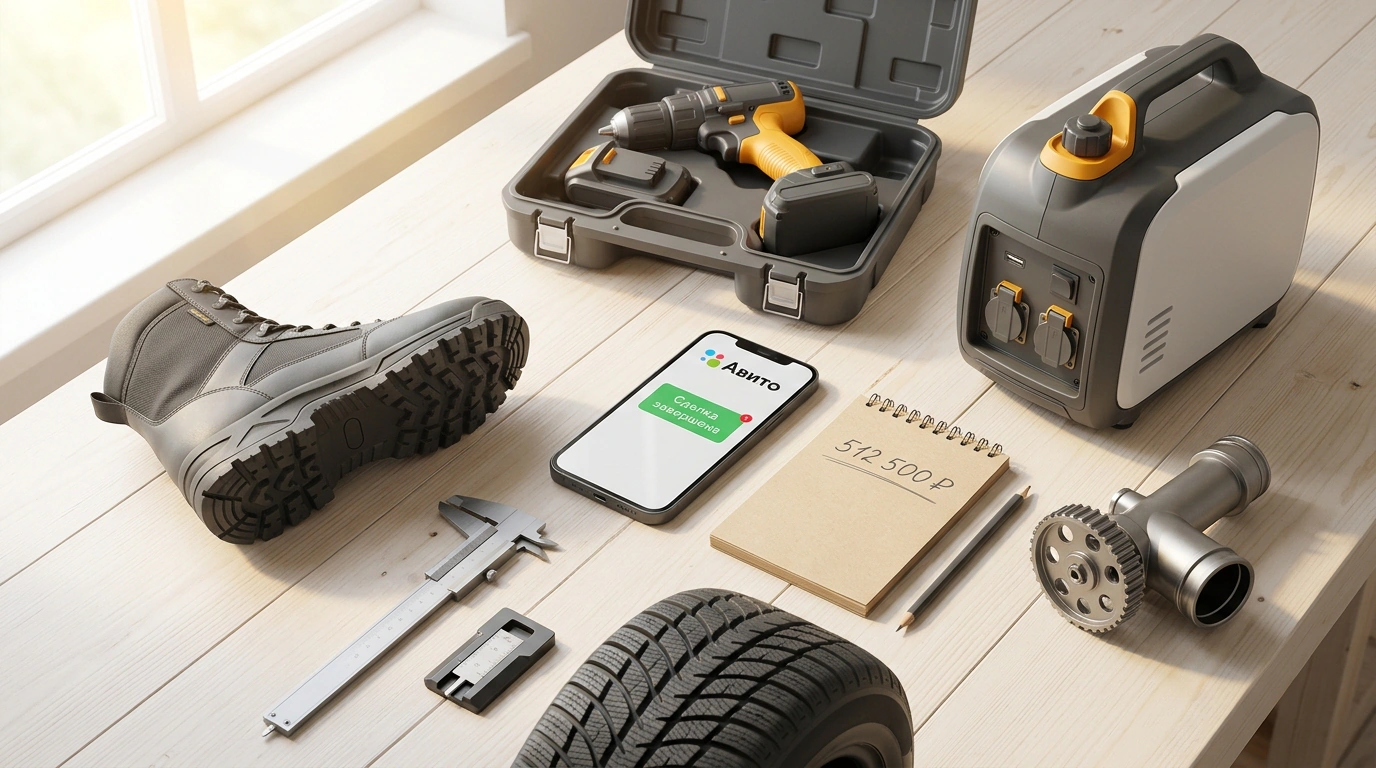
Conceptual diagram of a five-niche autumn product portfolio shown as balanced blocks totaling 512,500 rubles in net profit.
Let's lay out the 30-day math:
- Generators & backup power: 12 closed sales × 10,000 ₽ net profit = 120,000 ₽.
- Tactical mid-season boots: 35 pairs sold (just over 1 pair/day) × 2,500 ₽ net profit = 87,500 ₽.
- Cordless tool kits in cases: 20 kits (1 every 1.5 days) × 5,000 ₽ net profit = 100,000 ₽.
- Used winter tires (seasonal swap): 20 sets sold × 5,000 ₽ average margin = 100,000 ₽.
- Used engines & transmissions: just 7 assembly deals in a month × 15,000 ₽ agency commission = 105,000 ₽.
Add it up: 120,000 + 87,500 + 100,000 + 100,000 + 105,000 = 512,500 rubles in net profit in a single working month!
Notice the volume: you don't need to move freight cars or ship thousands of parcels a day. Just 7 drivetrains, 12 generators, and a couple dozen sets of tires and tool kits put half a million rubles in your pocket — with zero personal capital locked up in inventory.
Practical Playbook: In-Person Supplier Deals, Live Content, and Risk Protection
How do you actually pull this off without stumbling out of the gate? Stick to three hard rules that separate earners from armchair theorists.
Rule 1. Negotiate in person with decision-makers Never call a warehouse asking, "Hey, can I dropship your stuff?" Salaried desk managers who don't want extra work will brush you off politely in ten seconds. Get in your car, drive to the depot in person, and ask for the owner, general manager, or commercial director. Speak to their bottom line: "Good afternoon! I specialize in bringing buyers from Avito. I see you have a great warehouse and solid stock, but almost no online presence. I handle everything: build the listings, shoot real photos and videos, answer every call and chat, and send ready buyers to you. You get your full wholesale price at the register when the order ships. My cut is the commission on top. You take zero risk and spend nothing on in-house marketers." Nine times out of ten, the owner shakes your hand and lets you start shooting.
Rule 2. Zero tolerance for stolen internet photos Avito's moderation runs advanced computer-vision models. Grabbing glossy renders from search engines or copying a competitor's photos gets your listing downranked before it ever gets impressions. Shoot everything live at the supplier's warehouse: hold the part in your hands, capture factory serial plates, lay out everything included in the box, and record short clips with sound. Real, slightly raw smartphone footage builds far more buyer trust than sterile studio shots.
Rule 3. Written warranty terms and clean legal status To avoid eating losses on defective tools or engines, lock in a written warranty agreement with your wholesaler upfront. On complex electronics and drivetrains, suppliers must give buyers an installation and testing window (typically 14 to 30 days from delivery). Spell it out clearly: if a factory defect shows up, the supplier promptly swaps the unit or issues a full refund.
To use the Pay-Per-Deal tariff and accept payments cleanly, register as self-employed (samozanyaty) via the Moy Nalog app or open a sole proprietorship (IP) on the 6% simplified tax system (USN Income). That keeps you safe from bank compliance freezes under Law 115-FZ and keeps your entire operation above board.
In product sales on Avito, the winner isn't the one with the fattest wallet — it's the one who spots real demand, strikes deals with inventory holders, and packages listings so clearly that buyers have zero doubts. The tools and niches are right in front of you — roll up your sleeves and get to work.