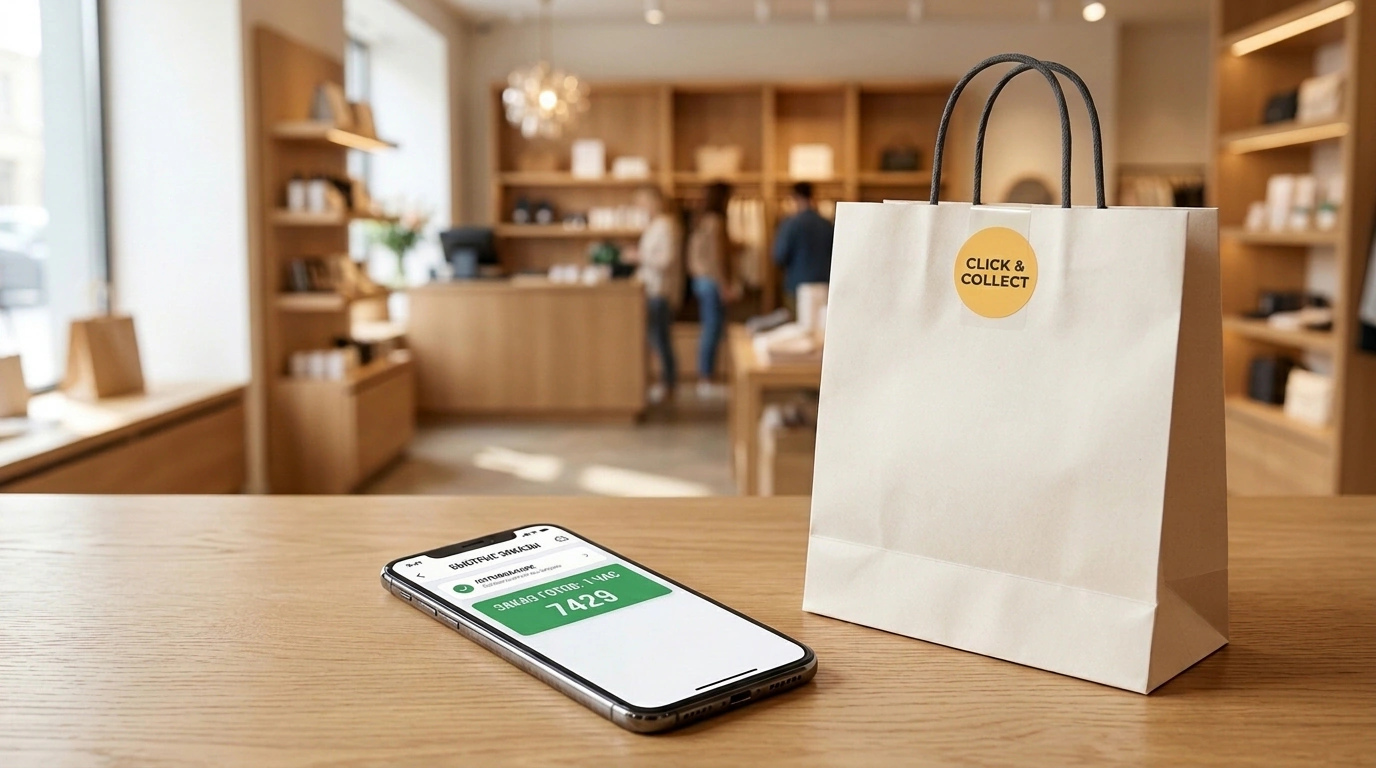
The merged company Wildberries & Russ has announced a major expansion of its Click & Collect (C&C) service—the model where a shopper places an order on the marketplace and picks it up in person from the seller's own brick-and-mortar store or showroom. The program now spans six countries at once: Russia, Belarus, Kazakhstan, Armenia, Kyrgyzstan, and Uzbekistan.
For retailers operating physical store networks, this looks like a long-awaited bridge between online marketplace traffic and foot traffic at the register. In our guide to self-fulfilled delivery on Wildberries, we broke down DBS and express shipping. Today let's examine the C&C model: how the unified stock dashboard operates and whether the platform's "pure traffic" commission actually pencils out.
Six-Country Rollout: How Brick-and-Mortar Retail Plugs Into the WB Storefront
Until recently, connecting physical retail stores to a marketplace meant endless technical headaches: manually syncing store shelves with warehouse counts, dealing with double-sold items, and untangling POS receipts.
Wildberries' new unified C&C dashboard solves those bottlenecks through direct integration with the seller's point-of-sale software:
- Store pins on the map: shoppers in the WB app see the seller's retail locations as available pickup points right on the product page, tagged "Pick up today in 1 hour";
- Real-time stock reservation: the moment a buyer taps order, the item is automatically locked in that store's inventory system, preventing a walk-in customer from buying the last unit off the shelf;
- Code-based handoff: the customer walks into the store, gives the cashier a 4-digit confirmation code from the app, inspects the item, and leaves without waiting in pickup-point lines.
For chains selling power tools, cosmetics, hardware, and auto parts, this is a serious foot-traffic engine. A shopper drops in to grab a cordless drill or face cream and picks up drill bits, cases, or accessories right off the sales floor.
Paying for the Storefront: Why the 10–15% Commission Sparks Seller Pushback
Still, the biggest point of friction between retailers and the marketplace sits squarely in the fee schedule. Under classic FBO, the marketplace charges 20–30% commission—but handles the full cycle: storing stock, hauling it across the country, and paying pickup-point staff.
Under Click & Collect, the marketplace's logistics costs are literally zero:
- Wildberries provides no warehouse space;
- The marketplace spends zero rubles on fuel or linehaul trucking;
- Store associates and cashiers handing out orders are on the seller's payroll.
Even so, the platform takes a 10% to 15% commission on the checkout total. From the marketplace's perspective, that's a fair price for access to tens of millions of active shoppers plus payment acquiring.
For high-margin sellers (40–50%+ gross margin), the math works nicely: acquiring a walk-in buyer through search ads or street billboards often costs well over 10%. For thin-margin chain retail running 5–8% net profit, however, WB's cut leaves zero breathing room. Before plugging your stores into Click & Collect, run the numbers carefully on in-store cross-sell potential.