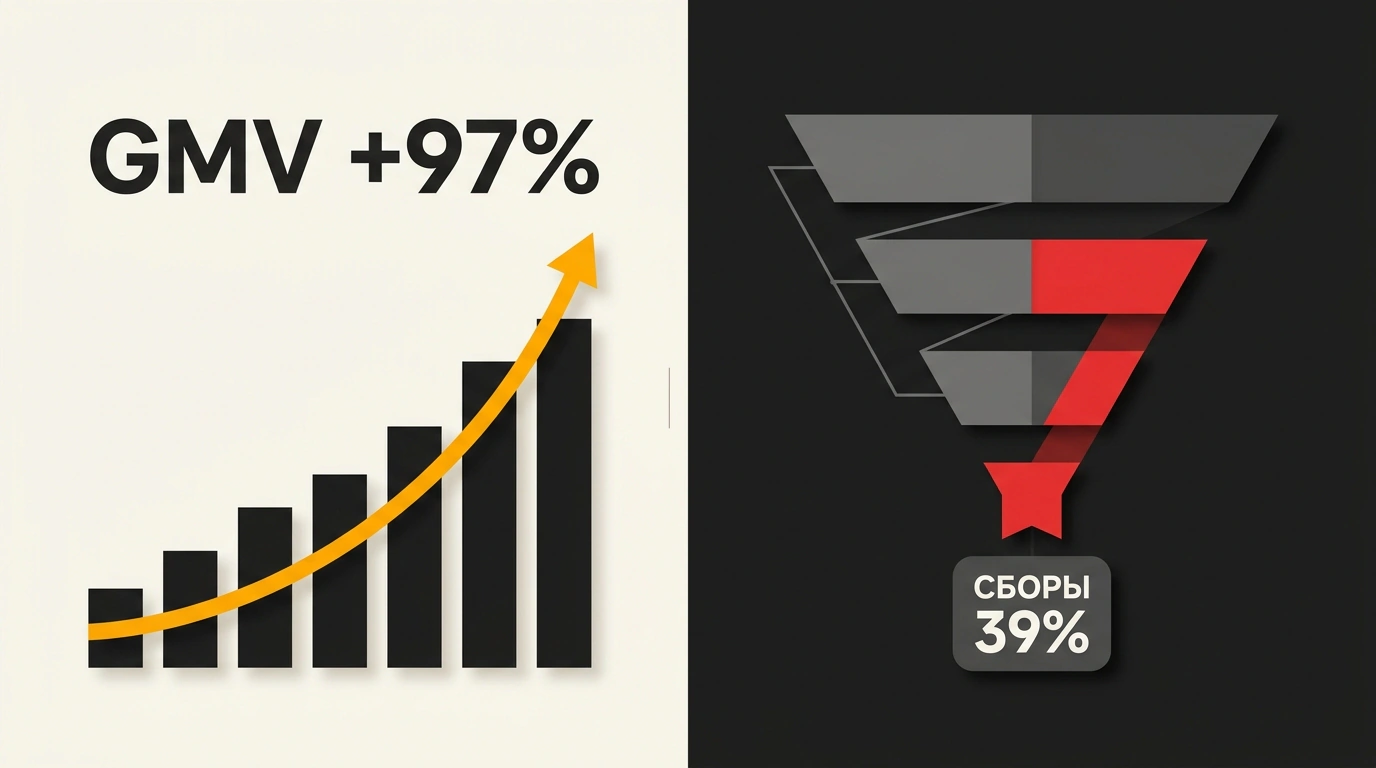
Ozon's third-quarter 2026 financial results sparked cheers across business media and among equity analysts. The headline numbers look staggering: gross merchandise volume (GMV) surged a record 97% year-over-year, pushing the platform close to all-time highs.
Yet in our recent financial breakdown of the marketplace, we pointed to an unsettling paradox: Ozon's revenue from seller services jumped 70% at the exact same time. Meanwhile, independent analytics firm RASK surveyed hundreds of active Ozon merchants—and those findings explain why executive victory laps only draw a bitter smile from actual sellers on the ground.
Two Parallel Realities: Storefront Boom vs. Empty Bank Accounts
Read Ozon's official press release and it sounds like a festival of abundance: active buyers are climbing, order frequency is breaking records, and fulfillment hubs are processing millions of parcels a day.
RASK's seller survey paints the exact opposite picture of day-to-day business reality:
- Over 62% of surveyed suppliers reported that their net profit fell in Q3 compared to Q2, even as nominal turnover in units and rubles rose;
- Nearly 24% of sellers hit zero profitability or slipped into an operating loss, forced to subsidize current sales out of older cash reserves;
- Just 14% of respondents saw genuine growth in free cash sitting in their checking accounts.
How is that even possible? Why did doubling the size of the sales pie leave most sellers taking home less money?
The Service-Fee Vacuum: Where Merchants' Margin Is Going
The answer sits inside the expense column. The primary engine behind the marketplace's own profitability wasn't a higher base sales commission—it was an explosion in paid add-on services that the platform effectively made mandatory for survival.
According to RASK's calculations, total marketplace service deductions as a share of the average seller checkout ticket climbed from 28% at the start of the year to a punishing 39% by the end of Q3:
- Ad cannibalization: free organic visibility inside Ozon's catalog has shrunk close to zero. Just to get impressions, a seller has to run search promotion and display placements ("stencils"). Average cost-per-click jumped 40–55% over the past six months, eating up 10% to 18% of retail price.
- Logistics surcharges and paid storage: repeated rate hikes on linehaul cross-docking and FBO storage fees have turned holding off-season inventory into an unaffordable luxury.
- Acquiring and payout fees: financial transaction charges and cash-withdrawal fees keep creeping upward.
As a result, the marketplace now operates like a giant margin-extraction pump: the seller shoulders the risk of demand swings, inventory financing, defects, and customer returns, while the platform collects a guaranteed cut on every click, scan, and mile traveled. It's time for sellers to stop hypnotizing themselves with gross-turnover charts and start ruthlessly cutting unprofitable ad campaigns.