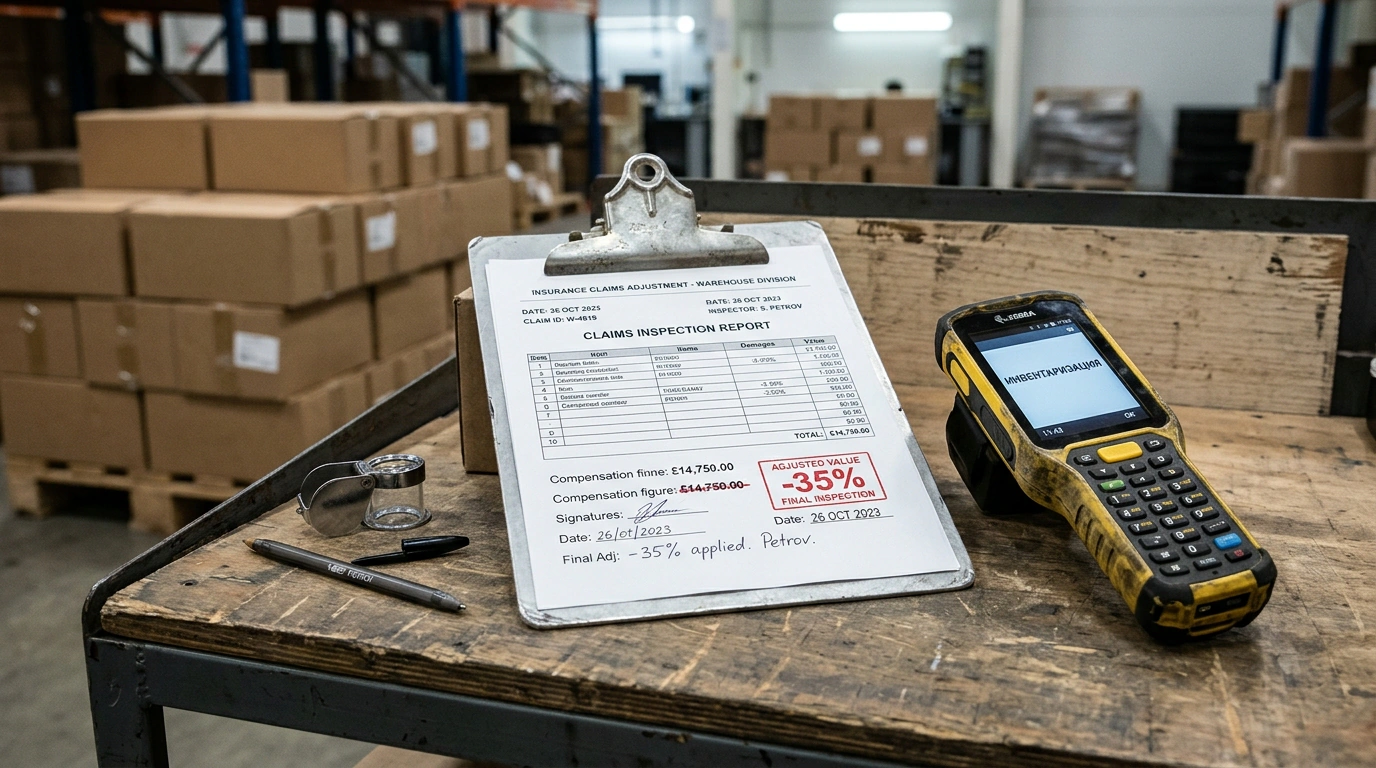
The fallout from the devastating August 2026 incident at Ozon's Makhachkala warehouse has taken an unexpected and painful turn for sellers. Merchants whose inventory burned or suffered damage during emergency response operations have started receiving notices from the marketplace revising previously approved compensation downwards.
In our recent review of warehouse insurance payouts, we flagged early warning signs from sellers whose settlements were slashed by a third. Today that practice has become widespread: payout amounts on final settlement statements have been cut by 15–36% compared to the figures the platform initially signed off on in seller dashboards during the first weeks after the disaster.
Let's look at how this legal sleight of hand works—and why entrepreneurs ended up holding the bag in a dispute between a giant marketplace and its insurance carrier.
An Inventory Audit in the Insurer's Favor: How Million-Ruble Claims Melted Away
Right after the emergency, the marketplace played the PR game flawlessly: it pledged full partner support, promptly compiled an initial register of lost inventory, and uploaded preliminary compensation statements calculated from average sales prices over prior months. Many sellers breathed a sigh of relief, counting on those funds to plug cash gaps and restart restocking.
Behind closed doors, however, hard-nosed negotiations began with the insurance syndicate. Total losses at the Makhachkala facility ran into billions of rubles. Insurance adjusters refused to sign off on payouts based on preliminary registers and demanded a full physical re-inventory of surviving stock and debris.
That's when warehouse "miracles" started happening:
- Items listed in August as completely destroyed by fire and firefighting foam were suddenly reclassified after re-inspection as "intact and fit for sale";
- Per-unit base valuations were adjusted downward retroactively by stripping out marketing subsidies and seasonal markups;
- Virtual platform commissions, logistics fees, and handling charges were deducted from final payout totals—as if those destroyed goods had actually been delivered to real buyers.
As a result, a seller originally approved for a 1,200,000-ruble payout sees only 820,000 rubles on the revised statement, while the remaining 380,000 rubles evaporate under wording like "reconciliation of actual on-hand stock."
Lessons for Sellers: How to Protect Your Business Before a Crisis Hits
This case exposed the core vulnerability of the FBO model: the moment you hand inventory over to a marketplace warehouse, you surrender physical control over your property.
To avoid ending up powerless when the next emergency strikes, make these three habits non-negotiable:
- Download full warehouse stock reports every week: never rely on your dashboard's cloud history. Export detailed inventory reports regularly showing exact SKUs, barcodes, and batch numbers. Screenshots won't hold up in court, whereas timestamped digital exports carry legal weight.
- Lock down preliminary compensation statements: if an incident occurs and the marketplace sends a preliminary loss calculation via chat or email, immediately certify it with a qualified electronic signature, get a notarized web inspection, or archive the file through your EDI system.
- Don't sign claim waivers lightly: marketplaces often offer to pay the reduced sum "tomorrow" if you sign a release waiving further financial claims. If the gap is material, file a pre-trial demand requiring photo and video proof of the supposedly "recovered intact" goods.
E-commerce warehousing carries real operational risk. And the larger the marketplace, the harder its lawyers will fight to protect the corporate balance sheet at the individual supplier's expense.