When you ship stock to a marketplace warehouse, you mentally budget for a small percentage of shrinkage or occasional damage. But when a distribution center is hit by an emergency, the survival of hundreds of businesses is on the line. In a moment like that, an insurance policy looks like the one reliable lifeline.
Real-world claims settlement on Ozon, however, handed sellers a brutal lesson. In late October 2026, a sharp dispute erupted over payouts for inventory destroyed at the Makhachkala distribution center. The marketplace and insurer Ingosstrakh applied lower payout coefficients retroactively, slashing seller compensation by up to 36%—and then recalled already-signed settlement statements altogether.
The Contested Clause 3.11.2: How an Inventory Count Date Cut Payouts by a Third
The timeline began on the night of August 24, 2026, when Ozon's logistics hub in Makhachkala was damaged in a drone attack. That same night, a facility in the village of Enem (Adygea) was also hit. Both warehouses halted operations, with seller stock destroyed by fire or water.
In September, Ozon wired advance tranches to affected sellers. The trap surfaced during the final inventory reconciliation:
- At the Enem warehouse, the stock count wrapped up before September 24, and sellers received compensation at the previous rates.
- In Makhachkala, the inventory count dragged on until September 29. Meanwhile, on September 24, the marketplace unilaterally revised its insurance payout coefficients sharply downward.
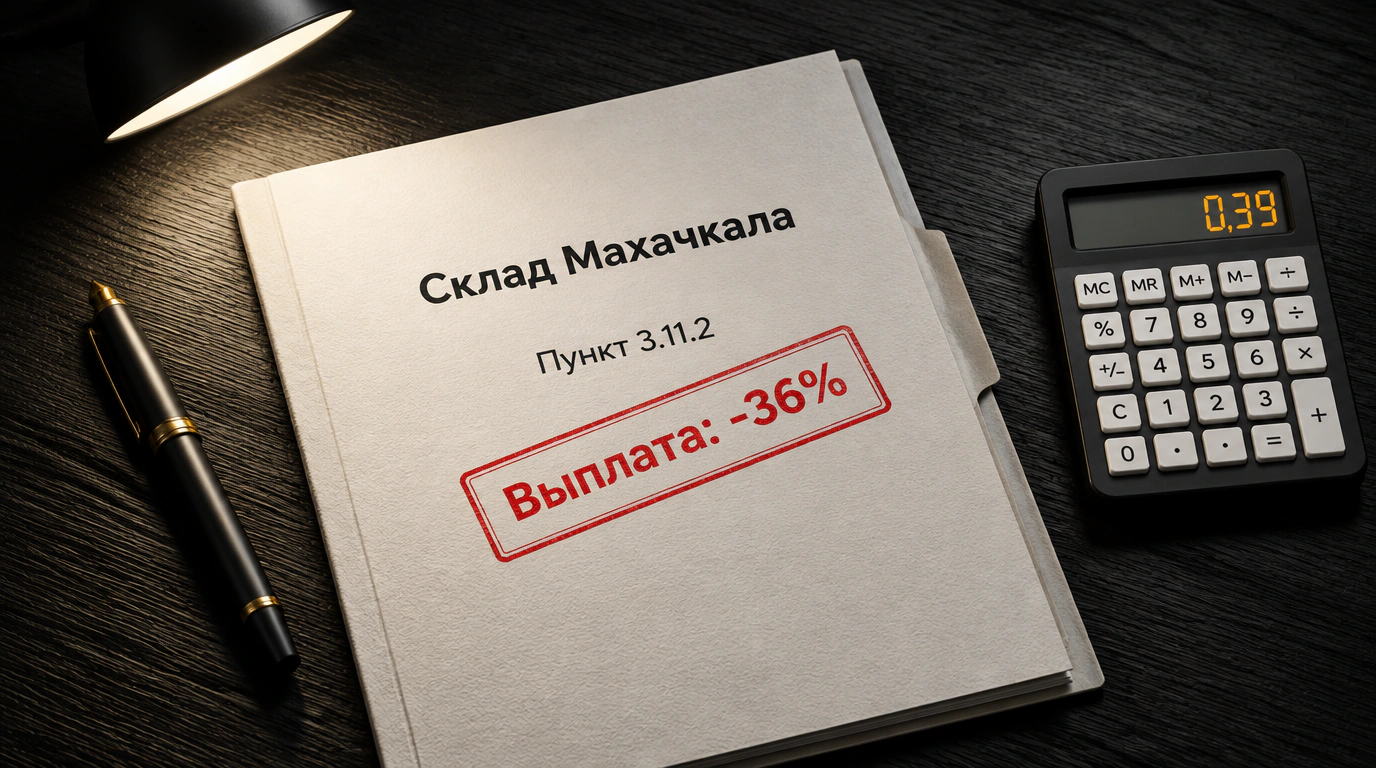
As a result, Makhachkala sellers saw their payout multiplier drop from 0.61 to 0.39. In hard cash, that meant a 36% cut to the final insurance payout. If a seller lost a batch with a landed cost of 3 million rubles, more than 1 million rubles suddenly vanished from their claim.
Ozon support pointed to Clause 3.11.2 of the insurance program terms, which states that coefficients apply as of the date the payout is actually calculated, not the date of the incident. Because of the platform's own internal delays, sellers' payouts got chopped. Earlier, we broke down how Ozon's insurance tariff calculation works and covered Ozon shutting down its drone-attack insurance program on October 13 after reinsurers pulled out. Still, obligations from August incidents have to be settled fairly.
Recalled Statements and Defense Plan: What Sellers Should Do Before Re-Signing
The climax hit on October 27–28. First, Ozon uploaded final settlement statements to seller dashboards, and entrepreneurs began signing off. Then, on the evening of October 28, the marketplace recalled the agreed statements, citing a calculation formula error, and promised to upload revised schedules.
Under Ozon's rules, only users assigned the Manager role in the Finance section are authorized to approve settlement statements.
Signing a statement in the seller dashboard constitutes unconditional acceptance of the proposed payout. Once you sign off on a reduced coefficient, challenging the amount in court becomes extremely difficult: the platform's lawyers will simply present your electronic signature on the agreement.
Action plan for affected sellers:
- Lock down digital evidence. Take screenshots from your dashboard: Makhachkala warehouse stock balances as of August 24, inventory count reports, the initial October 27 statements, and the recall notice.
- Calculate the real shortfall. Compare the offered compensation against your verified supplier purchase costs backed by universal transfer documents (UPDs).
- File a reasoned objection. Do not click approve if your payout is cut by 36%. Submit a formal refusal and a pre-trial claim demanding the rates in effect on August 24. Article 958 of the Russian Civil Code prohibits worsening insurance coverage terms retroactively.