Sooner or later, every marketplace seller asks the same question: how do I get off the hook of platform commissions and grow my own direct sales? You build a clean online store, run ads on social media or Telegram, win repeat buyers—and immediately slam into a logistics wall. Shoppers are used to picking up parcels in slippers at the pickup point around the corner, while hooking up traditional courier networks means either steep rates or weeks of painful integrations.
In October 2026, Ozon landed a heavy blow on classic B2C carriers (SDEK, Russian Post, Boxberry). Its "Ozon Delivery for Business" service dropped the barriers for independent online stores and D2C brands: you can now ship orders into Ozon's massive network of tens of thousands of pickup points (PVZs) without forcing buyers to register on the marketplace—and without paying steep storefront commissions.
Let's unpack how the workflow operates, how much money it actually saves a seller, and what operational details you need to watch when setting up shipments.
Pickup Points Without an Account or App: How the New Handoff Works
Historically, Ozon pickup points handled only orders placed on Ozon's own storefront: the shopper checked out, Ozon took a cut of the sale, and the seller paid for logistics. The biggest roadblock for external online stores was the login requirement—buyers were pushed to install the marketplace app, which annoyed loyal brand customers.
That barrier is now gone:
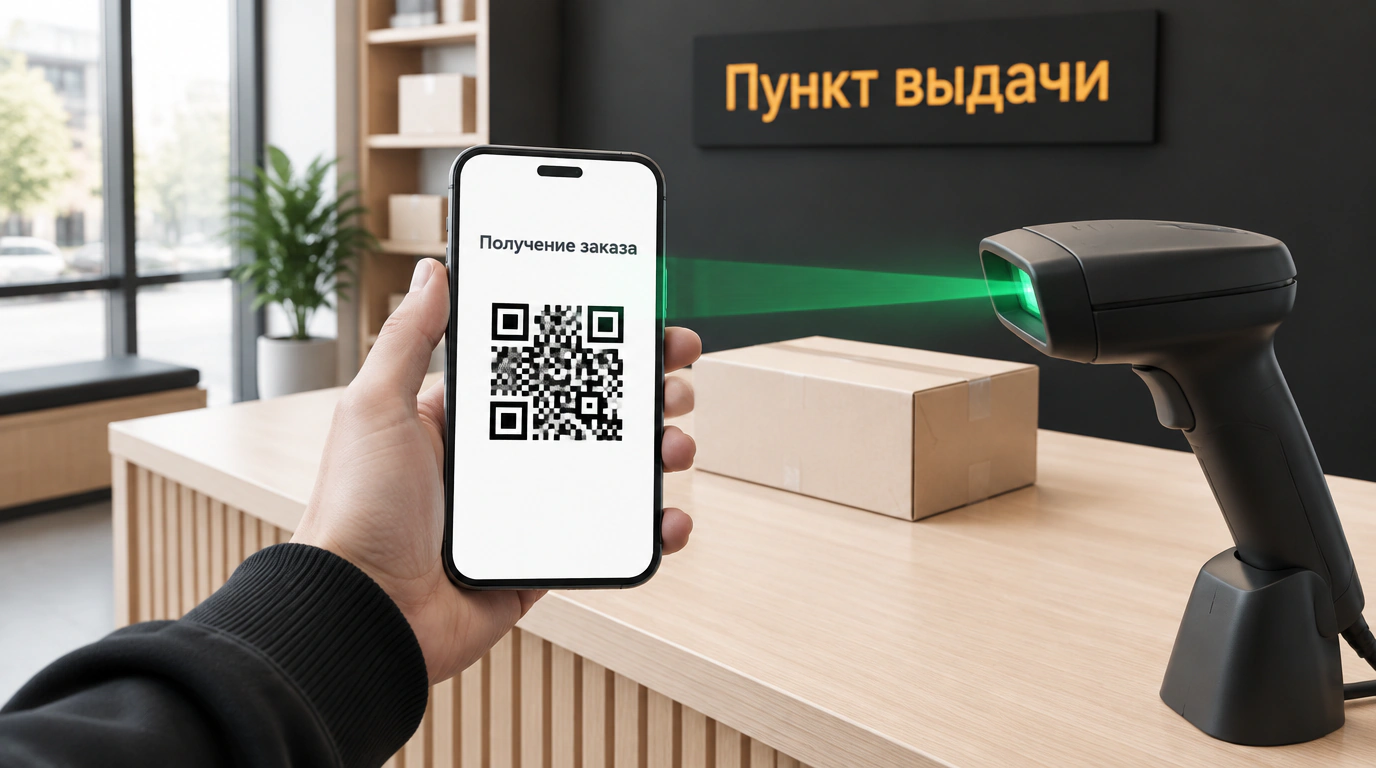
- Dynamic QR-code pickup. Shoppers buying from your online store do not need an Ozon account or app. When an order is placed on your site, the system generates a unique QR code sent to the buyer via email, SMS, or the MAX messenger. At the PVZ counter, the customer simply shows their phone screen, the clerk scans the code, and hands over the parcel in 20–30 seconds.
- Zero returns through PVZs. This is a critical operational guardrail: customers from external websites cannot file returns through a PVZ clerk. All claims, exchanges, and warranty requests go straight back to your store. That spares pickup-point staff from endless disputes and shields sellers from impulse rejections at the counter.
We wrote earlier about scaling Ozon's nationwide PVZ infrastructure, and now that footprint is effectively opening up as a public 3PL network.
Trust-Based Intake, ApiShip Gateway, and Commission Savings
To make onboarding as painless as possible, Ozon Delivery added two practical upgrades:
- Pre-built ApiShip gateway integration. You don't need in-house developers to wrestle with the Ozon Delivery API. Thanks to the ApiShip module, plug-and-play connectors are ready for major CMS platforms (1C-Bitrix, InSales, WooCommerce, CS-Cart). You drop in your
Client IDandClient Secretfrom the dashboard, and your checkout page automatically displays an interactive map with live rates and delivery estimates to Ozon PVZs. We covered the setup details in our recent technical review of Ozon Delivery integration for external businesses. - Trust-based intake by cargo unit. Forget scanning every single polybag one by one at the sorting center. Your store packs orders into master boxes or pallets, sticks on a single cargo-unit barcode, and hands the batch to an Ozon courier. Receiving wraps up in minutes with no dock queues.
Under trust-based intake, full responsibility for matching box contents to the manifest sits with your store. Double-check every item before taping a carton shut: if a buyer receives someone else's order, the cost of fixing the mistake comes straight out of the sender's pocket.
Let's compare unit economics on a 4,000-ruble order:
- Selling on Ozon's storefront: 18% category commission (720 RUB) + FBO/FBS logistics (250 RUB) + payment processing (60 RUB) = 1,030 rubles in deductions (25.7% of the ticket).
- Selling on your own website with Ozon Delivery: 0 RUB marketplace commission + online acquiring (100 RUB) + Ozon Delivery tariff (220–280 RUB) = 320–380 rubles in costs.
That's roughly 700 rubles in net savings per order—while the buyer still gets their familiar neighborhood pickup point. It's a strong lever for growing your own brand without overpaying for marketplace shelf rent.