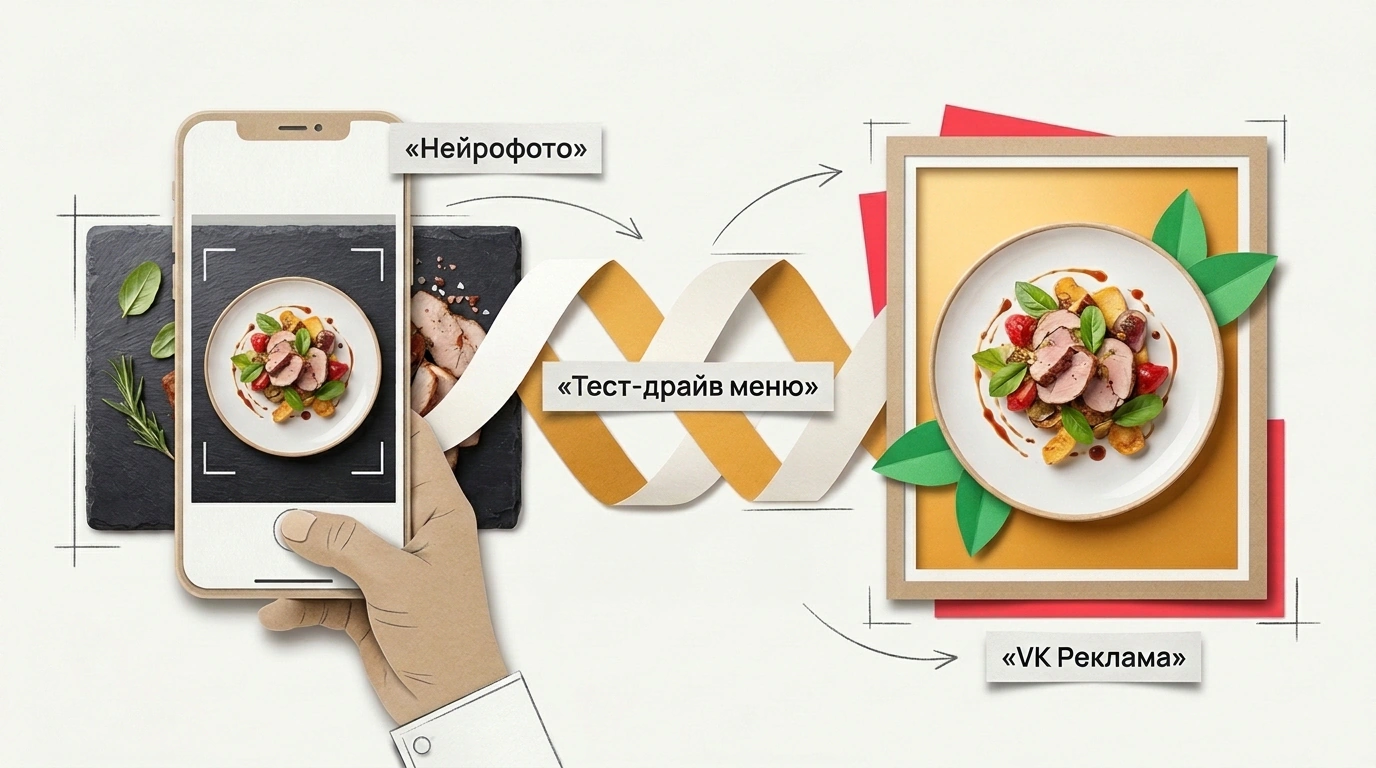
Launching a brand-new tech product into a conservative market is a tough assignment for any marketer—especially when your buyers are restaurant chefs and general managers. Restaurateurs are used to classic food shoots: a photographer brings lighting gear, the chef cooks dishes fresh off the pass, a food stylist brushes meat with glycerin for shine, and the invoice climbs into the hundreds of thousands of rubles. Mention neural networks in that world, and you get instant pushback: "AI will draw a plastic burger with six fingers, and guests will laugh us out of the room."
Elena Boyarova, a paid social specialist at LoftyLab, showed how to package and test an unfamiliar B2B product—Neuroeda, a service generating realistic dish photos for delivery apps and menus without a photoshoot. They allocated a modest 30,000 RUB budget for a two-week test on VK Ads. Let's look at the funnel, targeting setup, and hard numbers.
Two-Week Test Results in Numbers
Over 14 days of delivery, the campaign posted:
- Spend: 30,000 RUB.
- Impressions: 249,130.
- Clicks: 402 (average CPC: 74.63 RUB).
- Qualified conversations in community messages: 22 inquiries.
- Average cost per lead (CPL): 1,363 RUB.
Getting B2B leads under 1,500 RUB on social media for a complex service is a strong showing. The real trick was who saw the ads.
Audience Showdown: Why Interests Burned Budget and Scraping Won
The team tested five audience hypotheses, with three clear standouts:
- VK search phrases ("food photographer," "delivery food photos," "menu shoot"). Performed decently—the first lead landed the very next day—but hot search volume was tiny.
- Broad platform interests ("Small business," "Restaurants and cafes"). A classic budget drain: plenty of clicks, high CPC, and almost no actual restaurateurs among the clickers.
- Community owners and listed contacts via TargetHunter. The undisputed winner. They gathered active communities for cafes, restaurants, bars, and food delivery services, then extracted the profiles of managers listed in the "Contacts" block. That single segment delivered 16 of the 22 inquiries (72% of all leads).
When you sell to businesses, you can't rely on generic interest checkboxes in an ad manager. Pinpoint scraping of actual decision-makers pays for itself every time. For more on structuring content funnels around long B2B sales cycles, see our guide: Systematic B2B Marketing: Rebuilding Content and Funnels Around the Real Buyer Journey.
A Zero-Risk Free Trial Funnel
Had the team tried pitching subscriptions or generation packs straight from a banner, the campaign would have flopped. Skepticism was simply too high.
So they built an offer with zero financial risk: "First 3 generations free using your own photo."
When your product is unfamiliar and triggers doubt, remove the buyer's financial risk on step one. Offer a free test using their own real-world material. Chefs didn't have to configure anything—just snap a real dish in the kitchen on their phone and drop the ingredients in the chat.
Ads sent prospects straight into VK community messages, where a Senler chatbot greeted them with three clear buttons: "Try for free," "See pricing," and "View examples."
Conversion Reality: Why Zero Deals Closed in the First 14 Days
Here is the honest stage-by-stage funnel: 22 incoming chats → 9 restaurateurs sent a photo and received generated images (41% trial conversion) → 1 client moved to contract review → 0 paid invoices in 14 days.
A failure? Not even close. In the restaurant business, approving a visual menu goes through the head chef, the art director, and the owner. The sales cycle takes anywhere from three weeks to two months. That 30,000 RUB test did its job completely: it proved the funnel works, brought in qualified leads at 1,363 RUB, and filled the pipeline with warm prospects.