You've probably seen this classic B2B disconnect: marketing cheerfully reports beating traffic targets, CTR is climbing, and form conversions are breaking records. Then the sales director drops a cold reality check at the weekly sync: "Look, your leads aren't buying. We've got inquiries, sure, but zero revenue in the bank."
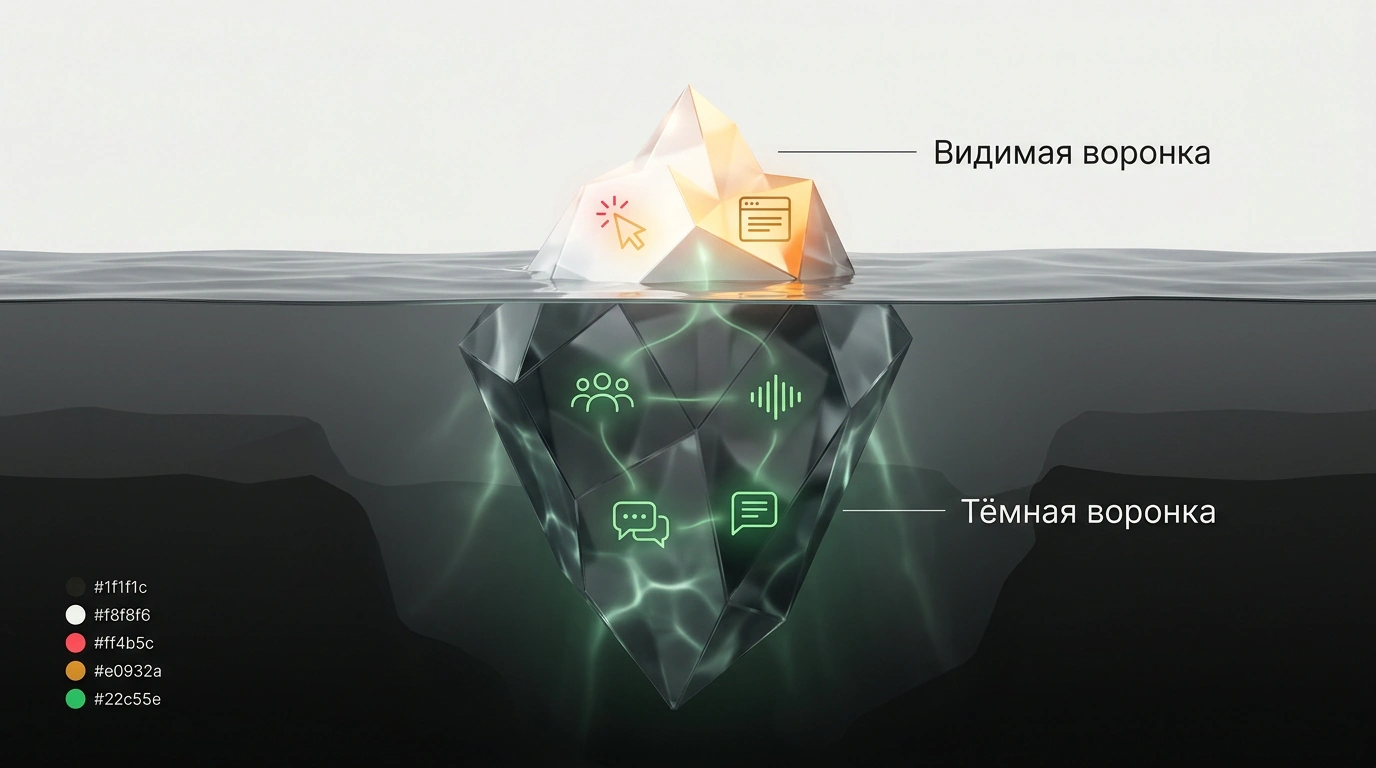
Scrambling to fix it, marketers start frantically polishing landing pages, rewriting offers, and A/B testing button colors. Nikolay Mikhailov, author of the Telegram channel "B2B Marketing: From Chaos to System," shared a telling case from his own practice: changing a landing page button's color boosted CTR by 95% and generated… zero rubles in revenue. Why does that happen? The answer lies in the Dark Funnel.
61% of the Journey Happens in the Dark
Research platform 6sense published a landmark B2B Buyer Experience report that flips conventional wisdom on corporate buying upside down: 61% of a B2B buyer's journey happens completely anonymously.
What does that look like in real life? A corporate buyer doesn't start shopping for industrial equipment, enterprise software, or consulting by clicking a Yandex Direct banner. Long before they ever type a product name into search or visit your site, the buying committee has already done heavy lifting behind closed doors:
- recognized the problem and drafted technical requirements;
- asked peers for recommendations in private professional Telegram chats;
- listened to speakers on niche podcasts and at industry conferences;
- queried ChatGPT, Claude, or Perplexity for options;
- built a shortlist of two or three trusted vendors.
Only when the decision is practically made does the buyer visit your site—just to grab a phone number or submit a formal RFP request.
The Illusion of Control and the Last-Click Trap
Traditional web analytics (Yandex Metrica, Google Analytics, tracking pixels) only sees the tip of the iceberg—the "visible funnel." It logs the final click: a visitor came from a search query, hit a button, and filled out a form.
The marketer draws the wrong conclusion: "Search ads just brought us a 10-million-ruble client! Let's triple the Yandex Direct budget!" In reality, the search ad acted like a phone book for someone who had already picked your company a month ago after reading an expert article or hearing a peer's recommendation.
If your brand is absent from the Dark Funnel, no amount of aggressive search bidding will save you—you simply won't make the shortlist. For more on why chasing clicks breaks business models, read our piece: Systemic Traps in B2B Marketing: Why Clicks Don't Close Deals.
How to Work the Invisible Funnel: Four Practical Steps
So how does marketing stop burning cash on illusions and start shaping real buyer choices?
Add one required or semi-required open text field on your Thank-You Page: 'How did you first hear about us?' Skip the dropdown menu. Right after submitting an inquiry, buyers give honest answers like 'a colleague recommended you in a directors' chat,' 'heard your podcast,' or 'asked ChatGPT.' That single field gives leadership a clear view of what's actually working.
Here are the other three rules for rebuilding B2B marketing:
- Shift to Zero-Click content. Stop hiding useful guides, benchmarks, and playbooks behind lead forms ("download this PDF in exchange for your phone number"). Corporate buyers hate spam and type in fake numbers anyway. Publish deep, practical value openly on blogs, industry media, and social channels—earn trust before anyone fills out a form.
- Audit how buyers actually talk. Listen to the exact words real directors and engineers use to describe their headaches in chats and meetings. Use their authentic language instead of polished corporate fluff.
- Measure revenue, not form clicks. The only mature metric for B2B marketing is impact on gross margin and closed deals—not CPC or the CTR of a pretty button.