Issue October 18Daily digest · 8 items
In this issueReviewed 67 sources, gathered 8 items
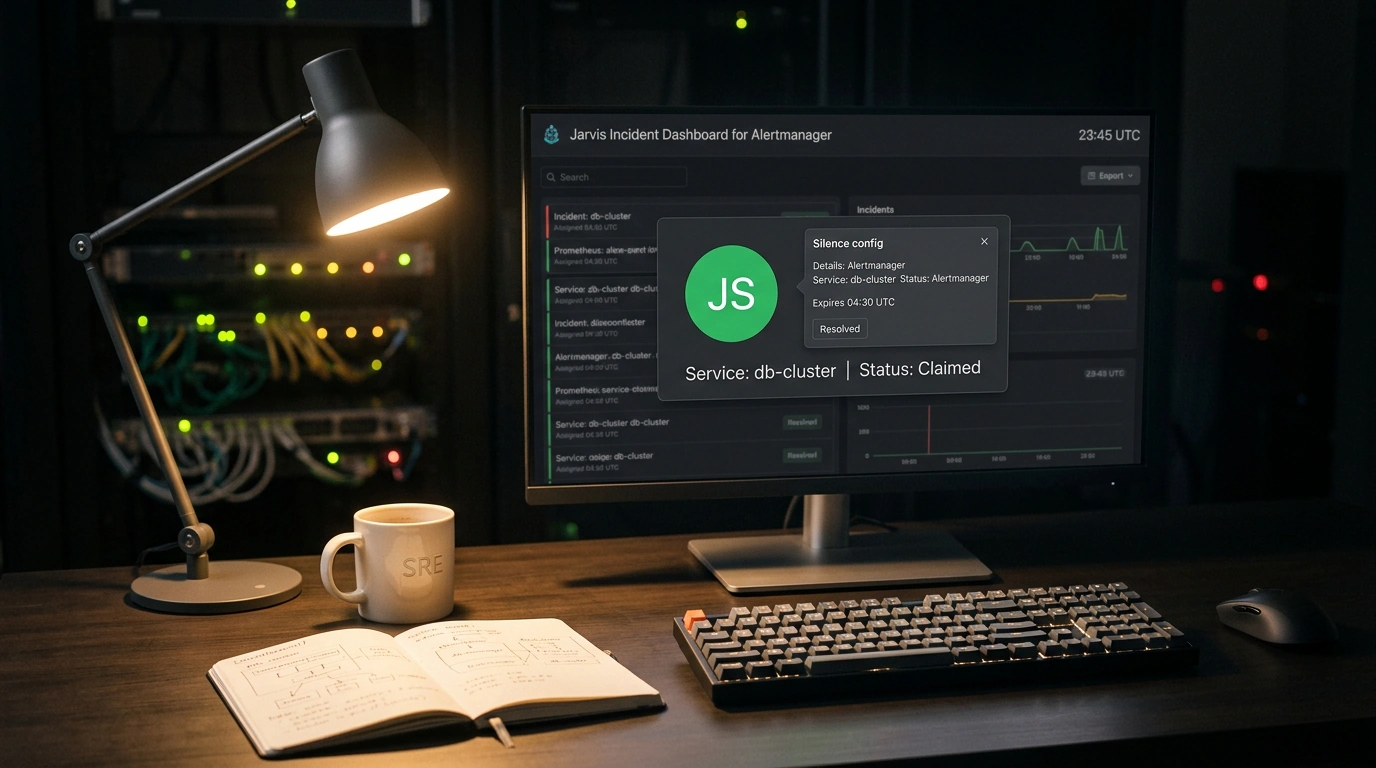
Studio still life of an on-call engineer's workstation: a monitor displaying the Jarvis dashboard, an incident card with a green assignee badge, and an SRE notebook under a night desk lamp.
ArticleDevelopmentOpen SourceAutomationMonitoring

Jarvis: An Interactive Web UI for Prometheus Alertmanager

Picture a classic on-call night shift: a red alert flashes in monitoring, and the team starts frantically messaging in chat to figure out who is already looking into it. The default Alertmanager UI—and even the popular Karma dashboard—only show a live snapshot of current alerts, keeping zero history of actions or engineer notes.

I took a closer look at Jarvis, a new open-source interactive web frontend that turns Alertmanager into a proper on-call engineer workstation. It brings one-click incident claiming, real-time WebSockets, a built-in database for notes tied to each alert fingerprint, and a silence rule preview so you never accidentally mute the wrong services.

👍 0
DevOps&SRE LibraryGitHub: kj187/jarvis
October 18
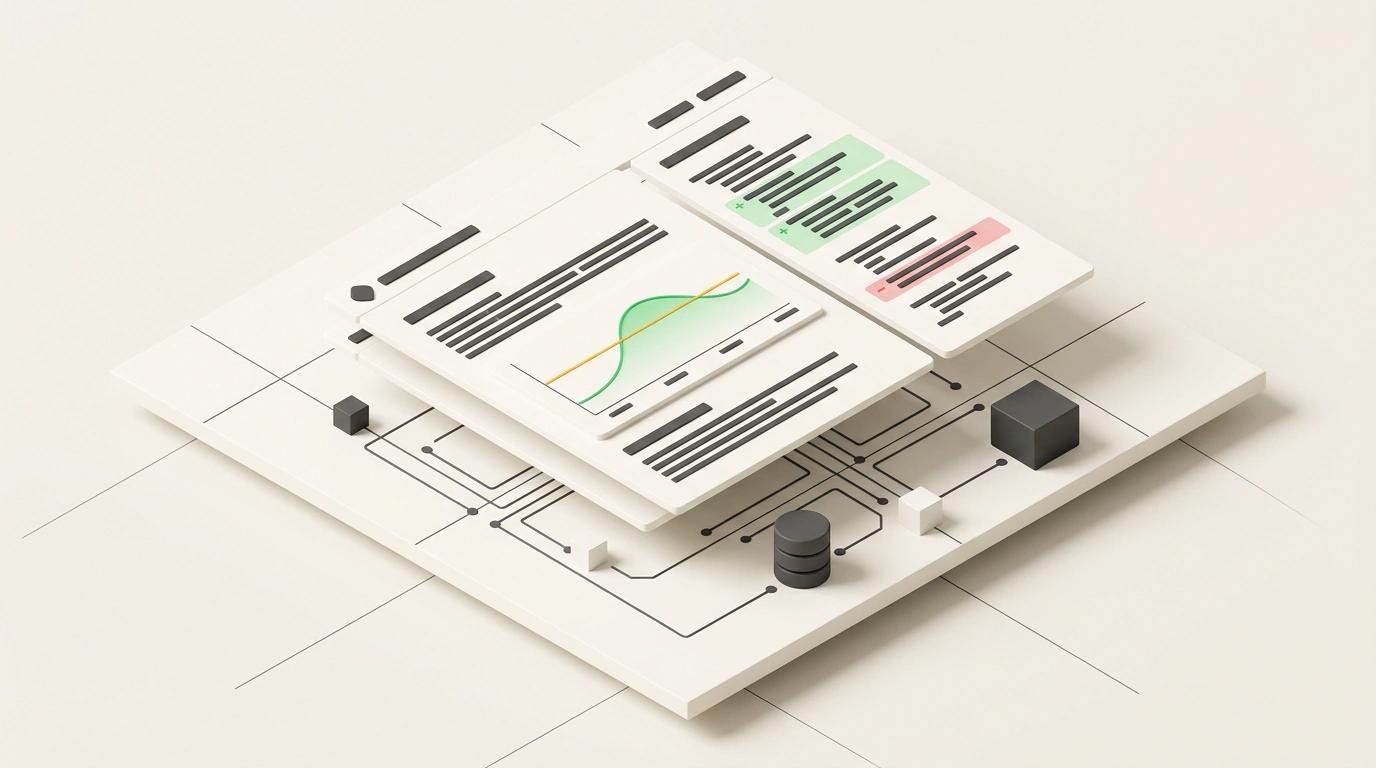
Architectural isometric diagram of the Oxynote platform: a technical documentation page with an embedded live metrics chart block and a review branch.
ArticleDevelopmentOpen SourceAI AgentsDocumentation

Oxynote: Living Engineering Documentation with Embedded Metrics

Where does your server architecture documentation usually live? In Notion or Confluence pages that went hopelessly stale six months ago? And where are the load graphs? Over in Grafana, where all incident context is squeezed into a tiny dashboard tooltip.

The creators of the popular Go library ttlcache proposed a different path—the open-source platform Oxynote. It is a "breathing docs" environment where technical runbooks and live charts from Prometheus or PostgreSQL sit on the same page. Instead of chaotic edits, it enforces a strict engineering workflow: every change is drafted with a block-level visual diff and goes through review before merging into the main runbook branch.

👍 0
DevOps&SRE LibraryGitHub: oxynote/oxynote
October 18
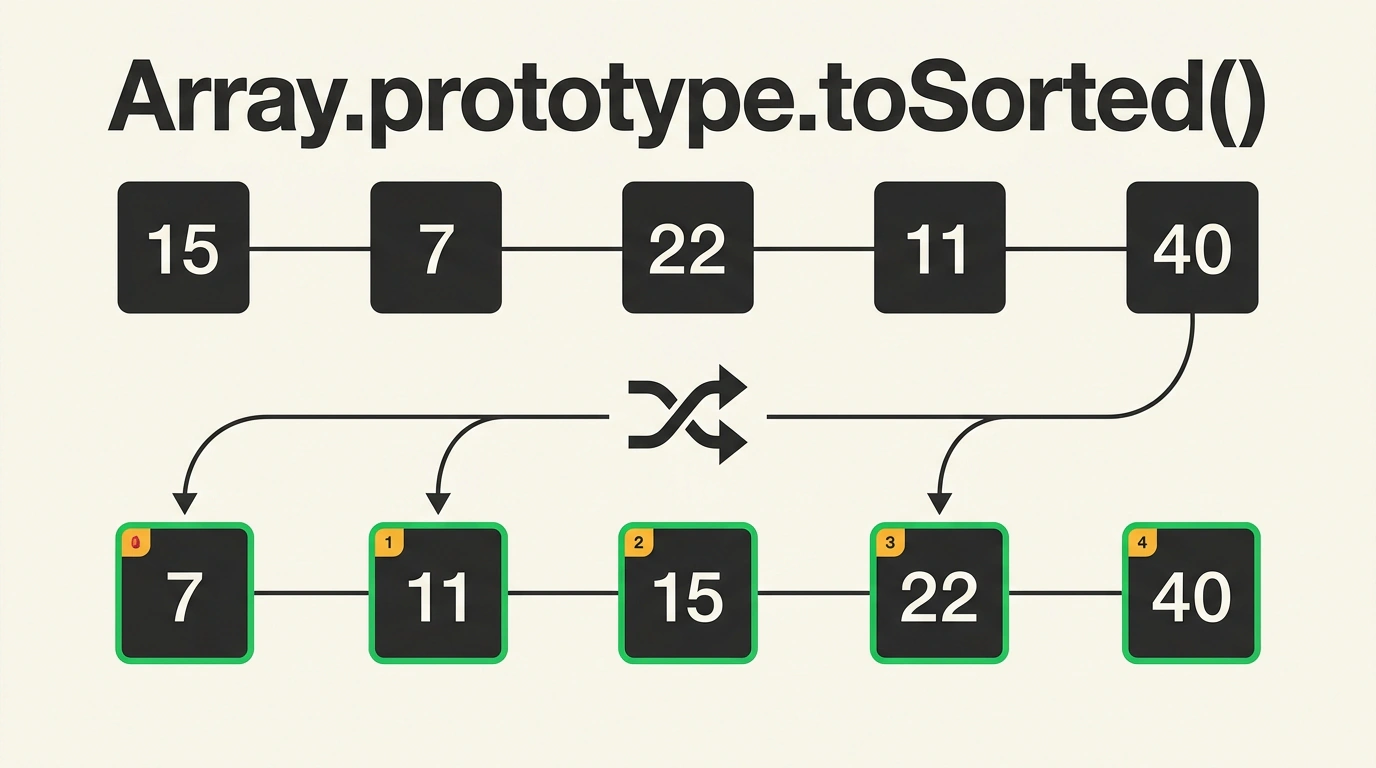
Minimalist editorial vector illustration: an array of numbers splitting into two parallel tracks, depicting immutable toSorted sorting without mutating the original data.
ArticleDevelopmentAlgorithmsJavaScriptFrontend

toSorted() vs. sort(): How to Sort Arrays in JavaScript Without Mutations

You click the sort button in a product catalog, the data in memory seems to update, yet the React UI stubbornly keeps showing the old list. Sound familiar? The culprit is the classic Array.prototype.sort() method, which sorts the array in place and returns a reference to the exact same object—so shallow hook comparisons never spot the change and skip re-rendering.

ECMAScript 2023 solved that pain with toSorted(), which returns an immutable copy of the array. Still, two traps await engineers here: sorting numbers as strings by Unicode code points when no comparator is passed, and shallowly copying references to nested objects. Let's look at how to write safe, mutation-free state code.

👍 0
Библиотека фронтендераMDN Web Docs: Array.prototype.toSorted()TC39 Proposal: Change Array by Copy
October 18
News · October 181 news item

Reslop 0.3.3: Support for Seven AI Agents via the ACP Protocol

In the Reslop 0.3.3 release, Timur Shemsedinov added support for seven new AI agents, including Junie, Copilot, and Windsurf. All integrations are built on top of the open Agent Client Protocol (ACP) in just 234 lines of code, proving the power of standardizing IDE interfaces.

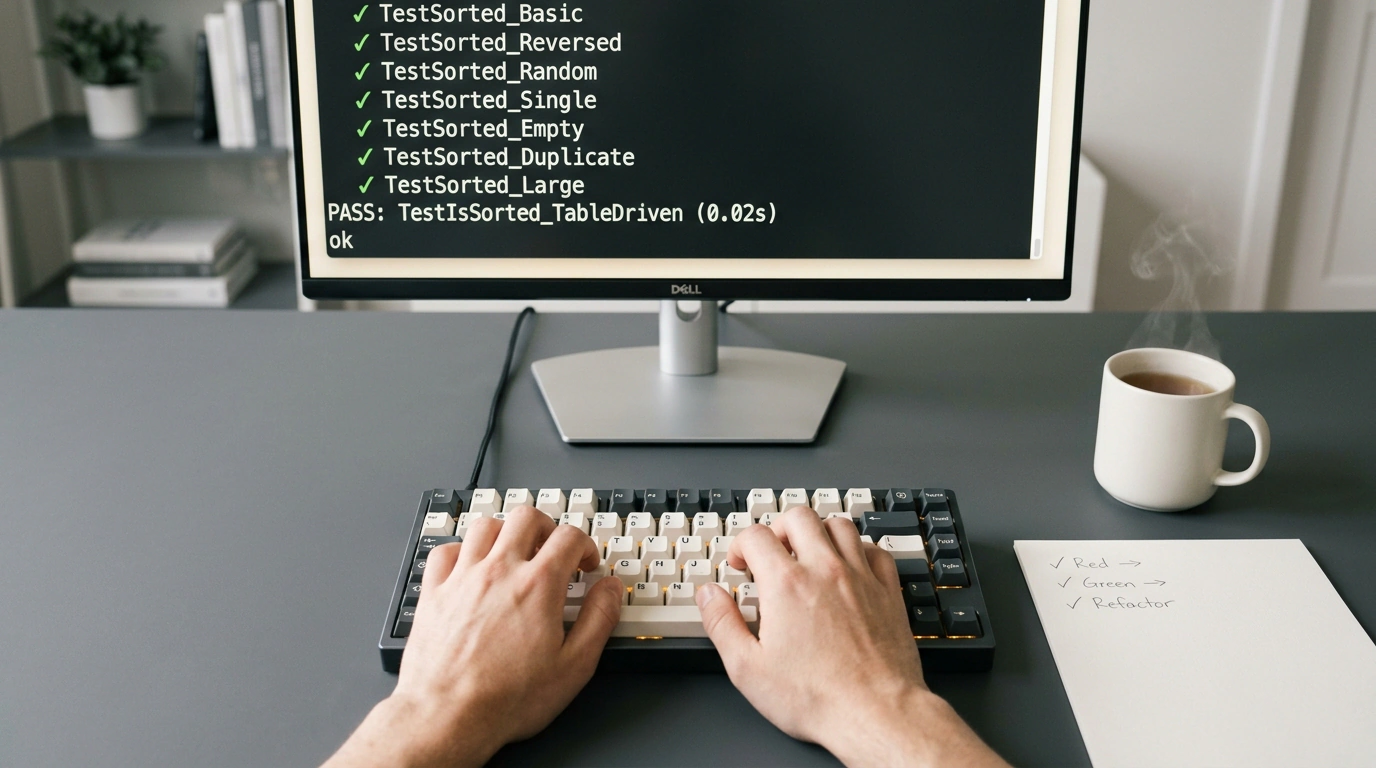
First-person still life of a programmer's desk: hands over a keyboard and a terminal running parallel TDD tests in Go.
ArticleDevelopmentPracticeGolangTesting

Practical TDD in Go: Why a Green Test Needs to Fail First

Why spend time writing a test you know will fail when you can just code the right solution straight away? It is a fair question, yet TDD has an iron rule: a test that never failed during development cannot be trusted. A naive check will happily pass for a dummy function returning a hardcoded true.

John Arundel, author of The Power of Go: Tests, demonstrated this paradox using an IsSorted slice-checking function. Starting from a deliberately false return, we uncover tricky edge cases step by step: panics on empty slices, bugs with negative numbers, and duplicate elements—ending with a safe refactor to Go 1.22's standard slices.IsSorted.

👍 0
Библиотека Go-разработчикаJohn Arundel: Dancing backwards with Go: why TDD is weirdGo 1.22 Release Notes: Loop variable scoping
October 18
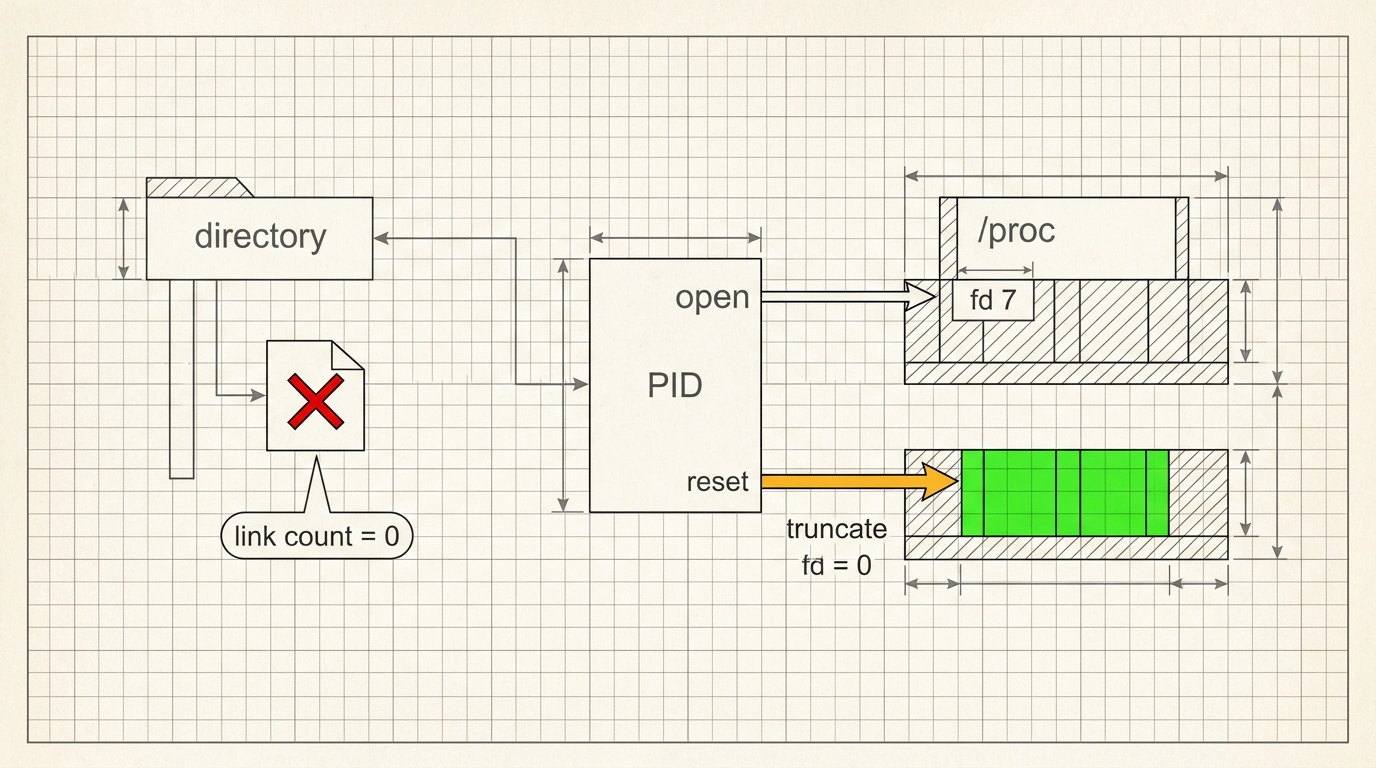
Infographic X-ray diagram of a Linux filesystem: the unlink syscall, an open file descriptor in proc, and zeroing file size via truncate.
ArticleDevelopmentSafetyLinuxDevOps

Disk 100% Full While du Shows Free Space: How to Rescue the Server

Every sysadmin's midnight nightmare: the database drops into read-only mode, df reports 100% disk usage, yet du counts tens of gigabytes of free space. You frantically delete logs with rm, but the used-space counter doesn't budge by a single byte.

In a Linux filesystem, disk blocks are only freed once every file descriptor is closed. If a service keeps writing to a deleted file, it becomes an invisible "ghost." Here is a safe playbook to rescue the server without a reboot:

  • track down processes holding deleted file descriptors using lsof;
  • truncate the file down to zero bytes instantly via its /proc mount entry;
  • configure clean log rotation with postrotate and reload.
👍 0
DevOps by REBRAINLinux Manual: lsof(8) — list open files
October 18
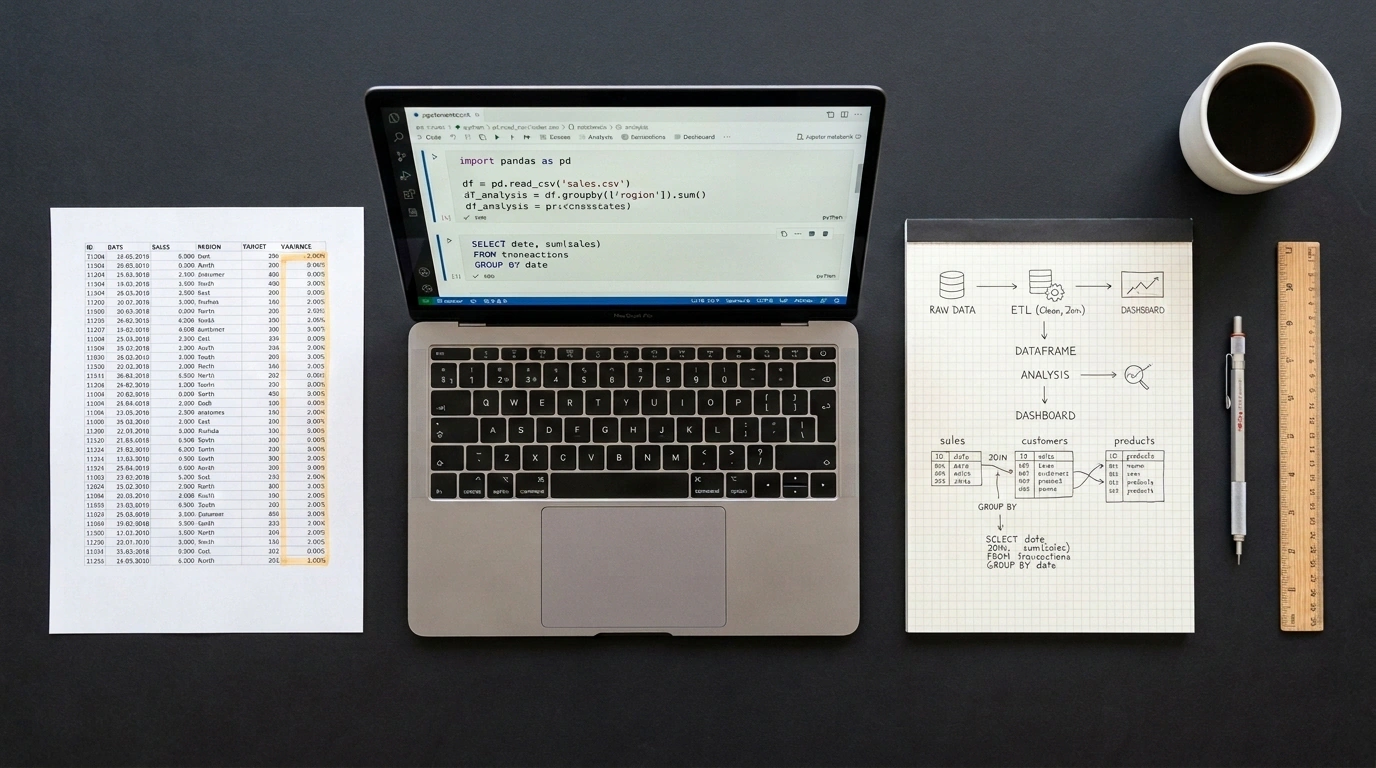
Analyst tools laid out on a desk: a laptop with Python pandas code, a printed Excel spreadsheet, and an SQL query diagram in a single workflow.
ArticleDataAnalyticsAutomationDevelopment

From Excel Spreadsheets to Code: Solving Data Analysis Tasks in Python and SQL

You open a familiar Excel sheet, drag a VLOOKUP formula across two hundred thousand rows, and your laptop turns into a space heater: fans roar, the UI freezes solid, and one clumsy click breaks the calculation. Meanwhile, many people hesitate to switch to SQL or Python, assuming they will have to learn a completely alien discipline.

The paradox is that the core logic of data processing is completely invariant. Filtering, sorting, pivot tables, and joins work the exact same way everywhere—only the notation changes. I mapped common analytics workflows across Excel, declarative SQL, and Python's pandas library to show how easy it is to automate routine exports and drop the fear of code.

👍 0
SQL PortalComparison with SQL — pandas documentationDuckDB Python Guide: Out-of-core SQL execution
October 18