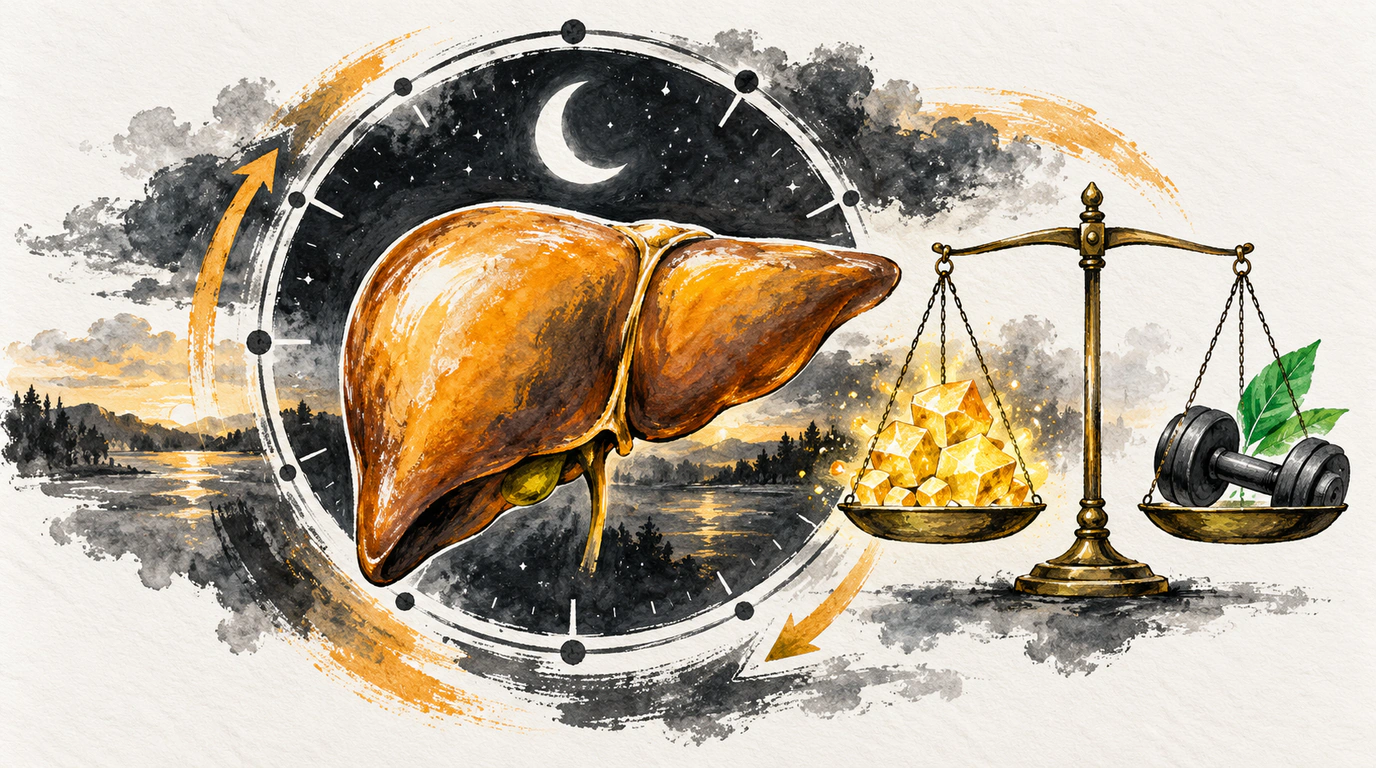
A scary rumor pops up regularly in wellness feeds: supposedly, when your liver accumulates fat, it "forgets" how to produce glucose—and only dry fasting or "liver cleanses" can save it.
What does actual physiology say? Dr. Burlakov dismantled this myth, and I cross-checked the isotope-tracing biochemistry studies in Cell Metabolism.
The reality is the exact opposite: in fatty liver disease, the liver doesn't "forget" how to make sugar—it cranks production up by about a third above normal, pumping excess glucose into your bloodstream. Let's look at how this biochemical factory runs and why fasting only makes things worse.
The Night Shift: Where Blood Sugar Comes From While You Sleep
Your brain and red blood cells need glucose every single second. When you sleep for 8 hours, your blood sugar doesn't crash to zero because your liver keeps the supply steady.
Every night, it runs two parallel processes:
- Glycogenolysis: breaking down stored glycogen from dinner (roughly 50% of your morning blood sugar).
- Gluconeogenesis: building brand-new glucose molecules from non-carb precursors like lactate, amino acids, and glycerol (the other 50%).
Your liver does this every night in every healthy person—no special fasts required.
We previously covered how carbs behave in our article on blood sugar spikes and real diabetes criteria. So what changes when excess fat builds up inside liver cells?
Broken Brakes: Why Fatty Liver Makes Too Much Sugar
Fatty liver (steatosis) affects roughly one in three adults and one in two people carrying extra weight.
In a study by Natasha Sunny (Cell Metabolism) using stable isotope tracers, researchers uncovered a striking fact: in people with fatty liver, gluconeogenesis isn't sluggish—it's 30–35% faster than in healthy controls.
Normally, the hormone insulin acts as the main brake on nighttime sugar output. When blood glucose is high enough, insulin switches off gluconeogenesis enzymes and tells the liver to ease off the gas.
When liver cells become overloaded with free fatty acids, however, hepatic insulin resistance sets in. The brakes fail: the liver stops hearing insulin's signal and keeps churning out glucose all night long. That's why someone with steatosis often wakes up with elevated fasting blood sugar (the dawn phenomenon).
The problem with a fatty liver isn't losing the ability to make sugar—it's broken brakes. Because of insulin resistance, the liver can't shut off nighttime gluconeogenesis.
How to Actually Unload Your Liver Without Quackery
Hepatology guidelines (AASLD) are unambiguous: neither over-the-counter "liver protectors" (phospholipids, milk thistle) nor IV drips clear fat out of liver cells. And trying to "flush bile" with olive oil and lemon juice is a fast track to the ER with acute cholecystitis.
Fasting triggers a sudden flood of free fatty acids from fat stores into your bloodstream. Those fatty acids rush straight into the liver, worsening cellular stress, while stagnant bile raises the risk of gallstones.
The only proven way to restore your liver's insulin sensitivity is gradual, sustainable weight loss:
- Losing 5% of body weight measurably reduces fat inside liver cells;
- Losing 7–10% of body weight calms liver tissue inflammation;
- Resistance training boosts glucose uptake by your muscles, taking pressure off the liver.
Your liver has remarkable regenerative capacity. Don't punish it with bogus cleanses: a modest calorie deficit and regular movement restore its normal rhythm far better than any supplement.