A popular legend circulates in gyms: you can eat whatever you want for years as long as you swallow handfuls of fish oil capsules to keep your arteries spotless. "Omega-3 dissolves cholesterol plaques and flushes extra fat right out of your vessels," fitness influencers declare while shaking colorful supplement tubs.
Cardiology listens to those promises with a sad smile. Master of Sports in powerlifting Alexander Alekseevich recently raised an uncomfortable truth on his channel: why outwardly lean, muscular athletes in their mid-30s are turning up with severe atherosclerosis.
I reviewed the official American Heart Association consensus (AHA Science Advisory) in Circulation. Let's separate what polyunsaturated fatty acids actually do from dangerous wishful thinking.
Can Fish Oil Really 'Wash Away' Plaque?
Let's start with basic anatomy. An atherosclerotic plaque isn't a pat of butter stuck to the inside of a pipe that warm fish oil can melt away.
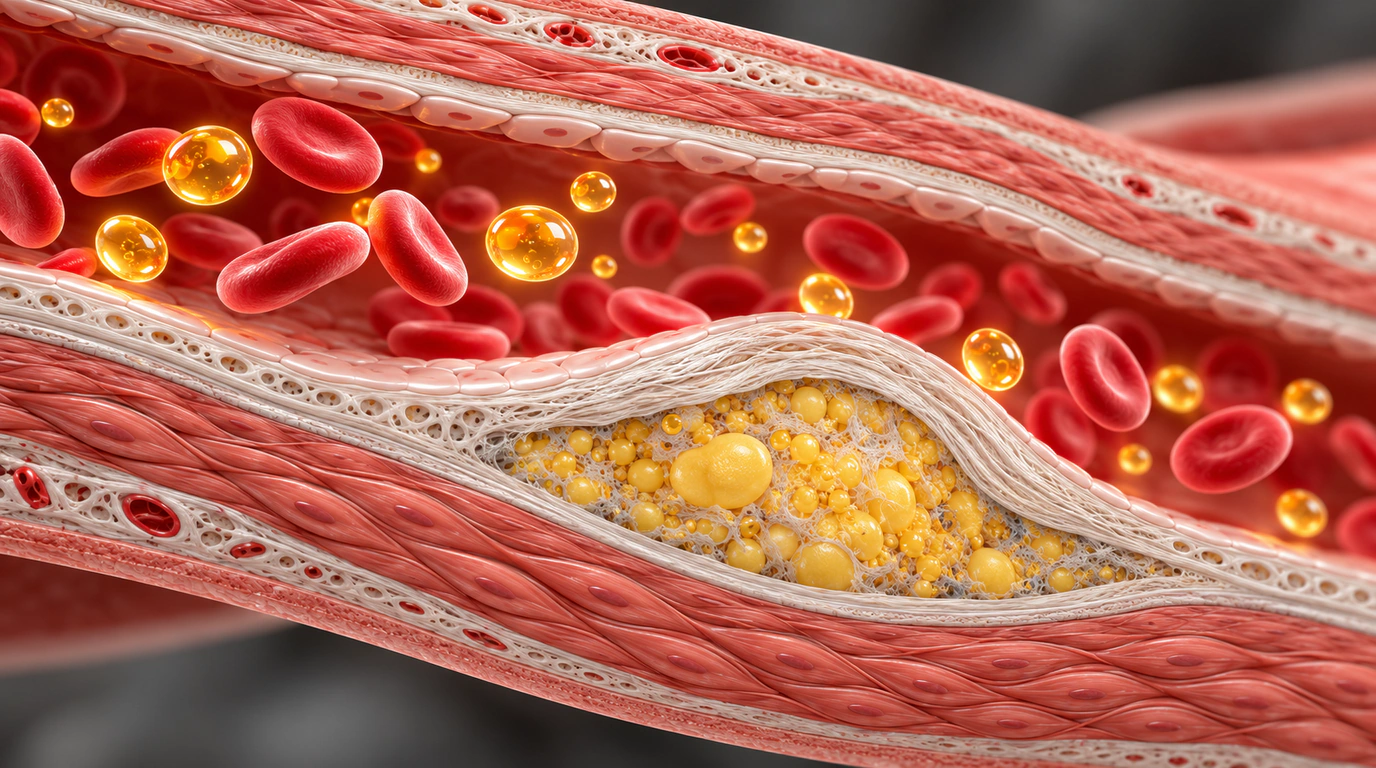
A plaque forms inside the arterial wall itself (in the subendothelial space). It's a dense complex of oxidized low-density lipoproteins (LDL), foam-cell macrophages, calcium deposits, and a thick fibrous collagen cap. Dissolving an established plaque with dietary supplements is physiologically impossible.
Even intensive combination therapy with high-dose next-generation statins and targeted PCSK9 inhibitors shrinks atheroma volume by only 1–2% over several years, according to intravascular ultrasound data.
So what do omega-3 fatty acids (EPA and DHA) actually do?
- At proven therapeutic doses (up to 4 grams of purified acids per day), prescription formulations lower blood triglycerides by 20–30%;
- They reduce the systemic vascular inflammation marker hs-CRP;
- They help stabilize a plaque's fibrous cap, lowering the risk of rupture and a fatal blood clot.
Omega-3s act as a stabilizer and protector for your endothelium—never as a pipe cleaner for your arteries.
We previously covered sustainable health and fitness principles in our article on fitness and lifestyle after 30.
Lipid Profile Disaster During Extreme Cutting
The second dangerous illusion is assuming that visible abs and low body fat guarantee clean arteries.
Alexander Alekseevich points out what happens during extreme contest "cutting" (dropping below 8–10% body fat in men): athletes often strip healthy dietary fats out completely and turn to performance-enhancing drugs. The result is a metabolic train wreck:
- Protective high-density lipoprotein cholesterol (HDL, the "good" cholesterol) plunges to catastrophic levels of 0.2–0.4 mmol/L (normal is above 1.0–1.2);
- Atherogenic LDL and oxidized particles shoot up.
Under those conditions, arterial plaques grow at double speed. Heart attacks in 30-year-old bodybuilders right in the middle of a workout are a grim reality of reckless modern fitness.
Low-grade fish oil oxidizes quickly when exposed to light and warmth. Capsules with a high peroxide value contain toxic lipid oxidation products that increase vascular oxidative stress instead of protecting your endothelium. Taking megadoses of omega-3s without medical supervision also raises the risk of atrial fibrillation.
Ignore the bold '1,000 mg Fish Oil' label on the front of the bottle—70% of that can be filler oil. Flip the jar over and check the 'EPA + DHA' line. In a quality concentrate, those two active acids combined should total at least 600–800 mg per capsule. Look for the re-esterified triglyceride form (rTG) rather than ethyl esters (EE).
Healthy arteries don't come from handfuls of pills. They come from checking your lipid panel once a year, keeping body fat in a sensible range, and eating a balanced diet rich in fatty fish, olive oil, and vegetables. Protect your heart, and don't buy marketing fairytales about "artery cleanses."