According to Sostav and AdIndex, 41% of Russians view sale discounts as a marketing trick, yet 55% actively hunt for promo codes from creators. Shoppers distrust storefront banners and immediately search their feeds for a code. As a store owner, you may still worry that a coupon just cuts your margin and is harder to track than a link. In real order data, the opposite happens.
Why Links Break on the Way to the Cart
According to ARIR estimates, the creator advertising market grew 20% in 2025 to reach 57 billion ₽. Serious money is flowing in, yet standard link-based sales tracking loses a chunk of orders.
In Reels, short videos, and podcasts, you can't tap a link, and in a screenshot sent to a friend it turns into dead text. Cross-device journeys add friction too, when someone watches a review on a phone and orders from a laptop that evening. In mobile apps and browsers with ad blockers or ITP, third-party cookies that connect a click to a purchase get stripped out. As a result, sales attribution—crediting each channel's role in a payment—breaks down: the creator drove the sale, while the report shows zero. A personal promo code travels anywhere; it's easy to remember, say out loud, and forward.
| Criterion | Affiliate Link | Personal Promo Code |
|---|---|---|
| Formats | Clickable posts only | Video, podcasts, screenshots, text |
| Device switching | Breaks between phone and PC | Carried over manually by the buyer |
| Cookie tracking | Blocked by ad blockers and ITP | Independent of browser cookies |
| Trust | Looks like an ad tracking tag | Feels like an insider bonus |
What 14 Million Orders and Four Buyer Habits Revealed
At Demis.Conf, Admitad Group Business Development Director Anton Rodichkin analyzed over 14 million online orders from January–September 2025 and 2026—details appeared in Admitad's blog on Cossa.ru and a Cossa Telegram post.
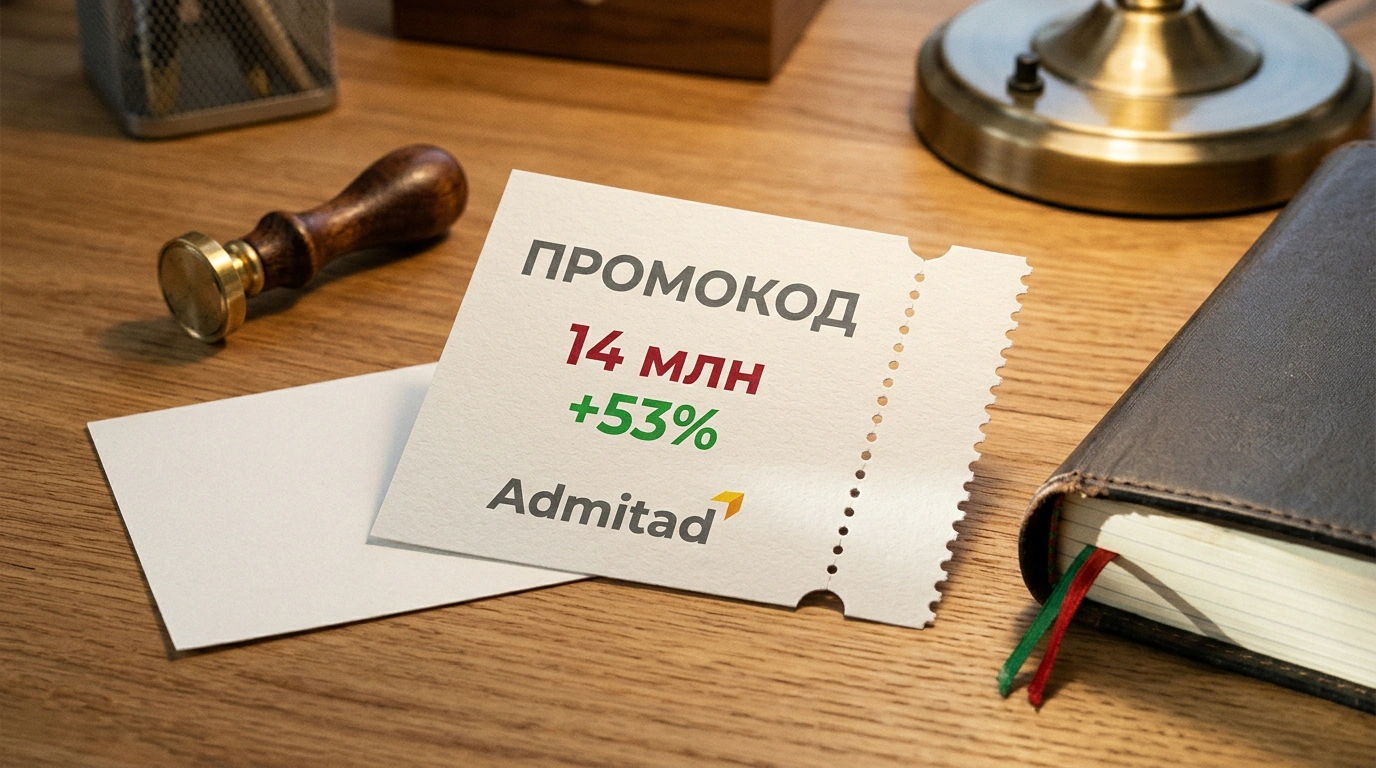
The average order value with a promo code reached 5,907 ₽ versus 3,872 ₽ across e-commerce overall—53% higher. Thrifty psychology kicks in ("I didn't overspend, I saved"), so buyers add items to hit a discount threshold or pick a pricier model. Granted, the stats come from inside Admitad's network, and self-selection explains part of the gap: shoppers hunt harder for codes before big purchases.
Coupon and promo sites hold first place with 29.5% of all affiliate sales, up from 25% a year earlier. Codes are used most often in clothing and shoes (21%), electronics (15.4%), and home goods (13%), while the fastest growth comes from sports goods (+28%), marketplace orders (+23%), and IT services (+21%). The 2025 peaks—18% above average in March, 24% in November, and 13% in December—smoothed out in 2026 thanks to 3–5-day flash promos. The record average order hit 7,351 ₽ in September 2026 during the back-to-school wave.
Beyond thriftiness and seasonal hooks like "BLINY", "DACHA", or "BACKTOSCHOOL", insider perks and word-of-mouth drive results. A creator's code feels like a note saying "tell the cashier I sent you," but it only works when the audience trusts the author: 45% of shoppers notice promo codes only from creators they trust, and 31% trust short tips with a code more.
Broadway Moscow Theater—with 1,000 shows a year, over 1.3 million attendees, and an average ticket around 7,300 ₽—proved this works on high-ticket items too. Codes from Telegram creators, Pikabu articles, seasonal promos, and CPA per ticket sold generated 31% of all theater orders in 2025, lifting GMV by 63% and ticket sales by 23%. Revenue through Admitad grew from 30.7 million to 40.3 million ₽ across 213 partners, with coupon sites bringing 29.8% of acquisitions.
How Coupon Sites Hijack Commissions and How to Plug the Leak
Generic, unlinked codes leak onto coupon aggregators within a couple of days. Then the Last Cookie Win rule kicks in, giving the commission to the final click before checkout. A buyer who already warmed up via a creator—or came straight from search—types "brand promo code" at checkout, clicks a coupon site, and applies the code. Under Admitad's documentation, standard tracking pays the aggregator, leaves the creator with nothing, and makes you pay a middleman for your own customer.
To protect attribution and margins, set three rules:
- Bind a Smart Promo Code to a publisher ID. The unique code stays tied to a specific creator, so tracking priority remains theirs even after a coupon-site click.
- Watch for spikes on small creators. If a niche channel's code suddenly drives a flood of orders from a big aggregator, revoke and reissue it right away.
- Split commission pools and set cart minimums. Give coupon sites a separate pool with a lower CPA rate, give creators private personal codes, and tie discounts to a minimum order value so higher baskets cover the price cut.