When it comes to skincare and fighting acne, two stubborn camps never seem to agree. On one side are strict "cleanse from within" advocates ready to blame every blemish on a stray piece of candy or a glass of milk. On the other are medical skeptics who claim your gut and your skin live in parallel universes, and that the only real fix comes from pharmacy tubes and courses of strong antibiotics.
The science project CMT (Nauchny Podkhod) highlighted a controlled clinical trial that makes one thing clear: pitting medication against nutrition makes no sense. Getting them to work on the same team is far more effective.
The Clinical Experiment: Adding Diet to Medication
Researchers recruited young men aged 18 to 25 diagnosed with moderate acne. To keep conditions rigorous and reproducible, both groups received identical standard-of-care dermatological treatment:
- Topical 1% adapalene gel (a third-generation retinoid) applied once daily;
- Oral doxycycline at a standard dose of 100 mg per day;
- Continuous observation over 12 weeks.
There was just one difference: the first group switched to a low-glycemic-load meal plan, while the control group kept their usual diet rich in fast, refined carbohydrates.
Three months later, the gap was unmistakable. Participants on the low-glycemic diet saw a significantly steeper drop in inflammatory lesions (papules and pustules) and a sharper decline in systemic inflammatory markers in the blood than the control group.
Biochemistry Made Simple: Why Sugar Feeds Inflammation
How exactly do the carbs on your plate reach your sebaceous glands? The pathway is direct, with nothing mystical about it.
When you eat a high-glycemic-load food—white bread, fast food, a candy bar, or soda—blood sugar spikes fast. The pancreas responds with a surge of insulin. Right behind insulin, the liver ramps up production of insulin-like growth factor 1 (IGF-1).
Together, this hormonal duo sends a strong signal to the intracellular mTORC1 complex inside pilosebaceous follicles. Sebaceous gland cells (sebocytes) respond by multiplying faster and pumping out excess sebum packed with pro-inflammatory fatty acids. At the same time, epithelial cells at the pore opening divide too quickly (follicular hyperkeratosis). The pore clogs with a dense plug, oxygen gets cut off, and anaerobic Cutibacterium acnes bacteria get the ideal environment to thrive.
Doxycycline knocks back the bacterial colony, and adapalene normalizes skin-cell shedding. But if waves of insulin keep hammering your sebaceous glands all day, those glands stay in overdrive. A low-glycemic-load diet shuts down that inflammatory assembly line at the source.
Practical Guide: Building a Clear-Skin Plate
To be clear: eating better does not replace seeing a dermatologist or taking prescribed medication for clinical acne. Diet isn't a substitute for treatment—it's a reliable ally.
A low-glycemic-load approach doesn't require extreme deprivation:
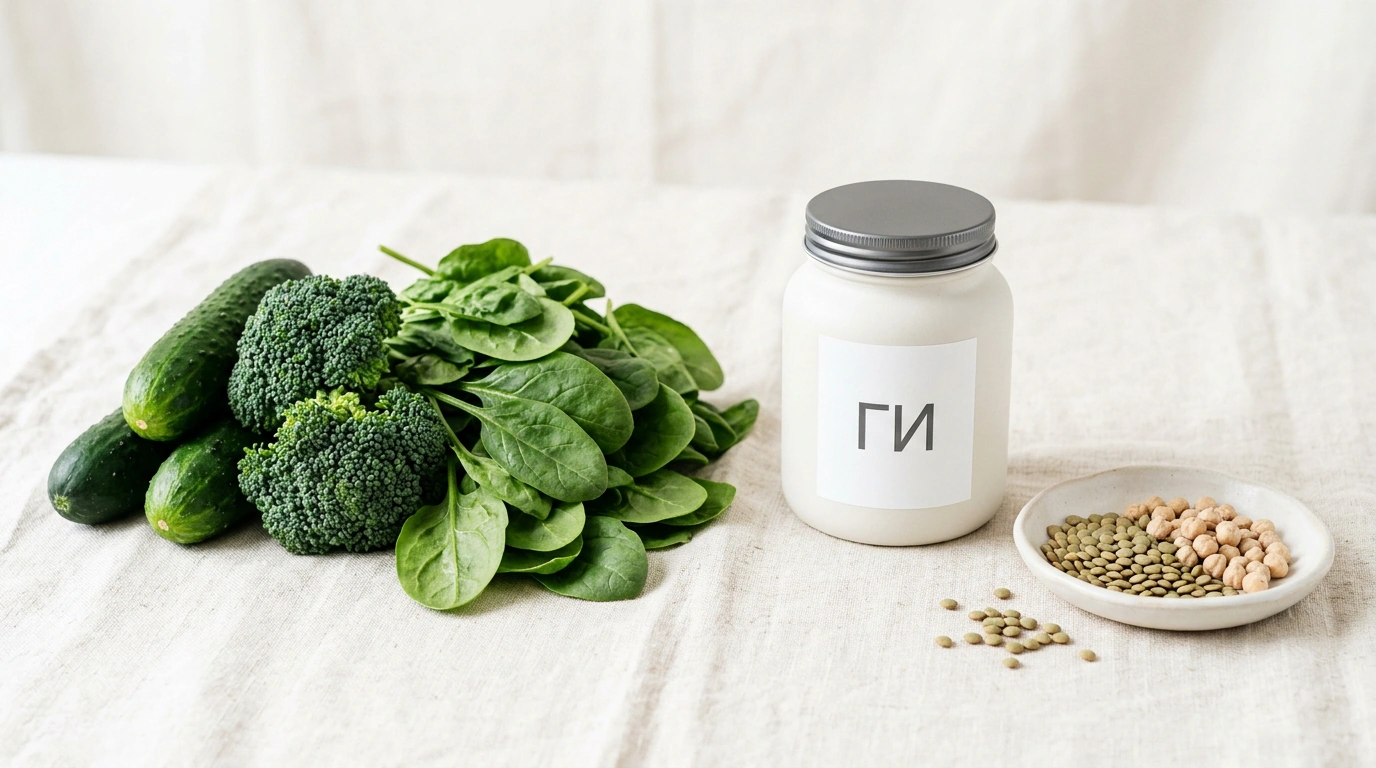
- Swap refined grains and white flour for whole grains (buckwheat, pearl barley, quinoa, brown rice) and legumes;
- Include a serving of fresh or cooked vegetables at every main meal so fiber slows glucose absorption;
- Cut back on liquid sugars (juices, sodas, sweetened coffee), which trigger the sharpest insulin spikes;
- Pair carbohydrates with quality protein and a moderate amount of healthy fats.
This strategy keeps your blood sugar off the roller coaster, calms overactive oil glands, and lets your medication do its job at full strength.