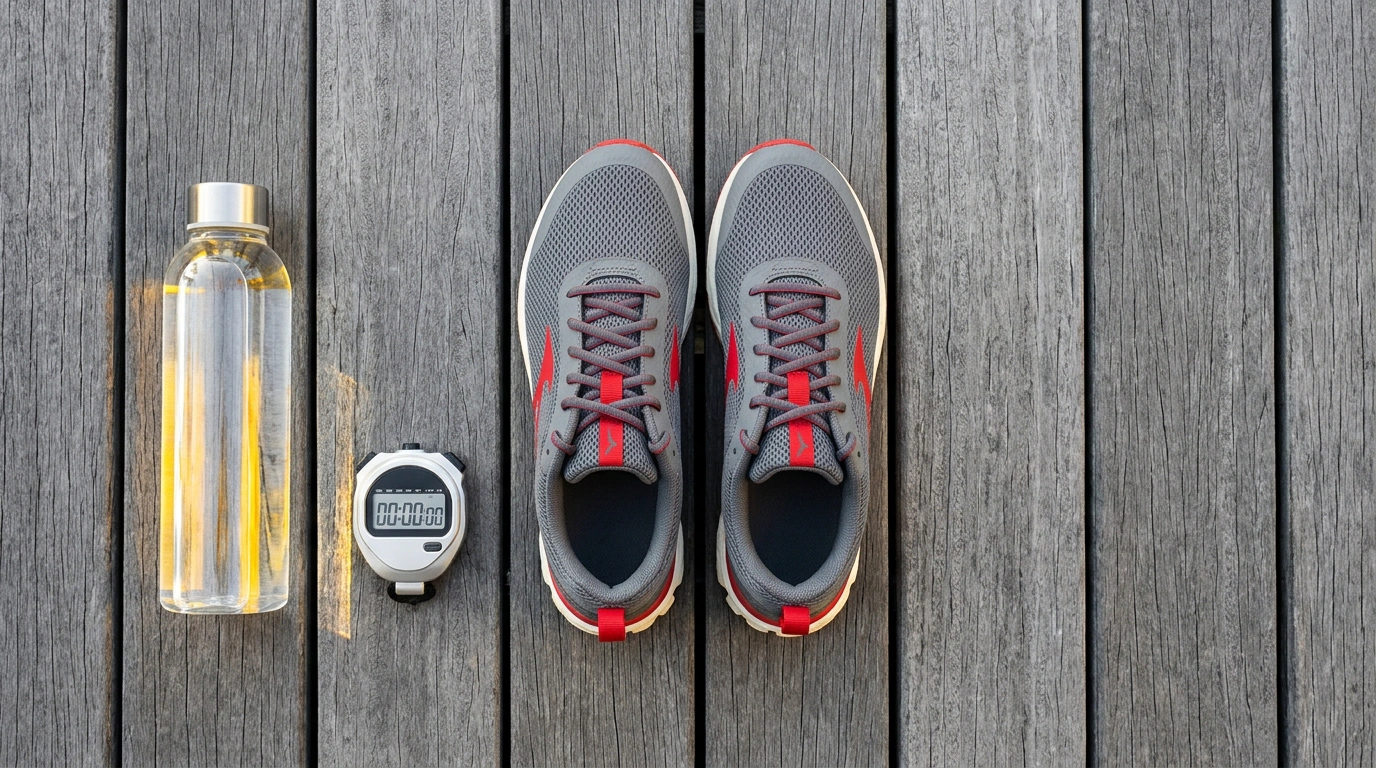
A sunrise jog is cinema's favorite shorthand for healthy living and conquering laziness. It feels like all you need is enough grit to drag yourself out from under a warm blanket at 6 a.m., lace up your sneakers, loop around the park, and the extra pounds will melt right off.
Endocrinologist Maxim Kuznetsov urges taking off the rose-colored glasses and looking at physiology honestly: for someone carrying extra weight, morning running is often one of the least effective—and most injury-prone—ways to lose fat.
The Calorie-Burn Illusion and Rebound Hunger
The first trap is overestimating how much energy a jog actually burns. An average recreational runner moving at a 6:30–7:00 per kilometer pace covers about 5–6 kilometers in 40 minutes.
In net energy terms, that run burns roughly 350–450 kcal. It looks impressive on a fitness watch, yet in real life it equals one sweetened oat-milk latte and a small "fitness cookie."
Worse, intense running triggers a sharp spike in the hunger hormone ghrelin. Coming home feeling virtuous, you sit down to breakfast ravenous. The quiet mindset of "I crushed my workout, I earned a treat" nudges an extra scoop onto your plate, a generous drizzle of condensed milk on your pancakes, or a double sandwich. Daily calories don't land in a deficit—they often overshoot by 200–300 kcal. You run faithfully every morning, and the scale creeps upward.
Joint Math: The Toll on Overloaded Knees
The second issue is sheer mechanical stress on your musculoskeletal system.
Running is a repetitive single-leg hopping motion where every foot strike sends an impact wave equal to 2.5–3 times your body weight through one leg.
- At 65 kg, your joints absorb around 160–190 kg on every step.
- At 90–100 kg—or a BMI above 28–30—unconditioned ligaments, menisci, and knee cartilage take a blow of nearly a third of a ton per stride.
At roughly 160 steps a minute, a 40-minute run means more than 6,000 impacts against asphalt. The outcome is predictable: within two weeks, shin splints flare up, Achilles tendons ache, and your lower back tightens. You're forced to quit training—and frustration often gets soothed with comfort food.
A Smarter Alternative: Burning Fat Without Pain
None of this means running is bad. For people with conditioned joints and a healthy weight, running is a fantastic way to build cardiorespiratory fitness. For fat loss, though, far more joint-friendly strategies work better:
- Brisk incline walking (outdoors or on a treadmill at an 8–12% grade): Energy burn rivals jogging (up to 400 kcal per hour) with zero impact phase, sparing your knees and spine.
- Moderate strength training: Preserves muscle tissue, boosts bone density, and keeps your resting metabolic rate high.
- Plate control: Up to 80% of weight-loss success comes from maintaining a comfortable 300–400 kcal daily deficit without feeling starved.
Move in ways you enjoy, protect your knees, and remember: lasting results come from consistent walks and smart kitchen habits—not forcing yourself through painful dawn heroics.