Think back to how we searched the web just a couple of years ago: type a query, scan ten blue links, open three or four tabs, and hunt down the paragraph you needed. Today, the flow is completely different. Open Google or Bing, and right above the results sits a tidy generated block where an AI has already read the sites for you, cross-checked the facts, and handed you a ready-made answer.
For everyday users, that's a dream—pure time saved. For site owners, writers, and marketers, it's a tectonic shift. Traditional search engine optimization (SEO) is giving way to two new disciplines: Generative Engine Optimization (GEO) and Answer Engine Optimization (AEO).
The Slide in Classic Rankings: What Google's Inline Links Change
According to fresh data from Aleyda Solis's SEOFOMO newsletter, Google has begun rolling out prominent inline links directly inside AI Overviews answers across more than 100 countries. Key claims from the model now come with interactive footnotes and carousels of relevant articles.
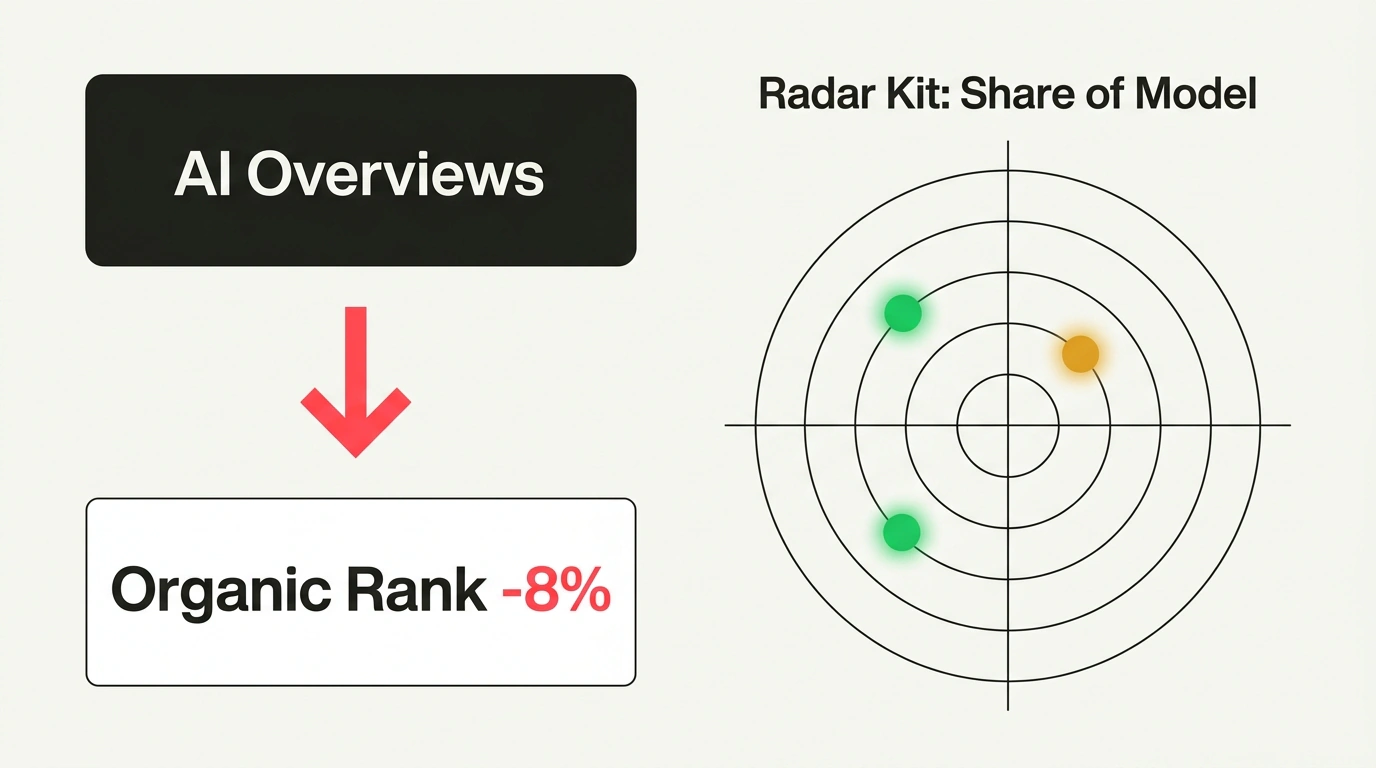
Sounds like great news, right? Yet a study by the platform Nozzle uncovered an alarming number: the AI Overviews block physically pushes down up to 8% of traditional top organic positions. Even if your site has held the #1 spot for a high-volume query for years, a mobile user now won't see it without scrolling a couple of times first.
If the AI doesn't cite your brand inside its answer, that traffic simply evaporates. "Search rank" is yielding to a new currency: Share of Model (citation share). We've already unpacked the basics of this shift in our guides on ranking in AI Overviews and optimizing for AI search.
Bing Topics Portfolio and Reverse Engineering with Radar Kit
Microsoft isn't sitting still either. Bing Webmaster Tools just added a Topics Portfolio report. Instead of counting isolated keywords, it groups queries into semantic clusters (Topics), estimates their volume, and highlights "Opportunity Queries"—topics where Copilot actively generates answers while your site is missing from the mix.
Still, how do you figure out why an AI cites a competitor instead of you? Julian Goldie SEO put a specialized toolkit called Radar Kit through its paces.
The tool audits your presence across six generative engines at once: ChatGPT Search, Perplexity, Google AI Overviews, Microsoft Copilot, Claude, and Gemini.
Here is what the audit algorithms check:
- Crawler accessibility: plenty of sites accidentally block
GPTBot,PerplexityBot, orClaudeBotinrobots.txt, voluntarily erasing themselves from AI search results. - Semantic entity markup: clean Schema.org structured data paired with a machine-readable
llms.txtfile at the site root makes accurate grounding 2–3x more likely. - Density of verifiable facts: AI models strongly prefer citing primary sources packed with concrete numbers, years, price ranges, and original experiments—not fluff and generic filler.
Writing about everything just to hit a word count no longer works—AI boils generic posts down to a single sentence. The only reliable way to stay visible in AI search is to publish unique primary data, real experiments, and crisp facts that models have to cite as a foundation.
