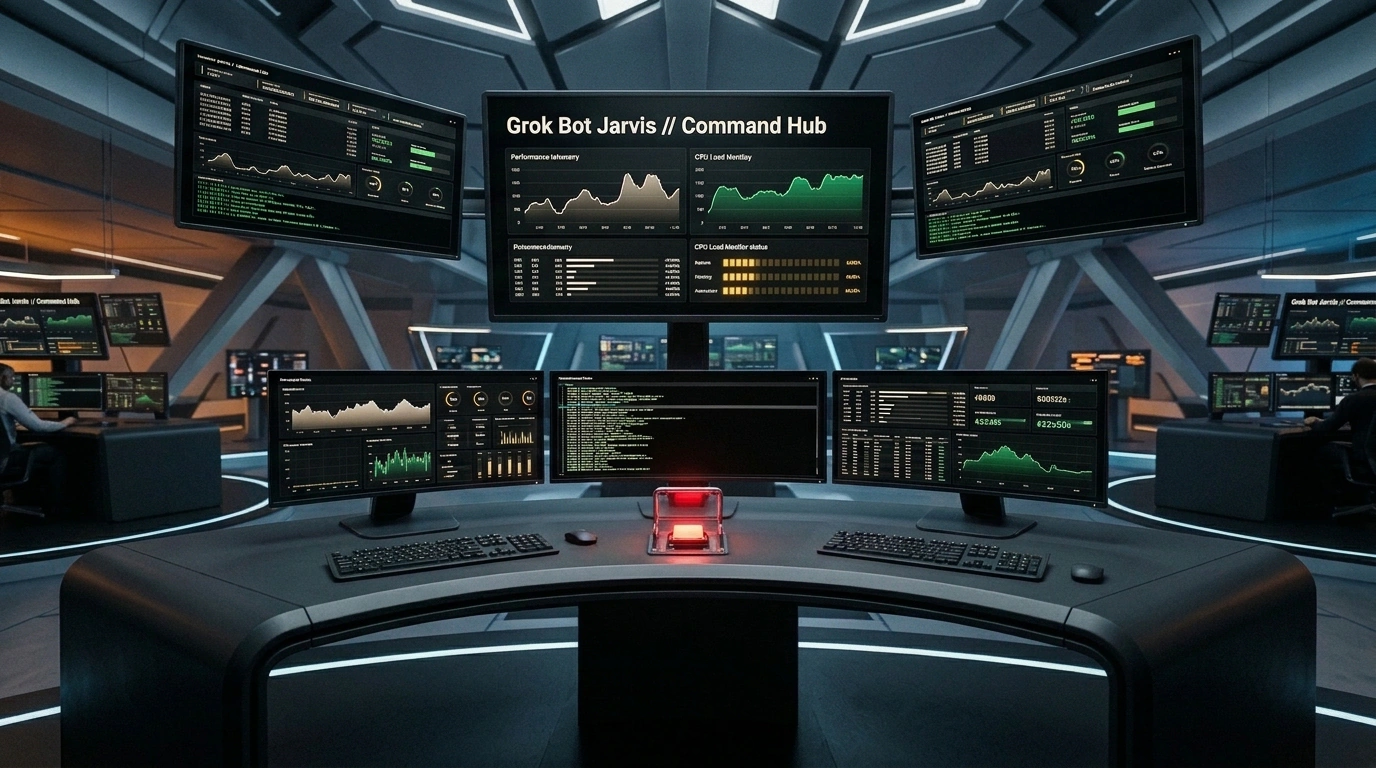
Picture the workday morning of a startup founder or department head: overnight, thirty-one autonomous bots completed hundreds of small tasks—collected leads, scraped competitor pricing, tested ad creatives, updated documentation, and checked server logs. If a human had to manually open thirty-one log tabs just to make sure everything went smoothly, the entire point of automation would be lost.
Autonomy without visibility breeds either paranoia of constant micromanagement or blind recklessness, where you only find out a process broke after the entire ad budget has been drained.
To close this gap, the Jarvis dispatch module was deployed in the Grok Bot environment. It is a top-tier meta-agent that doesn't handle routine content generation or coding, but instead coordinates a swarm of 31 specialized bots, compiling concise briefings and filtering critical decision points.
Aggregation Mechanics: From Log Chaos to a Morning Briefing
Throughout the night, each bot records its actions in a local event log. The swarm is divided into four functional clusters:
- Lead Generation Cluster (9 bots): Monitoring niche platforms, qualifying prospects, scraping contacts, and initial segmentation.
- Content Factory Cluster (8 bots): Generating article drafts, formatting social media posts, and preparing short-video scripts.
- Technical Monitoring Cluster (7 bots): Continuous API health auditing, broken-link checks, and page-load speed monitoring.
- Analytics & Finance Cluster (7 bots): Tracking token spend, monitoring cost-per-click (CPC), and analyzing funnel conversions.
At 08:00 AM, the Jarvis dispatcher polls all 31 nodes, gathers aggregated statistics, and generates a structured morning report. The report's guiding principle is maximum signal with zero fluff. A human should be able to scan the screen in ninety seconds and see:
- Overall system health (System Health).
- How many concrete outputs were produced (leads, drafts, closed tickets).
- Which anomalies the bots resolved on their own.
- Where a decision from an authorized human is required.
Here is the structure of the aggregated JSON briefing Jarvis sends to a private messenger channel:
{
  "briefingDate": "2026-11-03",
  "systemHealth": "HEALTHY",
  "activeBotsCount": 31,
  "nightlyMetrics": {
    "totalTasksCompleted": 412,
    "leadsDiscovered": 87,
    "contentDraftsGenerated": 14,
    "systemAnomaliesResolved": 3
  },
  "escalationsRequiringAction": [
    {
      "incidentId": "ESC-4091",
      "sourceAgent": "lead-acquisition-bot-04",
      "severity": "HIGH",
      "title": "CPC threshold exceeded in Search-Direct campaign",
      "details": "CPC jumped 38% due to a new competitor entering the auction. Bot temporarily lowered daily cap from $150 to $50.",
      "recommendedAction": "Approve budget reallocation to Content-Retargeting campaign",
      "approvalOptions": ["APPROVE_BUDGET_SHIFT", "KEEP_ORIGINAL_LIMIT", "PAUSE_CAMPAIGN"]
    }
  ]
}
Escalation Rules and Interactive Control Panel
The hardest part of building a meta-assistant is teaching it not to ping a human over trivialities. If a bot sends a notification for every transient network hiccup or parser typo, the operator will simply mute the chat.
To prevent this, Jarvis implements an Escalation Rules matrix. Each rule defines strict conditions under which a bot must halt autonomous execution and request operator confirmation:
{
  "ruleId": "financial-guardrail-outreach",
  "agentType": "outreach_commercial",
  "conditions": [
    { "field": "discount_offered_percent", "operator": ">", "threshold": 15 },
    { "field": "contract_duration_months", "operator": "<", "threshold": 6 }
  ],
  "action": "HALT_AND_ESCALATE_TO_JARVIS",
  "notificationChannel": "telegram_executive_channel"
}
Notice the ergonomics: an incident alert arrives not as a vague complaint that "something broke," but as a ready-made menu of three interactive buttons right inside the messenger. The operator taps one button on a smartphone screen—and the bot immediately resumes along the chosen path. Earlier, we broke down the practice of running a Superbots swarm in Grok Bot, and Jarvis wraps that structure into a dependable management system.
Architectural Trade-Offs and Centralization Risks
Despite the appeal of a "single control panel" model, it is important to remember the hidden risks:
- Single Point of Failure: If Jarvis's context window overflows or the model hits an inference outage, the entire coordination layer freezes. That is why the architecture includes a fallback mode linking bots directly to a Grafana dashboard.
- Context Distortion: When summarizing child agents' actions, the dispatcher compresses information. Occasionally an important technical detail may look minor to the model and get left out of the morning report. To counter this, Jarvis attaches a direct link to the raw session log in every incident block.
- Inference Cost Control: The dispatcher itself spends tokens aggregating hundreds of events. Using the compact Grok Flash model with context caching keeps the daily running cost of the meta-agent within a dollar and a half.
Jarvis demonstrates a mature engineering approach: artificial intelligence handles the grunt analytics and coordination, while always leaving final strategic forks to a human.
