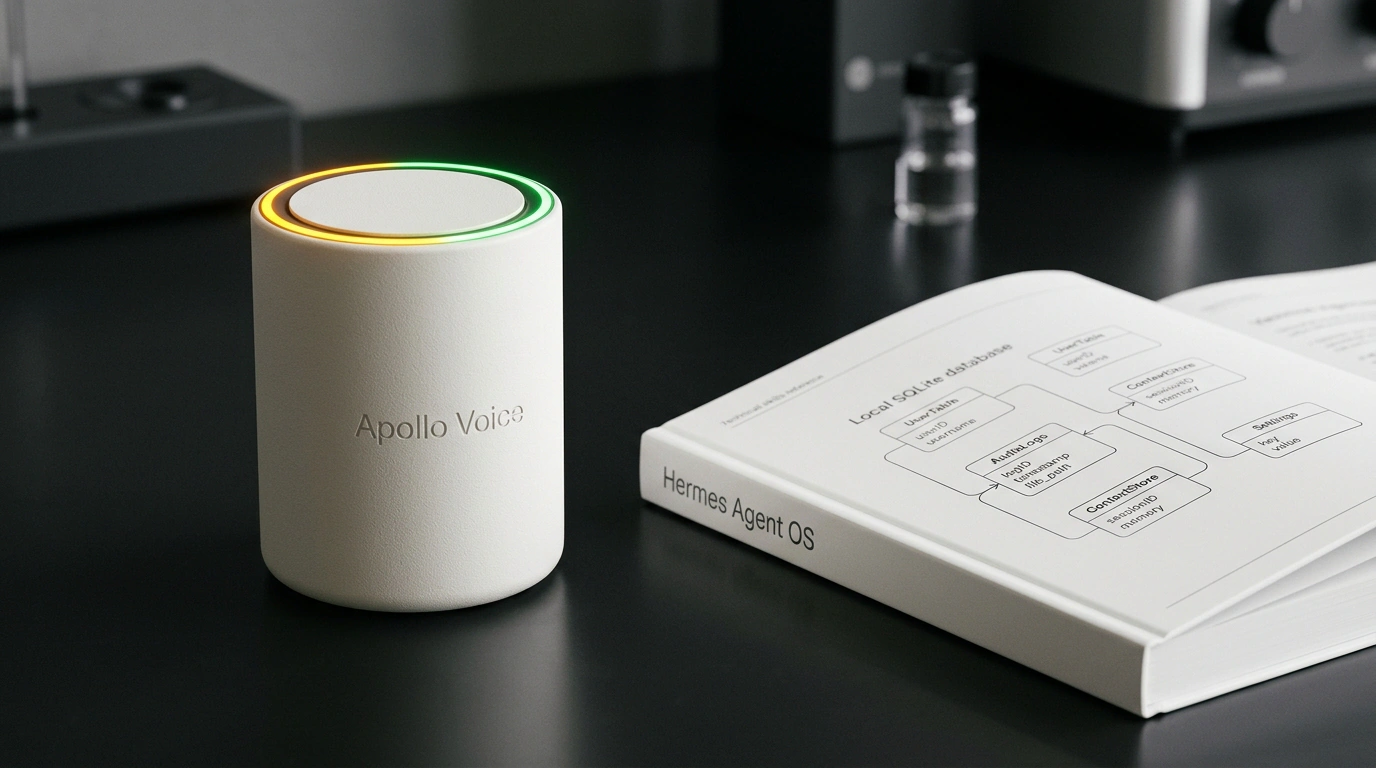
The open-source Hermes Agent framework from the research lab Nous Research has long been a benchmark for local language model enthusiasts who value strict instruction following and external function calling. In its latest releases, however, the project has made a qualitative leap: we are no longer looking at a simple wrapper around open weights, but a full-fledged operating environment for running specialized AI assistants in parallel. We have been closely following how the evolution of the Hermes Agent OS platform unfolded, and today we will break down four foundational updates turning Hermes into a complete working tool.
A Pack of 20 Specialized Skills for Applied Tasks
A key barrier to adopting AI agents has always been the need to write and debug system prompts for every routine operation. In the Skills Pack v2.0 update, the Hermes developers released a bundle of 20 ready-to-use applied skills covering web design, technical auditing, and content creation.
Each skill is packaged as a strict manifest with typed input parameters. For example, the autonomous SEO auditor skill is registered with the following declarative block:
{
  "skillName": "hermes-seo-auditor",
  "version": "1.0.0",
  "description": "Autonomous page semantics analysis and Schema.org markup audit",
  "parameters": {
    "type": "object",
    "properties": {
      "targetUrl": { "type": "string", "format": "uri" },
      "focusKeywords": { "type": "array", "items": { "type": "string" } }
    },
    "required": ["targetUrl"]
  }
}
Thanks to its modular structure, you can plug in only the modules needed for the current task without clogging the context window with unnecessary instructions.
Voice Agent Hermes Apollo with Instant Real-Time Response
Voice interfaces in most modern systems suffer from agonizing latency: the audio stream is transcribed to text via Whisper, passed to an LLM, a text reply is generated, and only then is it voiced via TTS. Total delay often exceeds 2–3 seconds, completely killing the feel of a live conversation.
The Hermes Apollo module implements an end-to-end duplex protocol with response latency under 300 milliseconds. The agent listens continuously, handles natural pauses properly, and goes silent immediately if you interrupt it mid-sentence. This elevates voice control of local scripts and servers to an entirely new level of comfort.
Integrating the Open Step 5 Model into the Local Agent Perimeter
For solving complex algorithmic problems and designing systems, the weights of the open Step 5 model were integrated into the Hermes perimeter. Unlike general-purpose chatbots, Step 5 is specifically optimized for deep step-by-step reasoning (Chain of Thought) and generating architectural specifications.
The model is distributed with open weights and optimized to run on consumer GPUs with 16–24 GB of VRAM under 4-bit quantization. In tests for writing backend services and hunting logical vulnerabilities, pairing Hermes with Step 5 delivers results closely approaching flagship commercial counterparts while guaranteeing 100% data privacy inside the local perimeter.
Cross-Agent Long-Term Memory Second Brain for Continuous Sessions
The most painful limitation of autonomous agents is "amnesia" between session restarts. The moment a conversation closes, the agent forgets the project's tech stack, folder structure, and the developer's personal preferences.
The Second Brain architecture solves this problem with a hybrid store built on SQLite and vector embeddings. Whenever any agent learns a new fact about the project, an entry is recorded in a shared memory table:
-- Initialize cross-agent memory schema
CREATE TABLE IF NOT EXISTS agent_memory (
    id TEXT PRIMARY KEY,
    agent_id TEXT NOT NULL,
    session_id TEXT NOT NULL,
    entity_key TEXT NOT NULL,
    fact_content TEXT NOT NULL,
    importance_score REAL DEFAULT 1.0,
    embedding BLOB,
    created_at TIMESTAMP DEFAULT CURRENT_TIMESTAMP
);
Any other bot in the system can run a semantic search against this database and immediately pull in context from previous work sessions, ensuring genuine continuity in development.
