If you've ever tried running local AI agents on your own machine, you know the "digital zoo" problem. One worker lives in the terminal, another sits inside your code editor, and a third runs as a web script. The worst part is how disconnected they are. Each one keeps its own isolated memory that vanishes the moment a session restarts, and triggering a job away from home means wrestling with clunky remote desktops.
Nous Research has been tackling this head-on with its open ecosystem, Hermes Agent OS. We already followed the early rollout of Hermes Agent OS and Mission Control, and this latest release packs five major infrastructure upgrades that turn a pile of scripts into a cohesive operating system.
1. Obsidian Sync MCP: The "One Brain" Architecture
The headline upgrade ditches proprietary vector databases in favor of a local Obsidian Vault connected via the Model Context Protocol (MCP).
Before, every new agent had to be re-briefed on how your project worked. Now any connected agent—whether Hermes, Claude Code, or a lightweight background worker—reads and updates a single Markdown knowledge base. You keep granular permissions too: you can grant an agent access strictly to SOPs and client notes while locking out personal journals. Your data never leaves for a closed cloud, staying on local disk with zero vendor lock-in.
2. Hermes Apollo Voice Agent
Typing at a keyboard works fine at your desk, but on the road or in the background, text slows you down. The Apollo add-on layers a continuous voice interface right on top of Mission Control.
It runs through a local ChatGPT CLI bridge, so you don't pay third-party voice APIs by the minute. You can dictate an idea mid-walk or ask the agent to read out your morning task status while you brew coffee.
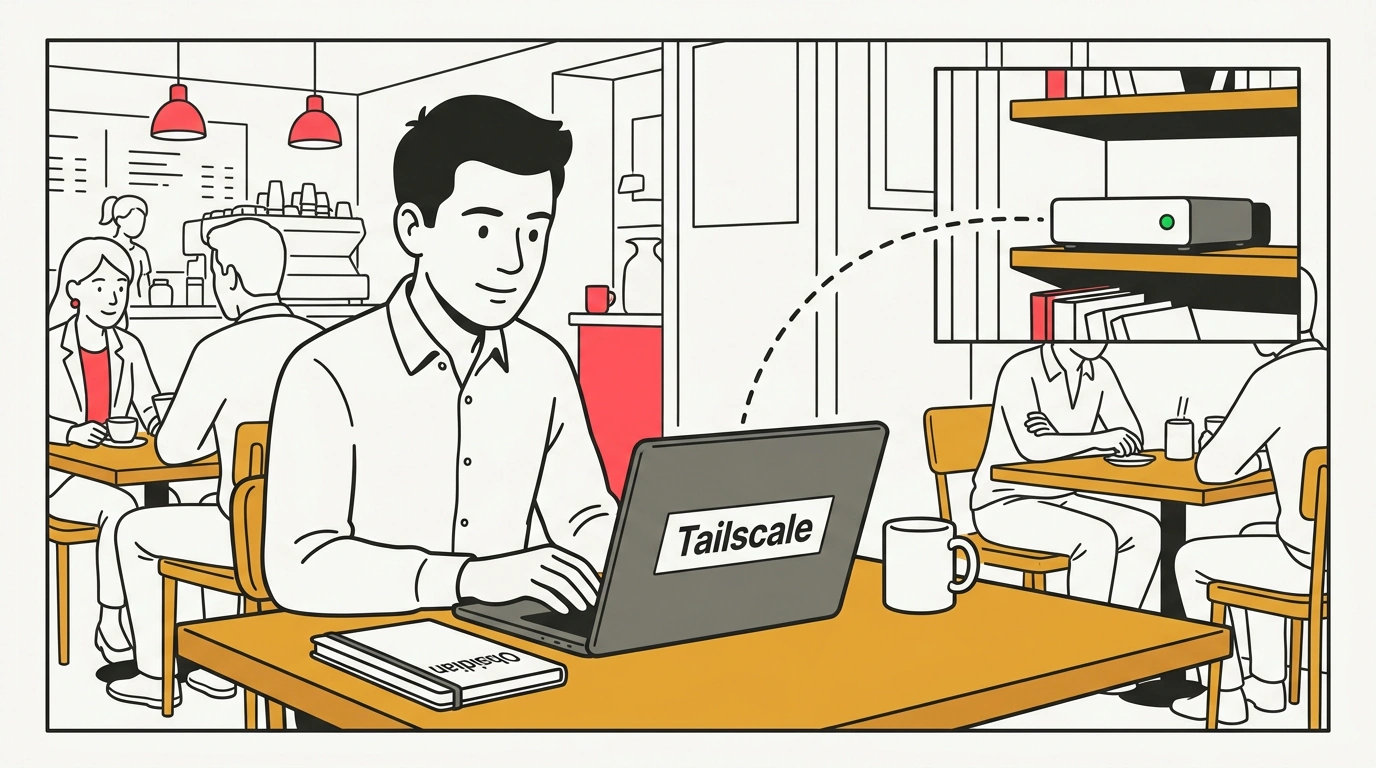
3. Remote Access via Tailscale in 10 Minutes
Reaching a home agent server used to mean paying for a static public IP, forwarding ports on your router, and exposing your home network to the open internet.
Hermes Agent OS now integrates natively with Tailscale, a WireGuard-based encrypted mesh network. Setup takes minutes: turn on Tailscale on your mini-PC or laptop, and you can open the Mission Control web UI right from your phone's browser over an encrypted tunnel. No open ports, single-account authentication, and if you ever lose your phone, you revoke access with one click in the admin panel.
4. Disposable Pop-Up Agents
Keeping heavy persistent agents alive for tiny chores—scraping a supplier price list, checking broken links in an article, or pulling a quick mention digest—makes no sense.
Hermes introduces Pop-Up workers: the system spins up a lightweight isolated process for a single prompt, grabs the data, writes a structured report to Obsidian, and tears down its container immediately so it doesn't hog RAM.
5. Specialized GEO Agents
The fifth upgrade targets modern search habits. Built-in GEO (Generative Engine Optimization) agents audit your drafts against how AI search engines—Google AI Overviews, SearchGPT, and Perplexity—structure their answers, helping you format content so generative engines cite it as a primary source.
All connected services and vaults (including the Obsidian MCP server) are declared in a single ~/.hermes/config.yaml file under the mcp_servers block. That lets you migrate your entire workspace and permissions to a home server or a new laptop with one script.
Bottom line: Nous Research's open stack proves personal AI infrastructure can be fast, convenient, and completely under your own roof.