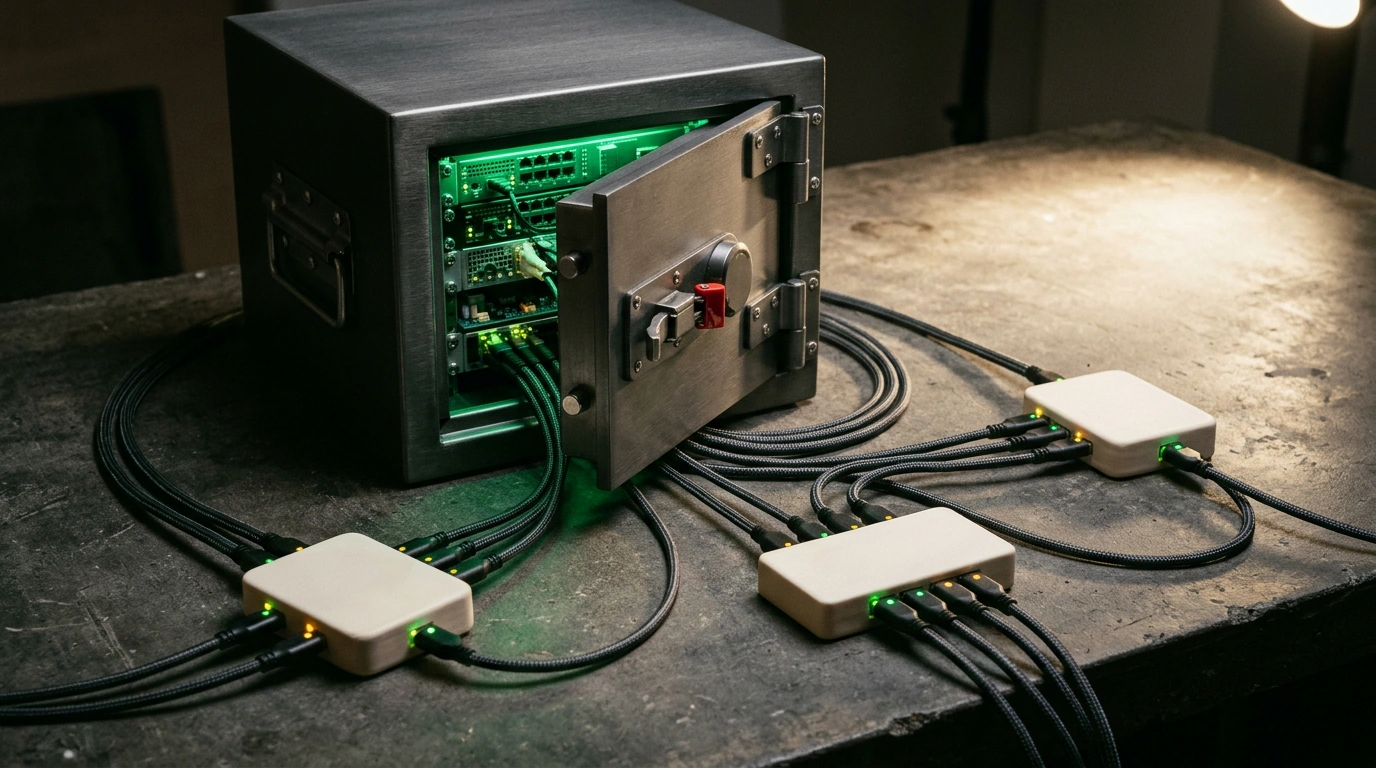
When it comes to autonomous AI agents capable of calling external APIs on their own, querying databases, and executing system commands, developers have grown used to looking toward closed cloud giants. We pay for OpenAI Operator subscriptions or depend on Anthropic's policies, accepting that our projects' confidential code and commercial customer databases fly off to someone else's remote servers.
Yet research lab Nous Research is methodically tearing down that proprietary fence. Their flagship project Hermes Agent has received a major v0.2 update codenamed Threshold Release. It's a qualitative leap: the open-source agent now speaks the official Model Context Protocol (MCP) standard, gains full-fledged long-term memory, and deploys effortlessly on your own VPS or home server with control straight from Telegram.
I tested this release in real combat to check whether an open-source stack can genuinely replace proprietary cloud solutions in day-to-day engineering practice.
Threshold Release: A New Milestone for Open Agents
The biggest flaw of previous-generation open agent systems was the unreliability of Tool Calling. A model could hold a charming conversation, yet the moment you asked it to invoke a custom script or parse JSON against a schema, open weights would start mixing up arguments, dropping required parameters, and breaking syntax.
In Threshold v0.2, the Nous Research team achieved a qualitative breakthrough thanks to three key architectural innovations:
- Specialized Hermes 3 fine-tuning dataset: model weights are optimized for strict JSON-RPC function-call generation without extraneous chatter;
- Reliable ReAct (Reasoning + Acting) loop: the agent first formulates a hypothesis about which tool is needed, makes the call, receives a structured response, and analyzes it before generating the next step;
- Open MCP protocol support: ditching homemade integration hacks in favor of an industry standard.
As a result, the open agent's reliability on multi-step workflows has pulled right up alongside commercial cloud models, as demonstrated in the detailed breakdown on infrastructure and self-hosting Hermes Agent on your own server.
The MCP Protocol as a Universal Bridge to the Outside World
The core engineering value of the v0.2 release is native support for Model Context Protocol. MCP turns the agent into a modular building kit. You no longer need to hand-craft prompts for working with a Postgres database or reading local files.
You simply plug in ready-made MCP servers, and the agent automatically gains access to their tools through a standardized interface. Here is an example config.json file for connecting a local filesystem server and system terminal:
{
  "agent_name": "Hermes-Local-Assistant",
  "model": "nousresearch/hermes-3-llama-3.1-8b",
  "temperature": 0.2,
  "mcp_servers": {
    "filesystem": {
      "command": "npx",
      "args": ["-y", "@modelcontextprotocol/server-filesystem", "/home/user/workspace"]
    },
    "git": {
      "command": "uvx",
      "args": ["mcp-server-git", "--repository", "/home/user/workspace/project"]
    }
  }
}
At startup, the agent queries the registered servers itself, discovers their method schemas (schema discovery), and seamlessly uses them during reasoning.
This modular approach completely changes the economics of building personal systems. Whereas creating a specialized agent used to require writing hundreds of lines of glue code for every new API, today adding two lines to the MCP config file is enough. The agent picks up the new capabilities on the very next restart.
Long-Term Memory and Local Installation
Another plague of simple agents is losing context between sessions. You teach a bot your repository structure, close the terminal window, and the next day you're starting all over from scratch.
Hermes Agent v0.2 implements hybrid long-term memory:
- Short-term context lives in a local SQLite database, recording the history of current steps and intermediate results;
- Long-term knowledge is indexed via a lightweight vector engine. If a month ago you asked the agent to configure Nginx for a specific domain, it finds that record by semantic similarity and applies the proven template.
Deploying the agent on your own Linux server takes literally three commands:
# Clone and install Hermes Agent v0.2 dependencies
git clone https://github.com/NousResearch/Hermes-Agent.git
cd Hermes-Agent
pip install -e .

# Launch the agent integrated with the local terminal
hermes-agent start --config config.json --interactive
Telegram Integration and Mobile Control
The cherry on top of Threshold Release is the built-in Telegram connector. You can bind the bot to your private account and talk to your home server right from your smartphone.
Picture the scenario: you're stuck in traffic and send the bot a voice message: "Run the integration tests in the project repo, collect execution-time stats, and send me a PDF chart." The agent on your server transcribes the audio, connects to the repo directory via MCP, runs the tests, generates the report, and sends the finished file straight back to the chat.
And not a single byte of your source code ever leaves your own server. That is true, sovereign artificial intelligence—available to every developer today.