How a Dry News Hook Stopped Waiting on the Algorithm
In October 2026, Wildberries (part of the RWB group) filed to trademark Vishi, a pink bear mascot for its 'My WB' loyalty program. For the brand, the news mattered: introduce people to the character and explain its role. For an average reader, it was routine corporate news — the kind of item few people open on purpose and that fades from feeds in two hours.
Gazeta.Ru (Rambler&Co) published the piece on its website and on Dzen. Normally that is where things stall: the newsroom crosses its fingers and hopes the recommendation feed picks it up. Everyone in the market knows this pain. According to a survey of Russian companies in an AdIndex case study, 80% of brands see potential in native integrations, yet 55% complain that standard channels are overheated.
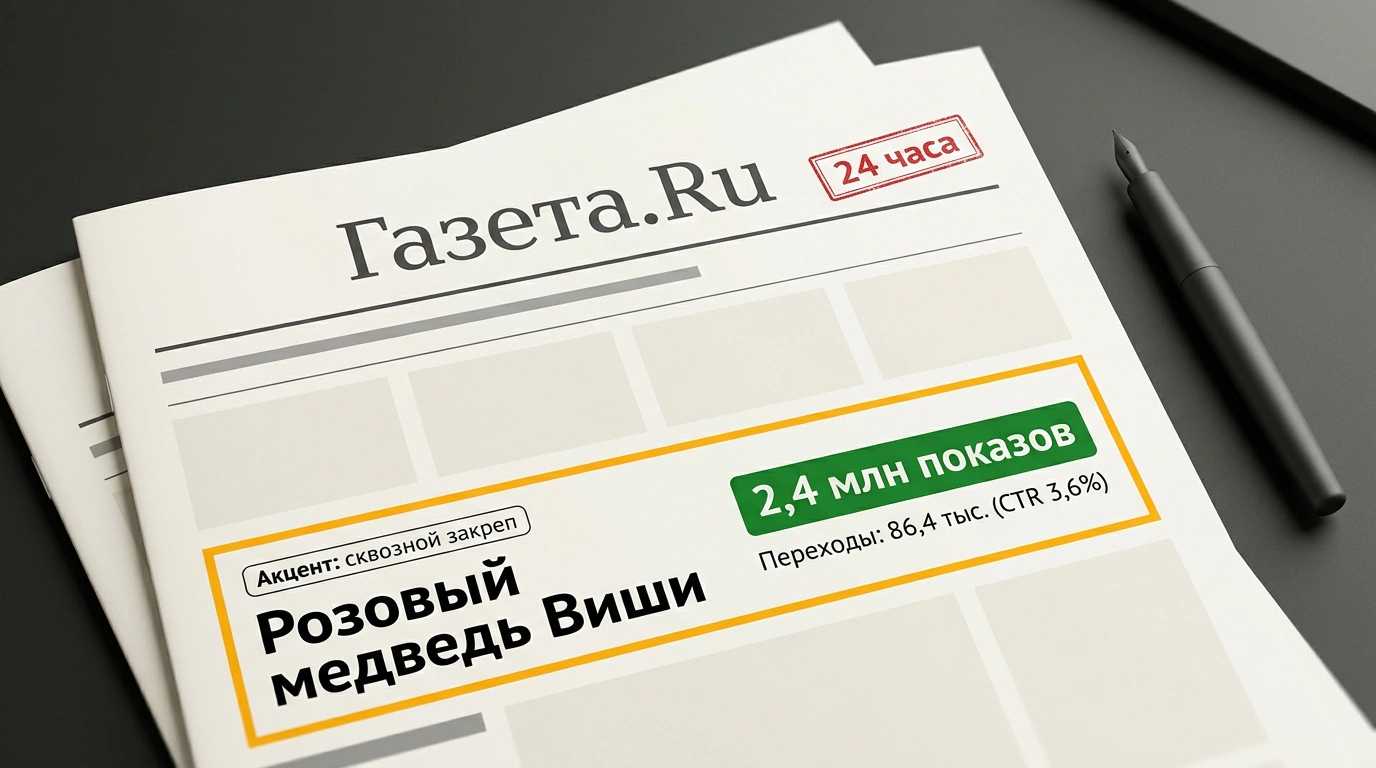
This time, Gazeta.Ru turned on a new Dzen Studio feature called 'Accent' for 24 hours. It works as a site-wide pin: the newsroom picks one partner article, and Dzen automatically places it right below every text post from that outlet. The DNative channel summed it up neatly: you open a Gazeta.Ru story about football, finish reading, and right underneath sits the card about the pink bear.
That happens under every article the outlet publishes. Readers do not need to search for RWB news — the newsroom's own daily traffic brings them there. Better yet, the native placement matches the outlet's editorial look, so it does not stick out like an intrusive banner.
What 24 Hours of Site-Wide Pinning Delivered for Gazeta.Ru
The test ran for exactly 24 hours, and the numbers show what happens when a partner article stops fighting for attention alone.
| Gazeta.Ru & RWB Case Metric | 24-Hour Result |
|---|---|
| Gazeta.Ru audience on Dzen (does not overlap with website) | 11 million people |
| Pinned article impressions | 2.4 million |
| Clicks to the article | 86,400 |
Click-through rate (CTR — share of impressions that clicked) | 3.6% |
For a dry trademark filing, that response was strong. Even better, the surge of clicks triggered organic momentum: the article climbed onto Dzen's main page right below the top national news. The brand also reached the segment of Gazeta.Ru readers who live inside Dzen and never visit the main website.
One card beneath a football story points to a bigger shift. With standard native content, you buy a lottery ticket — maybe the algorithm likes it, maybe it flops. A site-wide pin changes the math. Artem Muzlaev, head of corporate clients at Dzen, put it directly: reach here depends on the newsroom's real platform traffic, not algorithmic luck.
For publishers, the upside is just as clear. Gazeta.Ru CEO and Rambler&Co media executive director Andrey Tsyper noted that the tool turns other articles into entry points for partner content and lets outlets monetize existing readers without cluttering the site with new ad blocks.
Who Can Launch 'Accent' and Where Its Limits Lie
Brands cannot turn on 'Accent' from a self-serve ad dashboard. The tool lives inside Dzen Studio and is open only to media outlets in the seamless consumption program — where RSS news stories open in full inside the outlet's Dzen channel without sending readers to an external site. Marketing and PR teams need to negotiate directly with those newsrooms.
- The outlet's daily Dzen traffic. 'Accent' does not conjure readers out of thin air; it redirects people already reading the outlet's news on the platform.
- Headline packaging. Pinning guarantees impressions under other stories, yet people still will not click a dull press release.
- News shelf life. The format works best for 'cold' corporate announcements and time-sensitive launches that need fast 24-hour reach.
Pricing was not disclosed in the case study — each publisher sets terms individually, so you can only compare cost per click against standard paid social after requesting a quote directly from the media outlet.