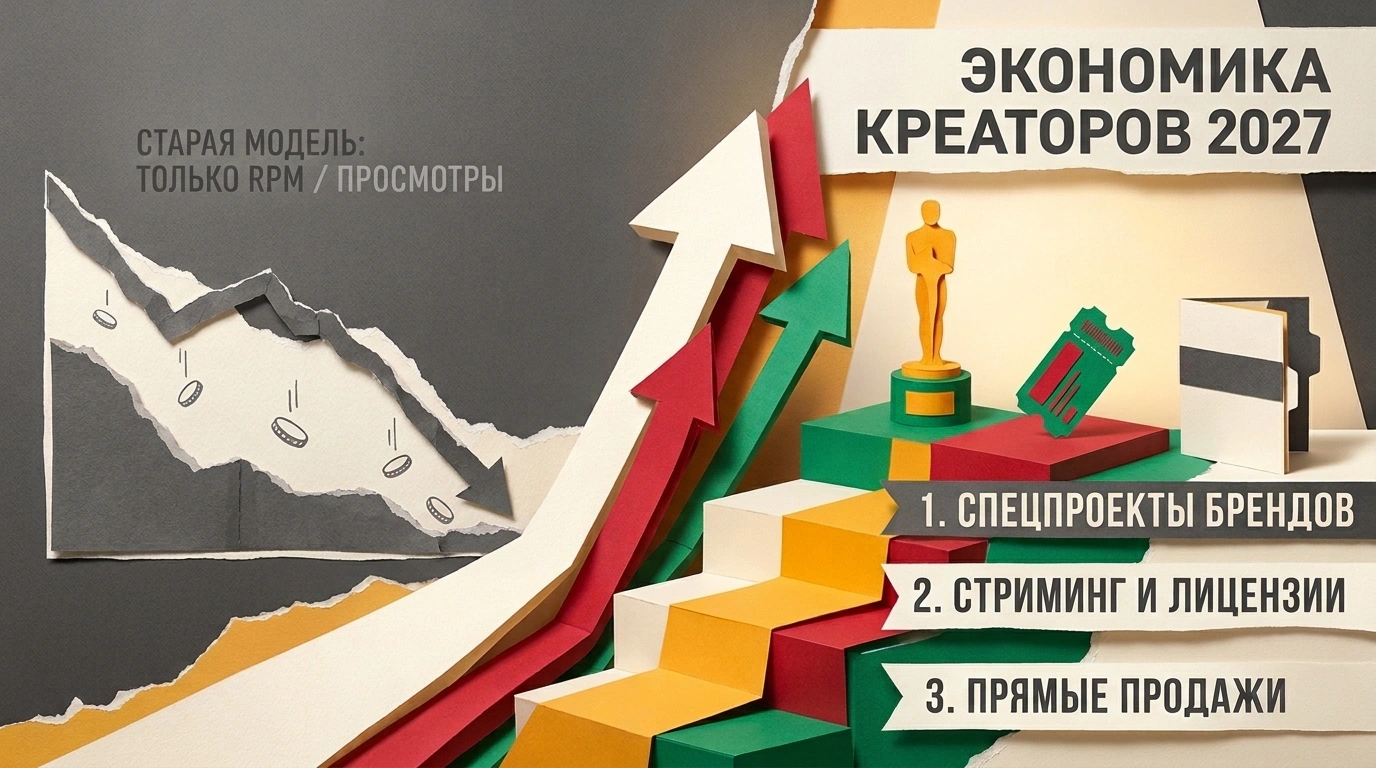
"These creators' influence now reaches far beyond their platforms," said Clio Awards CEO Nicole Purcell, summing up the shift in video. If you still judge YouTube and creators solely by how much trickles in per thousand ad views, your mental model is outdated. Money is moving out of basic impression buys and overpriced TV rights into branded specials, streaming licenses, and direct sales to fans. Here are four fresh market signals heading into 2027.
YouTube Sat Out the 2030 and 2034 World Cup Rights Race — Leaving Netflix as a Favorite
At the 2026 World Cup — won by Spain on a Ferran Torres goal — YouTube served as the tournament's Preferred Platform (an official partner with rights to companion and creator content without buying full TV broadcast rights). YouTube brought creators pitchside, produced dozens of videos, and drew nearly 2 billion unique viewers, including 550 million watching on TVs and boosting Nielsen ratings.
You might expect YouTube to bid next for US TV rights to the 2030 and 2034 World Cups. Instead, it walked away. According to The Athletic reporter Andrew Marchand, YouTube didn't submit a bid. Apple, ESPN, NBC, and Skydance also stepped aside, leaving CBS, TNT Sports, Paramount+, HBO Max, and Telemundo out of the race.
Two main contenders remain: Fox and Netflix. Fox paid $485 million for 2026 US rights and wants to keep the tournament. Netflix already holds rights to the 2027 and 2031 Women's World Cups and sits on spare cash for live sports after its Warner Bros. Discovery deal fell through. Meanwhile, YouTube proved it can capture billion-scale soccer reach through creators without writing a half-billion-dollar check for live TV rights.
First Clio Creator Awards Cemented Creator Brand Specials
The Clio advertising awards have run since 1959. In November 2026, Los Angeles's Dolby Theatre hosted the first standalone Clio Creator Awards, emceed by Terry Crews, with YouTube as title sponsor and agency Influential (bought by Publicis Groupe in 2024 for $500 million) as partner.
Grand Clio winners show what brands actually pay for today. IShowSpeed and Expedia won Integrated Campaign for Going Places with IShowSpeed travel streams. Michelle Khare's Mission: Impossible-style stunt with Adobe and Red Bull took Collaboration. MrBeast and Disney won PR for their Stand Up to Cancer fundraiser around I Granted 100 Kids Their Biggest Wish.
Other categories showed equal range: law firm Morgan & Morgan won Scripted Short Form for Spaceskits' The Injury Club, while Blenders Eyewear won for Jordan is the CCO with Jordan Howlett. Kylie Kelce won Podcast (Not Gonna Lie), channel fern won Video for its 35-minute documentary The Taliban Highway, and Dhar Mann received the Impact Award. Thirty-second promo-code reads are fading; holding companies now fund creator work like full-scale production.
Streamers Doubled Creator Show Output as TikTok Rules Music Charts
Internet creator shows are migrating rapidly to major streaming platforms. According to Ampere Analysis, US streamers released over 3,700 hours of first-run creator content in Q3 2026 — up from 1,934 hours in Q2 and 927 hours a year earlier.
Free ad-supported service Tubi (AVOD) drove more than three-quarters of that volume, while paid subscription platforms (SVOD) also jumped 75% quarter-over-quarter, led by Amazon Prime Video with 230+ hours. Reality and lifestyle account for 65% of hours, 37% of episodes run under 20 minutes, and 94% are produced by independent studios — meaning creators license shows while keeping their IP.
In music, the shift is even sharper. According to Luminate research for TikTok's 2026 Music Impact Report, 94% of songs on the Billboard Global 200 first broke on TikTok (up from 84% in 2024) and stay on the chart four times longer — roughly 8 weeks versus 2. In the US, 45% of users discover new music in the app.
M&A money is following that attention. John Lee Dumas sold his Entrepreneurs On Fire podcast company to PR agency Pathos Communications for $3 million cash plus up to $6 million in performance payments while signing a three-year host deal. Meanwhile, private equity firm Falfurrias Management Partners took a majority stake in B2B influencer agency Freeman & Forrest, with co-founders Emily Freeman and Forrest Brazill staying on as CEO and president.
Why 120 Million Views in India Can't Replace Direct Audience Sales
The final signal challenges a major myth about ad reach. In India, YouTube RPM (a creator's actual earnings per thousand views after YouTube's cut) remains very low: even 120 million monthly views bring in roughly $150,000 at most, whereas the same traffic in the US pays many times more.
Glance at that number and it is tempting to write the market off. That would be a mistake.
India is nowhere near Coldplay's top market by streaming RPM, yet the band played the biggest stadium shows of its career there. On January 25 and 26, 2025, at Narendra Modi Stadium in Ahmedabad, fans bought roughly 223,570 tickets across two nights (111,581 and 111,989). BookMyShow Live and EY-Parthenon estimated the two concerts added around $75 million to the local economy.
Low RPM only measures the price of bulk ad impressions — not empty wallets. When you or your brand build real trust with an audience, people pay directly for tickets, products, subscriptions, and live experiences, bypassing ad-exchange ceilings altogether.