Issue October 24Daily digest · 12 items
In this issueReviewed 68 sources, gathered 12 items
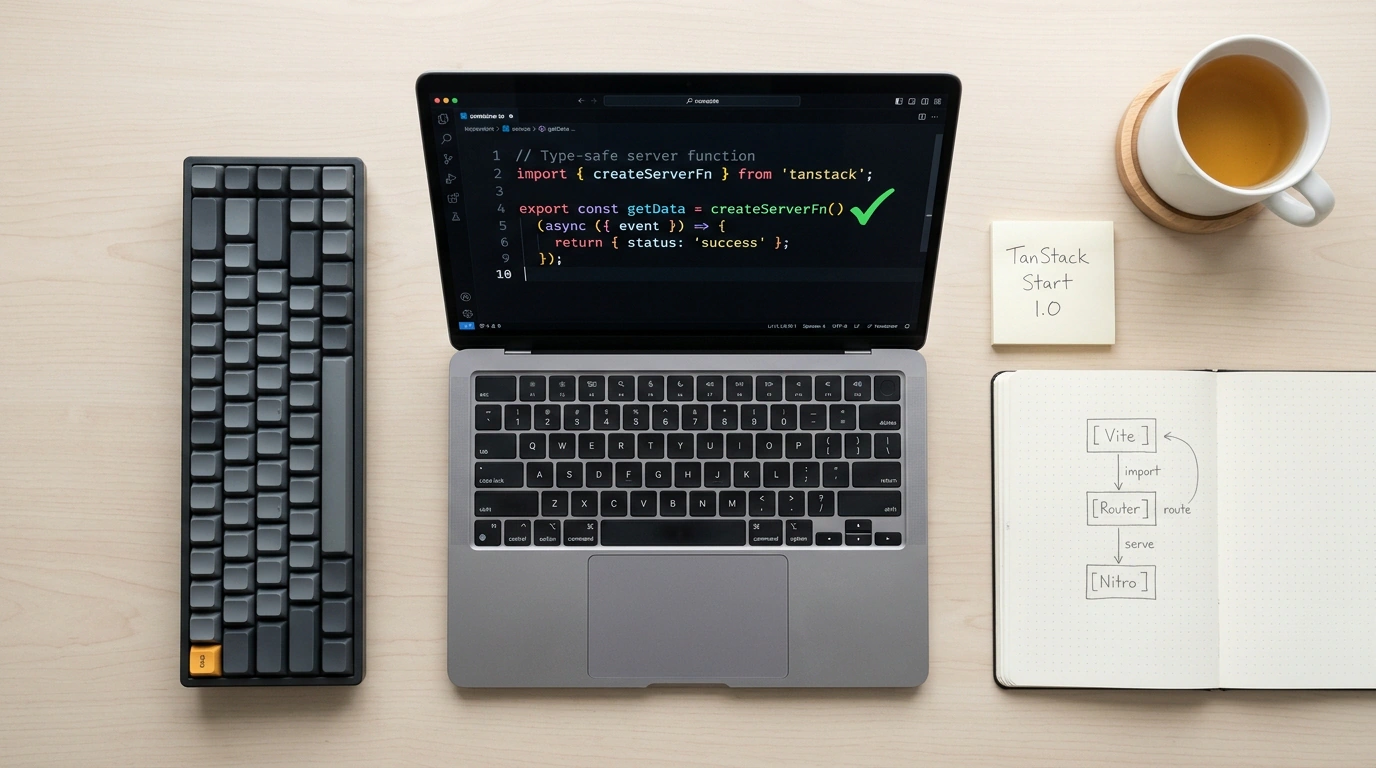
Web developer's desk with a mechanical keyboard, architecture sketchbook, and TanStack Start 1.0 code on screen.
LongreadReactTanStackJavaScriptDevelopment

TanStack Start 1.0: A Stable Release Without RSC Lock-In

When a simple Next.js component crashes over serialization limits and the Network tab fills with unreadable stream chunks, you start wondering if React has to be this complicated. Tanner Linsley and the TanStack team chose another route: after a year of public testing, TanStack Start 1.0 is out, dropping mandatory React Server Components entirely—the authors even rewrote their own portal without RSC.

Instead of hidden magic, you get strict file-based routing, the createServerFn primitive, and a Vite + Nitro build pipeline that runs on your own VPS, Node.js, or Cloudflare Workers without host lock-in. In benchmarks, it handles 2.9–8.6x more dynamic requests per second than Next.js 16.4, bringing predictability and control back to React development.


👍 0
React StatusBytesTanStack Blog - TanStack Start 1.0
October 24
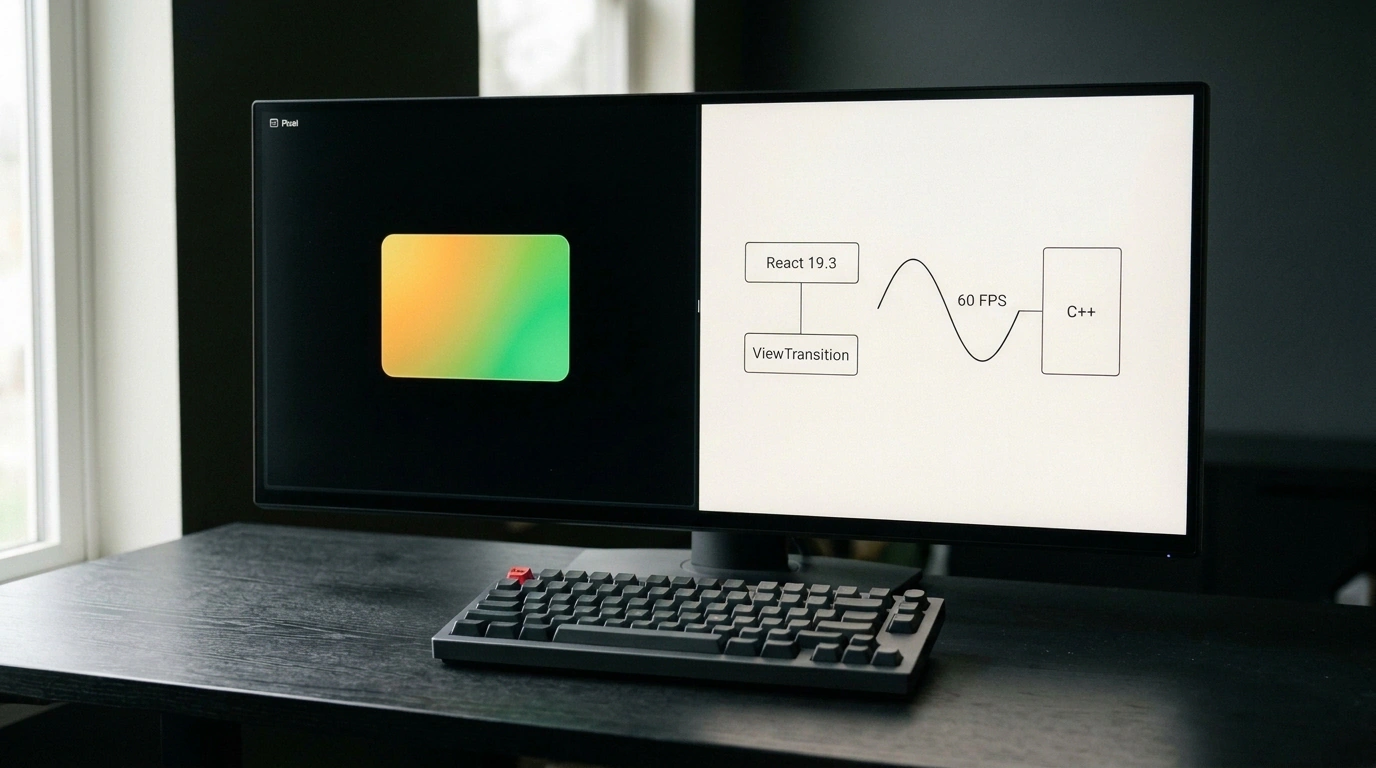
Engineer's workstation showing the Pixel terminal UI, a View Transitions animation curve, and Tamagui's C++ module.
Thematic roundup4 sectionsReactFrontendJavaScriptOpen Source

React Tooling Roundup: Native View Transitions, Terminal UI, and C++ on the Web

The React ecosystem has transformed over the past year: instead of piling on abstractions, libraries are handing heavy work back to native browser standards, GPUs, and compilers. Four notable shifts stand out in this frontend tooling roundup:

React Router 8.5 dropped custom page-transition animations in favor of React 19.3's standard <ViewTransition> component. Pixel now renders hardware-accelerated gradients, true rounded corners, and even embedded WebViews straight in the terminal via the Kitty protocol. Tamagui 3 moved dynamic theme switching into a native C++ runtime, while TanStack Hotkeys solved shortcut collisions cleanly with contextual scopes.

👍 0
React StatusRemix / React Router Blog - React Router 8.5TanStack Hotkeys DocumentationTamagui 3 Announcement+1
October 24
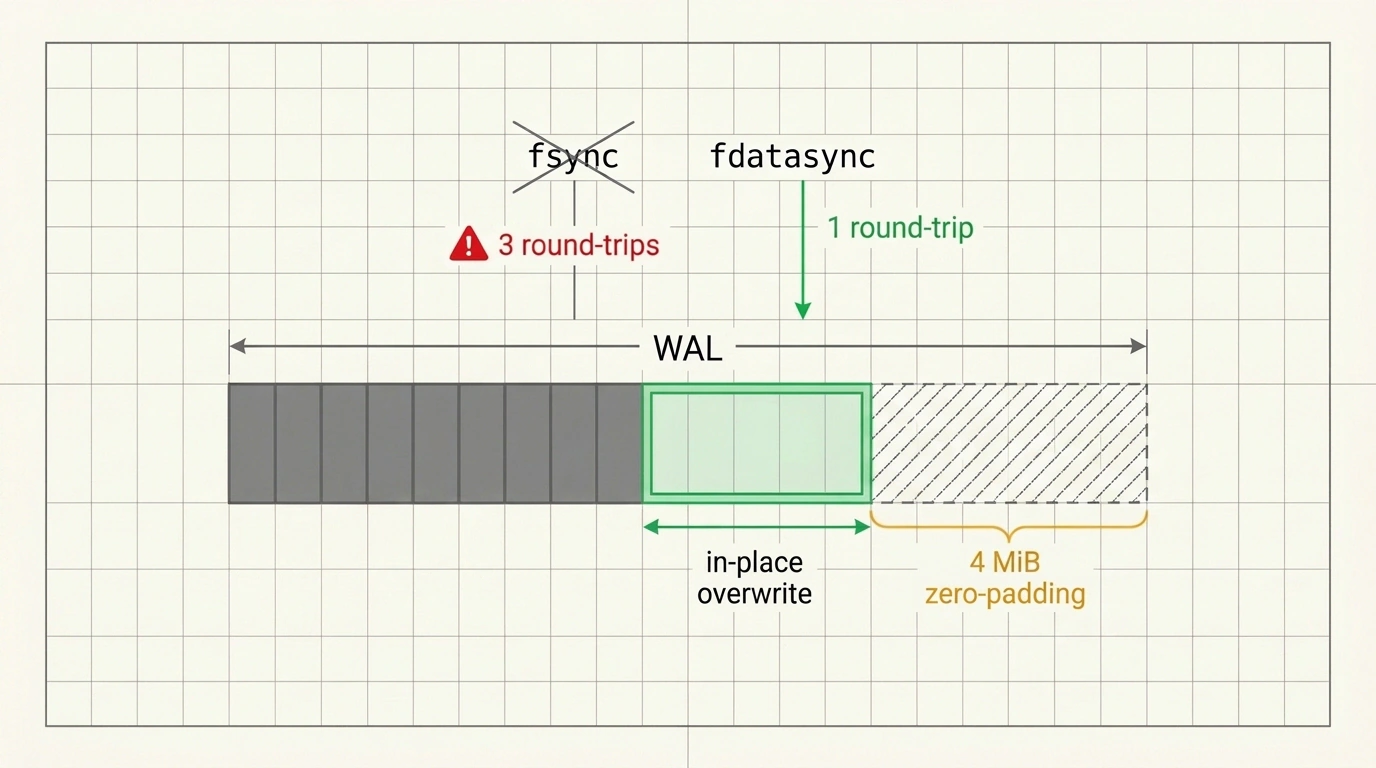
Patent-style infographic blueprint of a WAL file layout with a 4 MiB zero buffer and fdatasync syscall.
LongreadGoStorageDatabasesDevelopment

Speeding Up WAL in Dolt: Why fdatasync Only Works With Zero-Padding

Speeding up Write-Ahead Log (WAL) commits sounds simple: swap the heavy fsync syscall for lighter fdatasync, skipping file metadata flushes on every commit. Yet the engineers behind Dolt learned firsthand that on real-world Linux VFS, this naive swap yields zero speedup.

Under POSIX, appending to a file changes its size, so Ext4 still triggers three disk round-trips with JBD2 journal locks. Their counterintuitive fix: pre-write a 4 MiB buffer of zeros to the end of the file, turning commits into fast in-place overwrites of already-allocated sectors—cutting commit latency by 10–40% on high-latency network disks.

👍 0
Библиотека Go-разработчикаDoltHub Blog - fdatasync vs. fsync for WAL commits
October 24
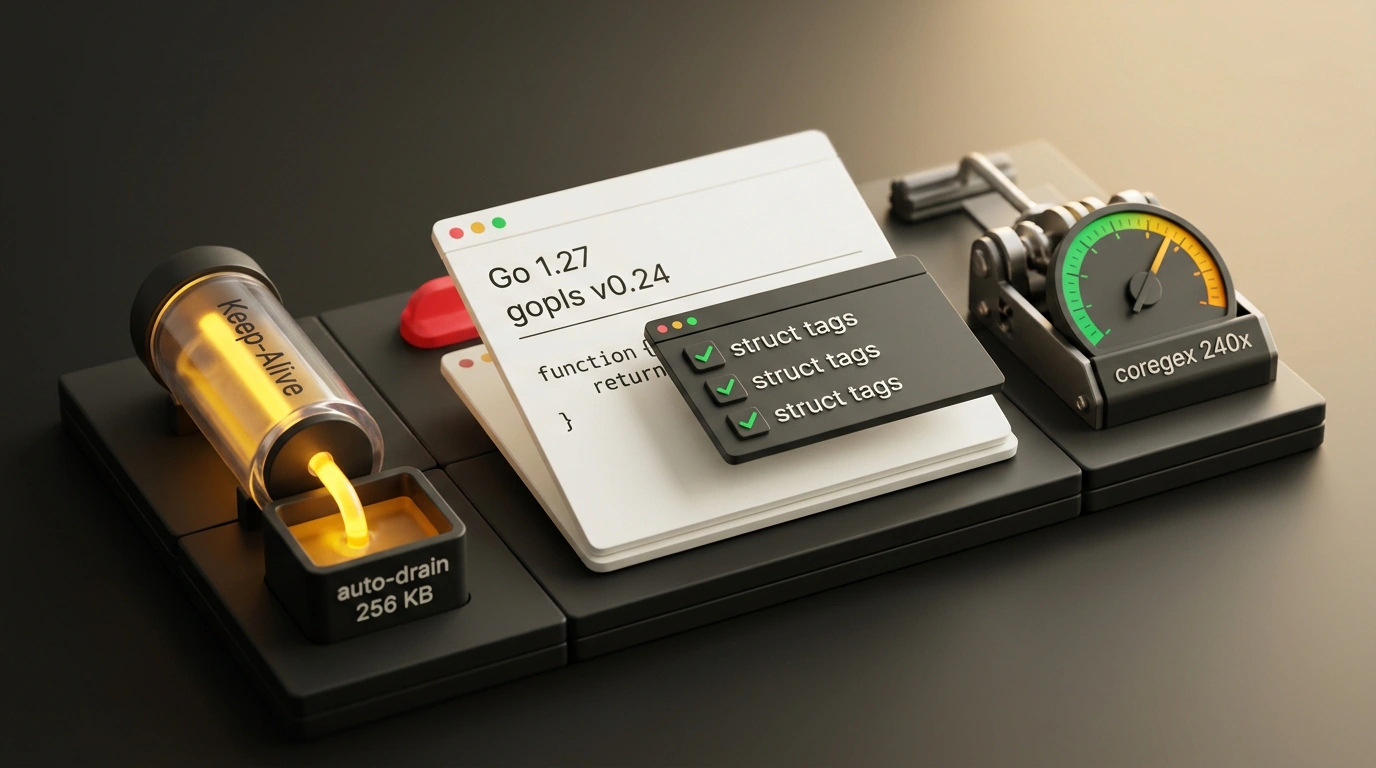
Engineering diorama of Go tooling featuring an interactive gopls dialog, HTTP/1 socket, and fast regex automaton.
Thematic roundup5 sectionsGoToolsCompilersOpen Source

Go Engineering Updates: Interactive gopls, HTTP/1 Drain, Desktop Apps on MyGo, and TinyGo 0.43

Over the past few months, Go has been steadily closing long-standing developer complaints—from standard library conservatism to clunky interactive refactoring in editors. This engineering roundup covers five notable platform updates:

The gopls language server introduced an LSP extension for interactive refactoring dialogs right inside your editor. Go 1.27's net/http client now drains up to 256 KB of leftover response bodies in the background, restoring TCP socket reuse without manual io.Copy boilerplate. MyGo builds compact desktop apps without Cgo, TinyGo 0.43 moves closer to synctest support, and coregex speeds up regex matching up to 240x using lazy DFAs.

👍 0
Go WeeklyGo Blog - Interactive Refactoring in goplscoregex GitHub Repository
October 24
European-style comic illustration of a Chrome engineer celebrating the safe Rust JPEG XL decoder integration.
LongreadChromeRustFormatsDevelopment

JPEG XL Decoding in Chrome 155: Safe Rust and SIMD Optimizations in jxl-rs

JPEG XL's path in Chrome reads like a thriller: after pulling experimental support in version 110 over C++ libjxl complexity, Google brought the format back natively in Chrome 155. The real story, though, isn't the reversal—it's how the new decoder works under the hood.

Image decoders process arbitrary files from the web inside the renderer process, making them prime targets for buffer-overflow exploits. To satisfy Chromium's strict Rule of Two, engineers replaced C++ with jxl-rs, a decoder written in memory-safe Rust, and used stabilized target_feature_11 to unlock SIMD vector instructions without a single unsafe block.

👍 0
Библиотека фронтендераChrome for Developers Blog - JPEG XL in Chrome
October 24
Isometric 90-degree folded smartphone displaying an adaptive video player split across the hardware hinge.
LongreadCSSBrowsersStandardsDevelopment

Adapting the Web for Foldable Screens: Device Posture API and Viewport Segments in Video.js

What do you do as a web developer when a phone physically folds in half and drops a plastic or glass hinge right down the middle of your page? Until recently, frontend engineers had to sniff User-Agent strings and hardcode pixel offsets that broke the moment a user rotated the screen.

With the iPhone Duo simulator in Xcode 27.1 bringing native support for W3C's Device Posture API and Viewport Segments API, that guesswork is over. Video.js engineers put both specs to the test with a console-style player: bending the device locks video into the top segment and moves controls onto the bottom half using pure env(viewport-segment-*) CSS variables.

👍 0
Веб-стандартыVideo.js Blog - iPhone Duo Web Development
October 24
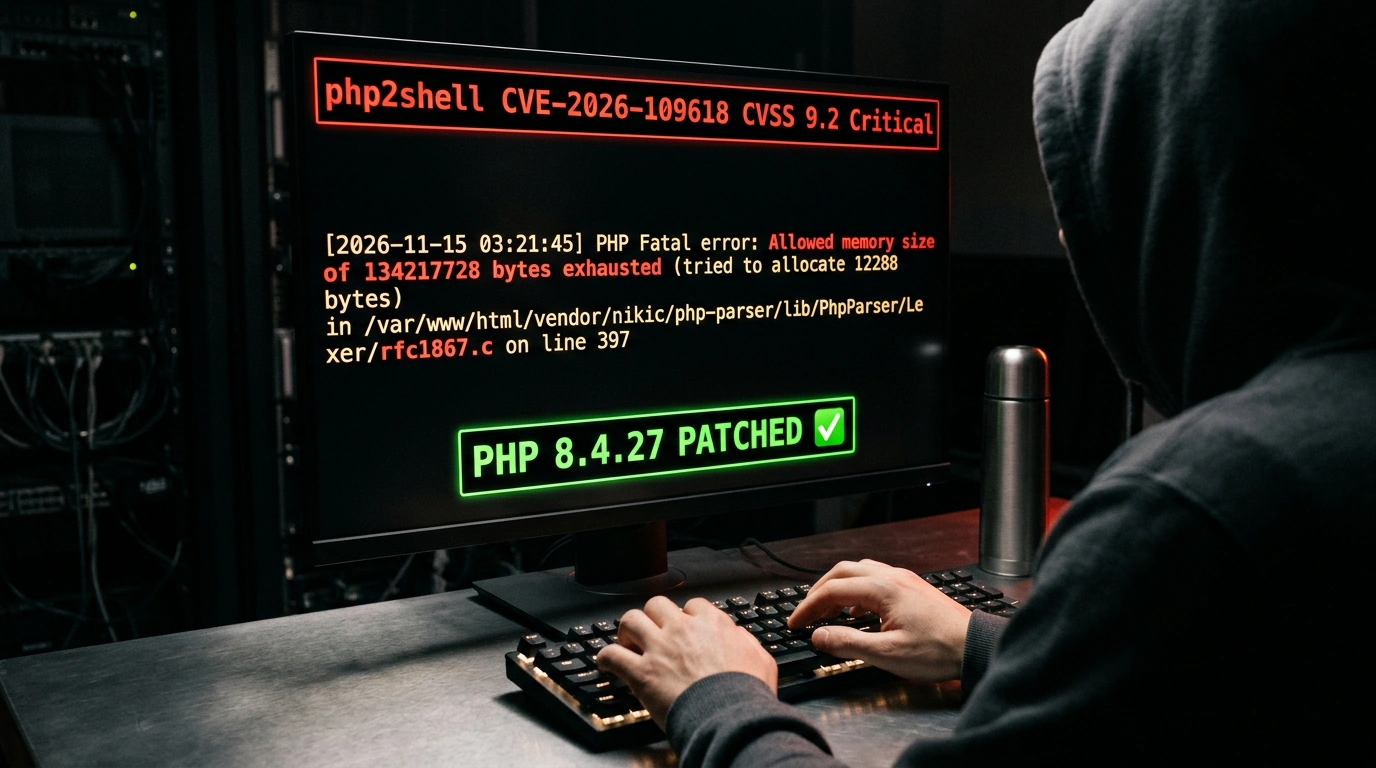
System administrator in a dark server room checking a terminal alert for the php2shell flaw and PHP patch status.
LongreadPHPVulnerabilitiesWebSafety

The php2shell Vulnerability in PHP Core: Memory Exhaustion Mechanics and Remote Code Execution

A critical PHP core vulnerability dubbed php2shell (CVSS 9.2) gave sysadmins worldwide a sleepless night, putting virtually any PHP-FPM or Apache server accepting POST requests at risk. The flaw isn't in Laravel or WordPress application code—it lives deep inside PHP's low-level C parser rfc1867.c.

By crafting multipart/form-data headers without Content-Length, an attacker floods the interpreter with thousands of empty form fields until memory runs out. The shutdown routine then walks half-built linked lists on the heap and dereferences a forged pointer into shellcode. Upgrading to official patches PHP 8.5.12, 8.4.27, 8.3.36, and 8.2.35 is the only reliable fix.

👍 0
BytesWiz Research Blog - php2shell PHP RCECloudflare Blog - PHP Vulnerabilities WAF Protection
October 24
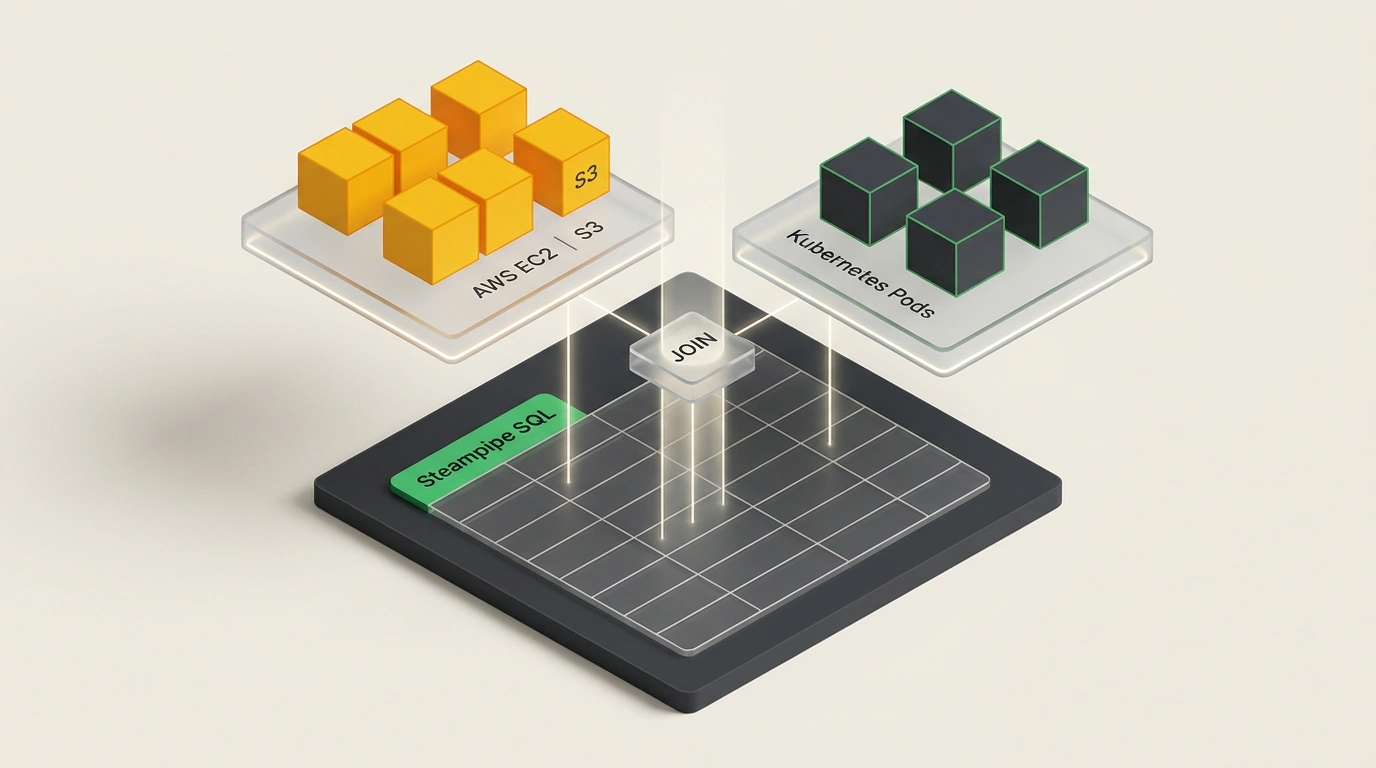
Isometric architecture diagram showing AWS and Kubernetes resources projected into Steampipe SQL tables.
LongreadSQLDevOpsInfrastructureAutomation

Steampipe: Declarative Auditing of AWS, GCP, and Kubernetes Infrastructure With SQL

Anyone who has audited cloud security across distributed infrastructure knows the pain: finding unencrypted disks or forgotten public S3 buckets across dozens of AWS accounts usually means writing sprawling Python boto3 scripts, fighting pagination, and stitching together mismatched JSON payloads.

Turbot's open-source Steampipe solves this with relational algebra. Under the hood, it runs an embedded lightweight PostgreSQL instance with Foreign Data Wrapper (FDW) plugins that turn cloud and Kubernetes APIs into virtual tables—letting you run a single declarative SELECT with a JOIN across Kubernetes pods, EC2 instances, and network policies without writing glue scripts.

👍 0
SQL PortalSteampipe Official Site & Documentation
October 24
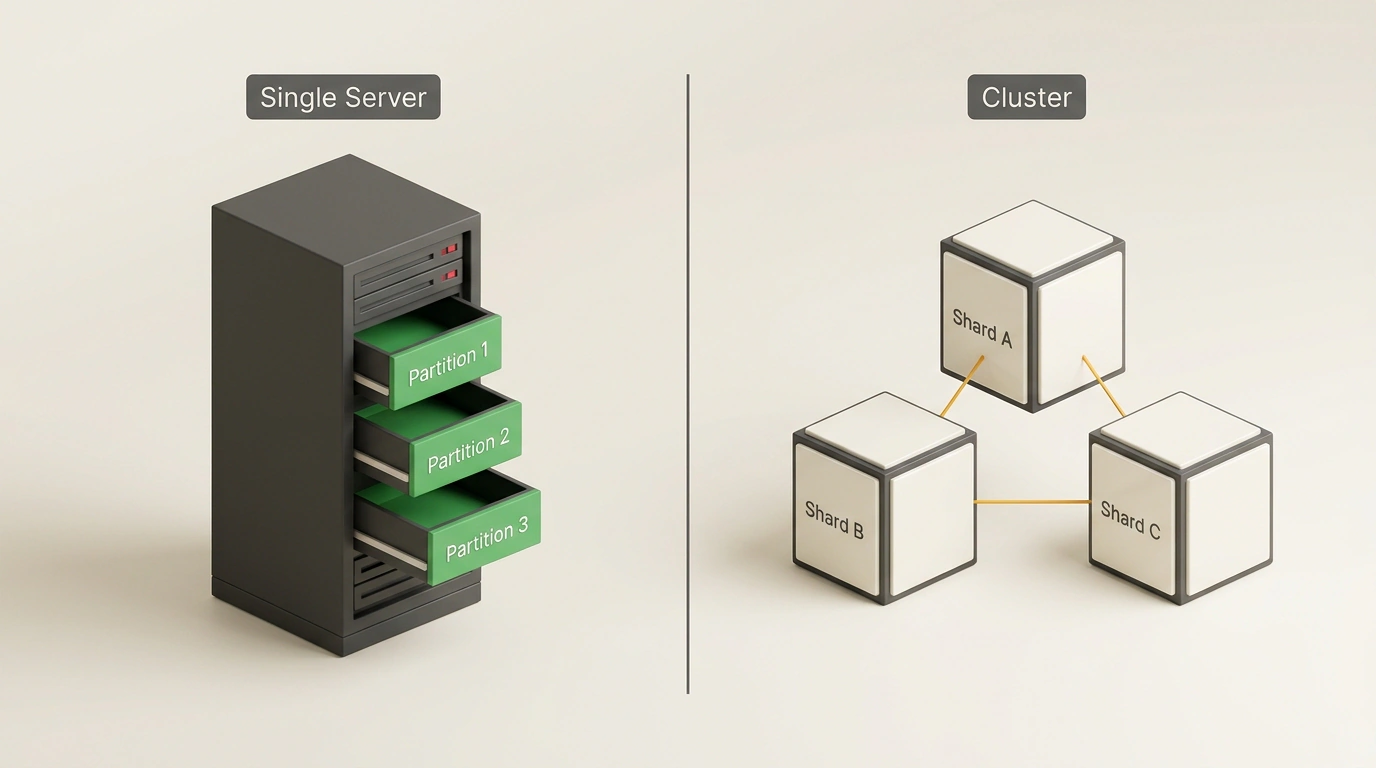
Bauhaus-style modular installation contrasting a single server rack with pull-out partitions against a cluster of independent shards.
LongreadDatabasesArchitectureScalingData

Partitioning vs. Sharding: Architectural Boundaries and How to Choose in a DBMS

When an orders or events table explodes to hundreds of millions of rows, backend teams face a classic fork: reach for partitioning or build a sharded cluster? Developers often treat the two terms as synonyms, even though a hard physical hardware boundary sits right between them.

Partitioning splits one logical table into sections inside a single server—keeping indexes in RAM and letting you drop old data instantly via DROP TABLE without blocking VACUUM. Sharding spreads data across independent cluster nodes once a single box hits its write I/O ceiling, at the steep cost of losing native foreign keys and dealing with distributed transactions.

👍 0
SQL PortalPostgreSQL Documentation - Table Partitioning
October 24
Isometric scene showing a Kubernetes pod protected by the Understudy operator alongside the PigeonEye control panel.
Thematic roundup2 sectionsKubernetesDevOpsToolsAutomation

Kubernetes Tools: Native GUI PigeonEye and the Understudy Singleton Operator

Running production Kubernetes clusters means constantly balancing developer ergonomics against cloud cost optimization. This DevOps tooling roundup highlights two practical open-source solutions:

  • PigeonEye: a fast native desktop client built with Rust and Tauri that replaces heavy Electron dashboards and auto-generates tables for any Custom Resource Definition (CRD);
  • Understudy: a smart operator that safely drains single-replica workloads during Spot node rotations and cluster upgrades without paying for a permanent second replica.
👍 0
DevOps&SRE LibraryPigeonEye GitHub Repository
October 24
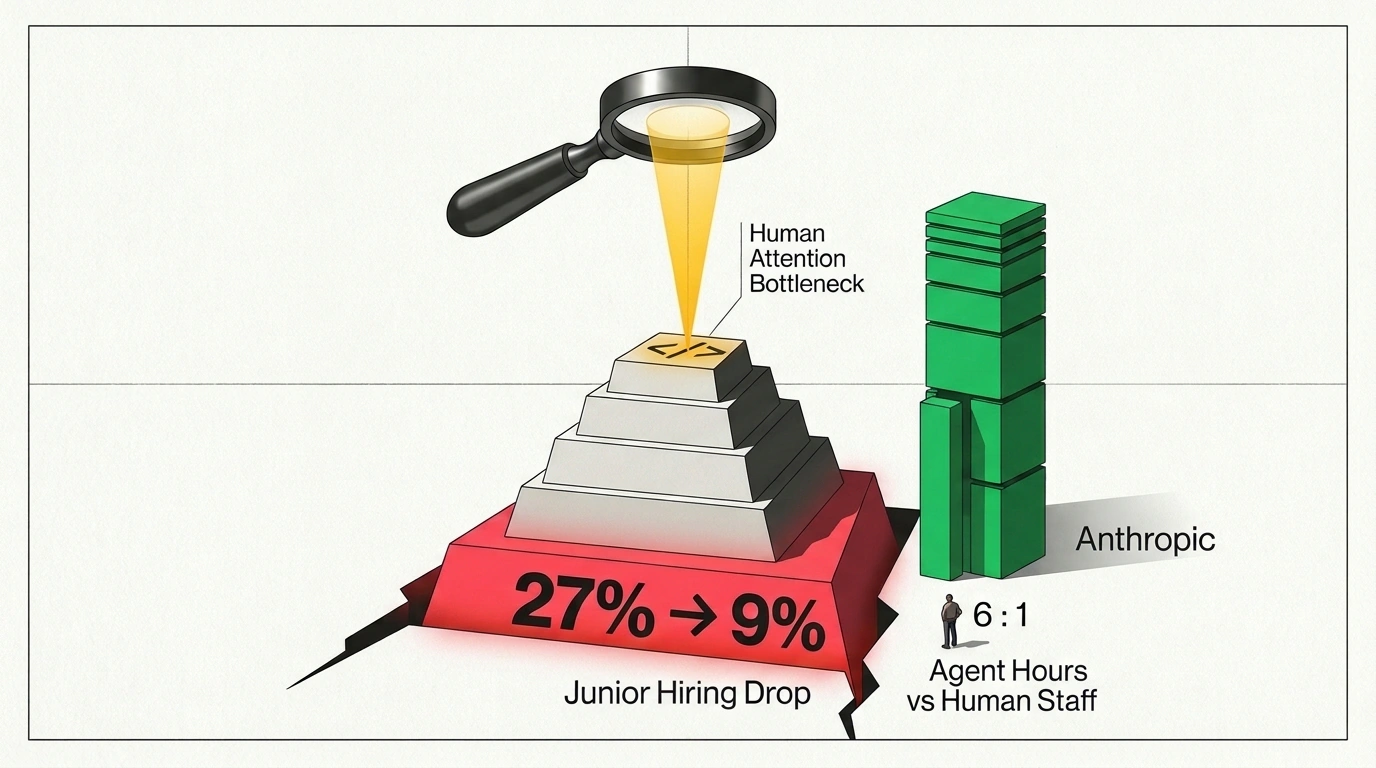
Infographic breakdown of Anthropic's engineering teams showing the drop in junior hiring and 6x agent hour ratio.
ArticleAIDevelopmentHiringProductivity

How AI Is Reshaping Engineering Teams: Anthropic's Study on the Drop in Junior Hiring

While analysts debate whether AI will eventually replace programmers, Anthropic published real empirical results from deploying coding agents across its own engineering org. The numbers reported by Nathan Wilmers and colleagues are stark: in just six months of heavy Claude adoption, the share of junior hires among new technical staff plunged from 27% to 9%.

Meanwhile, senior engineer productivity jumped more than fivefold, with autonomous agents logging six times as many hours as the entire human staff—and an astonishing 19-to-1 ratio in R&D. Code review and testing—not writing syntax—are now the main bottleneck, forcing the industry to confront where tomorrow's seniors will come from if juniors aren't hired today.

👍 0
Node.JS [ru]Anthropic Research - Labor and AI Adoption in Software Engineering
October 24
Tactile mixed-media paper collage illustrating LLM Key-Value cache compression down to 890 bytes per token.
LongreadLLMAIArchitectureData

LLM KV-Cache Architecture: How Context Compression Changes Inference Economics

Dramatic price drops for long-prompt processing in DeepSeek models sparked industry rumors of state-subsidized dumping. In reality, the explanation comes down to GPU compute physics and the architecture of the Key-Value cache.

During token-by-token decoding, a model has to stream the entire accumulated context out of VRAM for every single token, hitting the HBM memory bandwidth wall. DeepSeek Flash engineers compressed that cache down to a record 890 bytes per token (4x smaller than predecessors), fitting a million-token context into under 1 GB of VRAM instead of 3.5 GB—packing four times as many concurrent sessions onto one GPU and slashing repeat-call costs by 50x.

👍 0
System Design & HighloadHabr - Prompt Caching: токены LLM в 10 раз дешевле
October 24