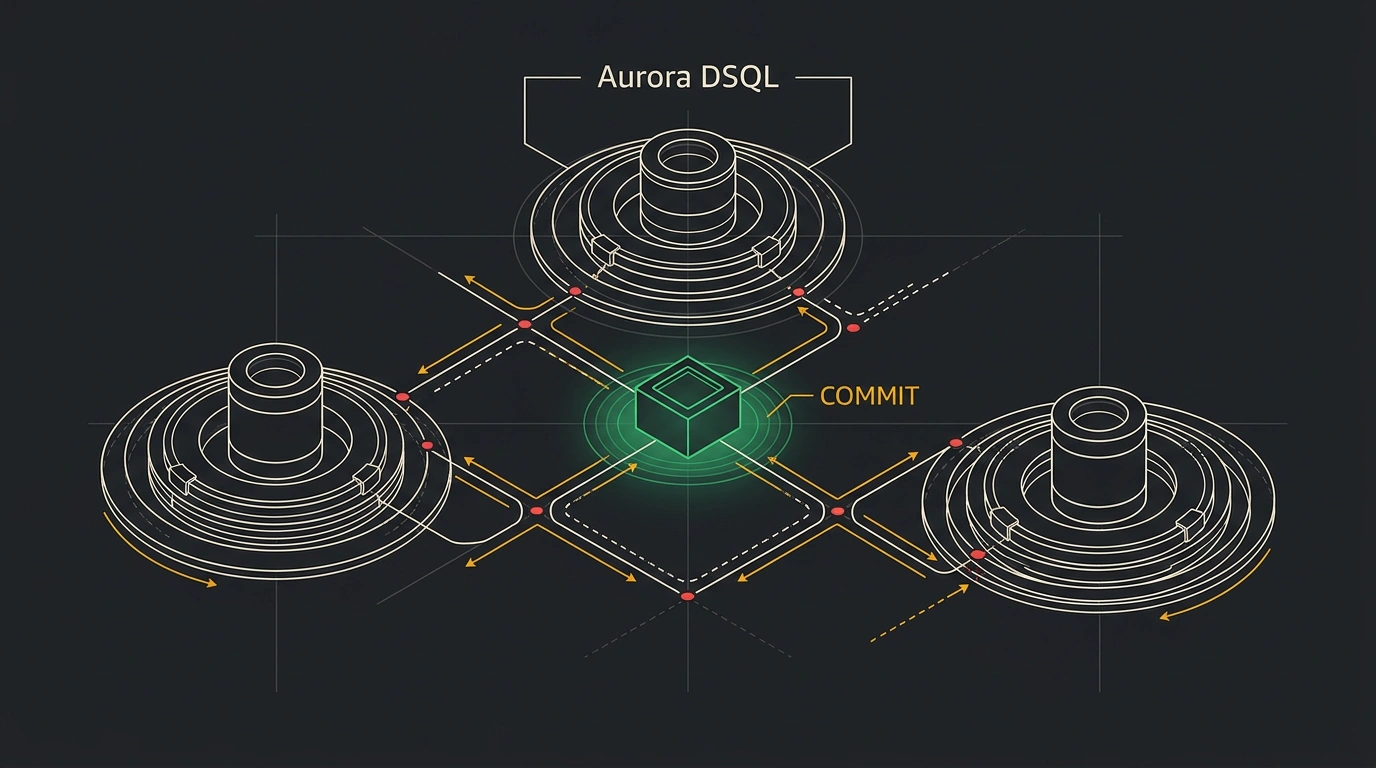
In a classic relational database, writes from different continents still bottleneck on a single primary server — otherwise data diverges. In Amazon Aurora DSQL, which recently reached Generally Available (GA) status, there is no single writer: you can read and write with guaranteed consistency across multiple regions simultaneously in active-active mode, and SELECT queries never wait on cross-region coordination.
How do you build a global relational database speaking the PostgreSQL protocol without manual sharding or replication lag? As the SQL Portal channel highlighted, AWS engineers rebuilt the engine in Rust around a serverless model, splitting compute, conflict resolution, and storage apart.
Why replicas and shards break standard SQL
Look at where a conventional database hits a wall using a global ticket-booking service. As traffic grows, the first instinct is to spin up read replicas closer to users in Europe and the US. On paper, everything speeds up with zero code changes, yet asynchronous replication introduces lag: a passenger in Frankfurt buys the last seat, refreshes the page, and sees it still available on a replica.
The second hope is scaling writes via manual regional sharding. That illusion of clean partitioning collapses in application code: your app has to route every query to the right shard, distributed transactions require heavy two-phase commit (2PC), and cross-shard JOINs stop working. Before long, the team spends all its time patching glue code around the database.
Four layers instead of a monolith: how a transaction flows
Aurora DSQL replaces the monolith with four horizontally scalable layers. Let's trace that same ticket purchase through them:
- Query Processor — a stateless component on lightweight microVMs behind a regional endpoint in each availability zone, speaking standard PostgreSQL wire protocol. For
SELECT, it reads from a local snapshot without consulting other continents. For writes (UPDATE), changes don't lock rows over the network; they buffer in transaction memory until commit under Optimistic Concurrency Control (OCC). - Adjudicator — steps in at
COMMIT. This decentralized service, sharded by key ranges, compares timestamps and checks whether the same row was modified in another region, guaranteeing Snapshot Isolation and strict serializability. - Storage Journal — records an approved transaction across storage-node quorums in multiple availability zones for atomicity and durability.
- Storage Layer — asynchronously applies changes from the journal and serves reads. Once the purchase in Frankfurt commits, the US service immediately sees the seat as taken — with no manual sharding.
What I find most revealing here is the edge case: what happens if buyers in Frankfurt and New York click "pay" for the exact same seat in the same millisecond? One commit succeeds, and the other returns the standard PostgreSQL serialization error 40001, requiring your application code to retry the transaction.
That detail points to an important rule: strong consistency in a distributed database isn't free — it just moves where you pay. Instead of global locks, Aurora DSQL charges the cost only on actual conflicts. Under even workloads, scaling feels seamless; when regions frequently contend for the same "hot" row, arbitration latency and retry rates climb.
For contrast, check out our breakdowns of Cloudflare D1's control plane at the edge and Apache Cassandra's architecture, where active-active availability comes at the cost of dropping classic SQL.
Aurora DSQL in GA is worth a serious look once a transactional service outgrows a single region and maintaining DIY sharding on top of PostgreSQL eats too much engineering time — provided your code is ready to retry conflicting transactions. Still, does your current project genuinely need multi-continent writes, or would solid indexing and one beefy server do the job for now?