Sound familiar? Your morning starts with a firm resolve to eat clean and hit the gym that evening. All day you bravely turn down office candy and power through stress, but by nightfall your battery dies. You open the fridge, eat everything in sight, collapse on the couch, and think grimly: "Why do other people have iron willpower while I always cave?"
The «Физикл» project team suggests taking a breath: there is nothing wrong with your character.
For decades, pop psychology promoted Roy Baumeister's "ego depletion" theory: the idea that willpower works like a muscle that burns glucose and fatigues quickly with every decision you make. It sounded neat: spend your reserve during the day, crash at night.
Then in 2016, science ran a strict audit. In Perspectives on Psychological Science, a massive preregistered study led by Martin S. Hagger came out. 23 independent labs worldwide and 2,141 participants tested the ego-depletion effect under a single rigorous protocol. The result was stunning: the willpower-depletion effect was essentially zero (d = 0.04). Willpower does not "burn sugar" or physically wear out.
So what is actually happening? The brain doesn't run out of energy—it shifts the subjective value of actions. When we grow tired of monotonous routine, the prefrontal cortex switches from goal-directed effort to hunting for immediate hedonic reward (dopamine).
Moreover, behavioral genetics shows that the trait "Conscientiousness" is 40–50% heritable. Some people are simply wired from birth to regulate impulses more easily. And French sociologist Pierre Bourdieu highlighted the role of habitus—the set of unconscious habits absorbed from family and surroundings. If everyone around you runs in the mornings and eats vegetables without fuss, it feels normal to you and takes zero heroism.
Yet the biggest discovery came from studies using mobile tracking of everyday behavior. People who score high on self-control do not suppress temptations more often than others. On the contrary, they encounter temptations far less often! They beat cravings not with clenched teeth, but by smartly engineering their physical environment:
- Stimulus control: their home simply doesn't have cookies, chips, or candy sitting on the kitchen counter. To eat something sweet, they'd have to get dressed and walk to the store—and that friction cools the impulse.
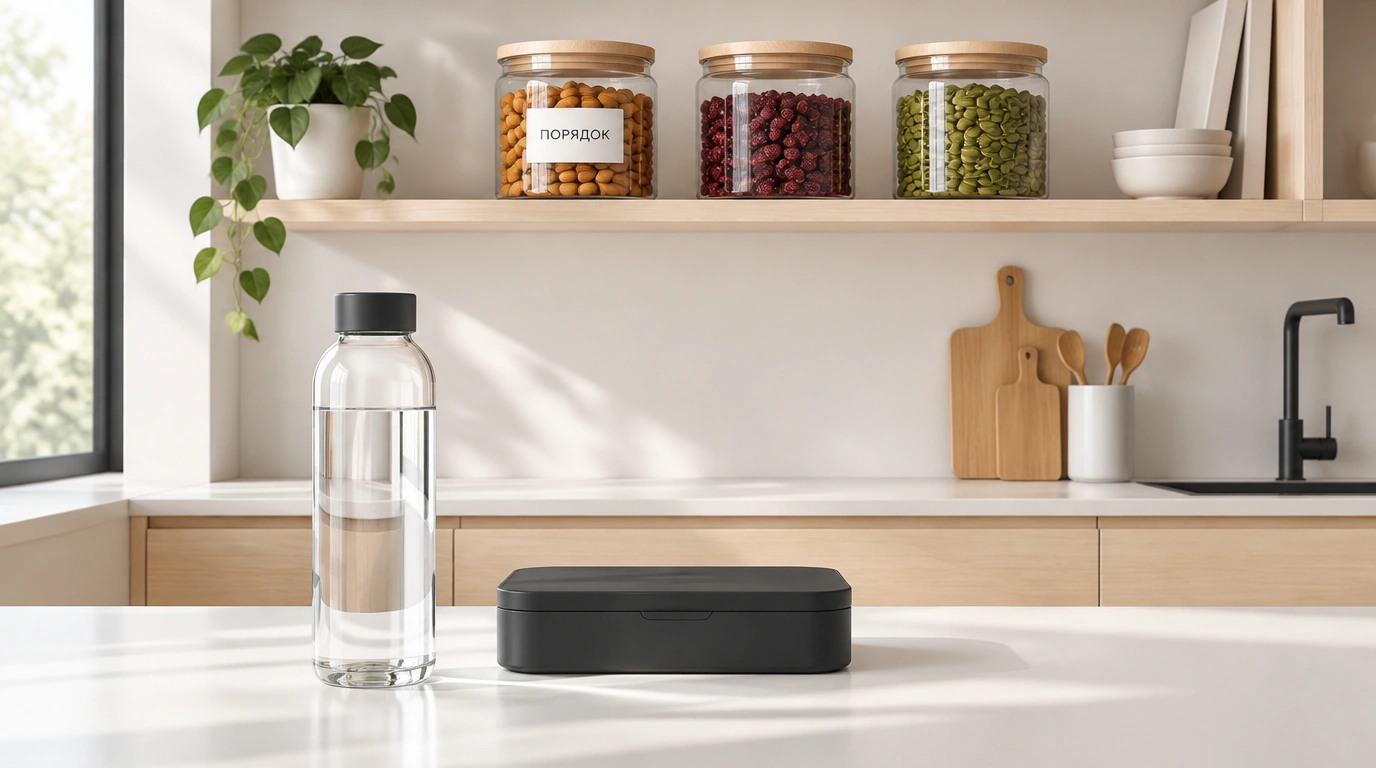
- Lowering barriers for good habits: gym gear is packed the night before and sitting by the door, containers of healthy food are prepped three days ahead, and a water bottle sits right in front of them on the desk.
When a sudden, overwhelming urge for dessert hits, don't ban it outright. Tell yourself: "I'll eat this, but in 10 minutes—and right now I'll drink a glass of warm water." Within 10 minutes, the amygdala's sharp emotional spike subsides, and the prefrontal cortex takes back the wheel.
Stop banking on abstract willpower and fighting yourself. Redesign your surroundings, get triggers out of sight—and a healthy lifestyle becomes the natural backdrop of your day.