Issue October 22Daily digest · 16 items
In this issueReviewed 36 sources, gathered 16 items
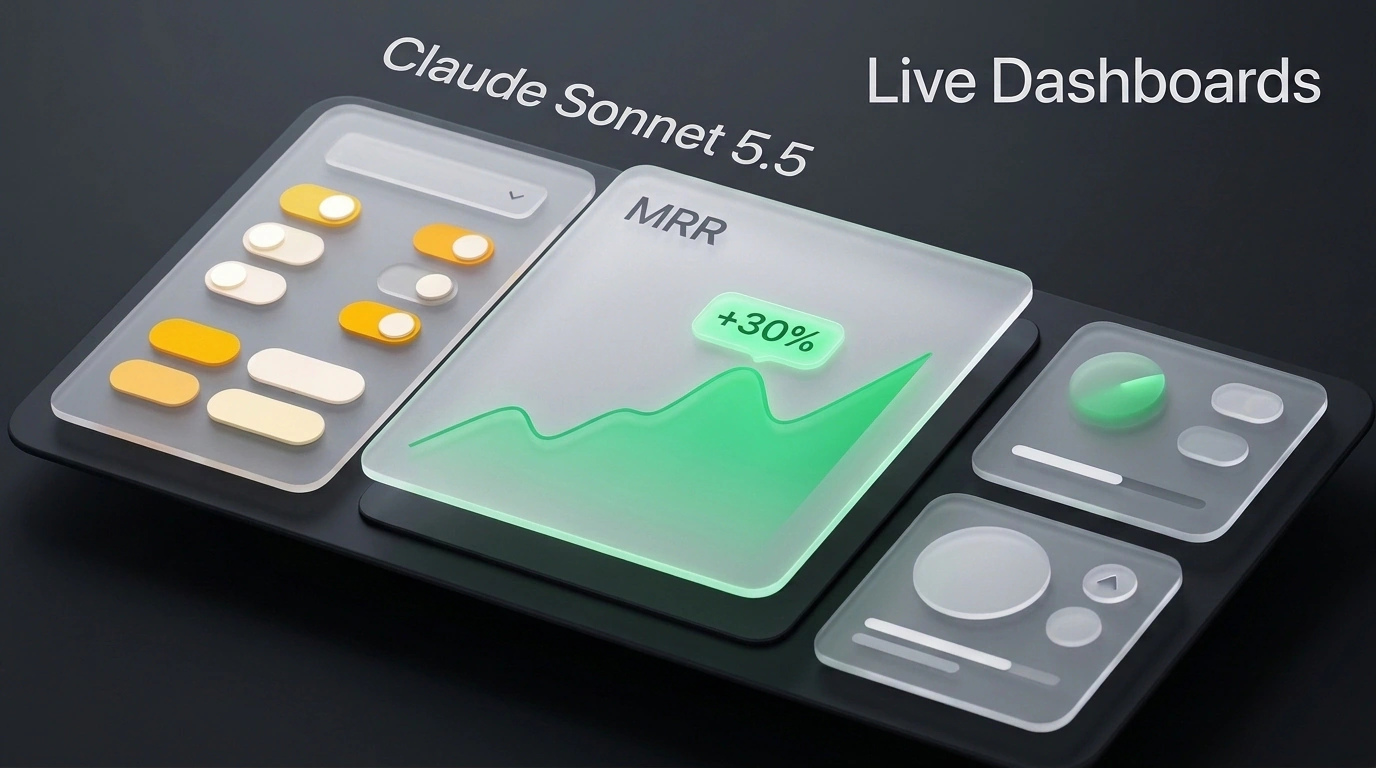
Interactive 3D Live Dashboards interface in Claude Sonnet 5.5 with floating chart panels on a dark graphite background
LongreadAIAIClaudeAnalytics

Claude Sonnet 5.5 and Interactive Live Dashboards: 30% Faster Inference and Real-Time Data Visualization

You are probably thinking, "Another minor update with a tenth-of-a-percent bump on benchmarks?" I opened the release notes with the exact same skepticism, yet reality turned out far more interesting. Anthropic's Claude Sonnet 5.5 did not just speed up by 30% at the same token price—it overhauled prompt caching economics, slashing repeated context reads to $0.10 per million tokens.

The biggest practical shift happened in the UI: Live Dashboards turns raw exports from Stripe, Gmail, or databases directly inside the chat into interactive React and Recharts dashboards with client-side filtering. No more spinning up bloated BI tools just for a single slice of metrics.

👍 0
Simon WillisonSkill Leap AIAnthropic Official Announcement
October 22
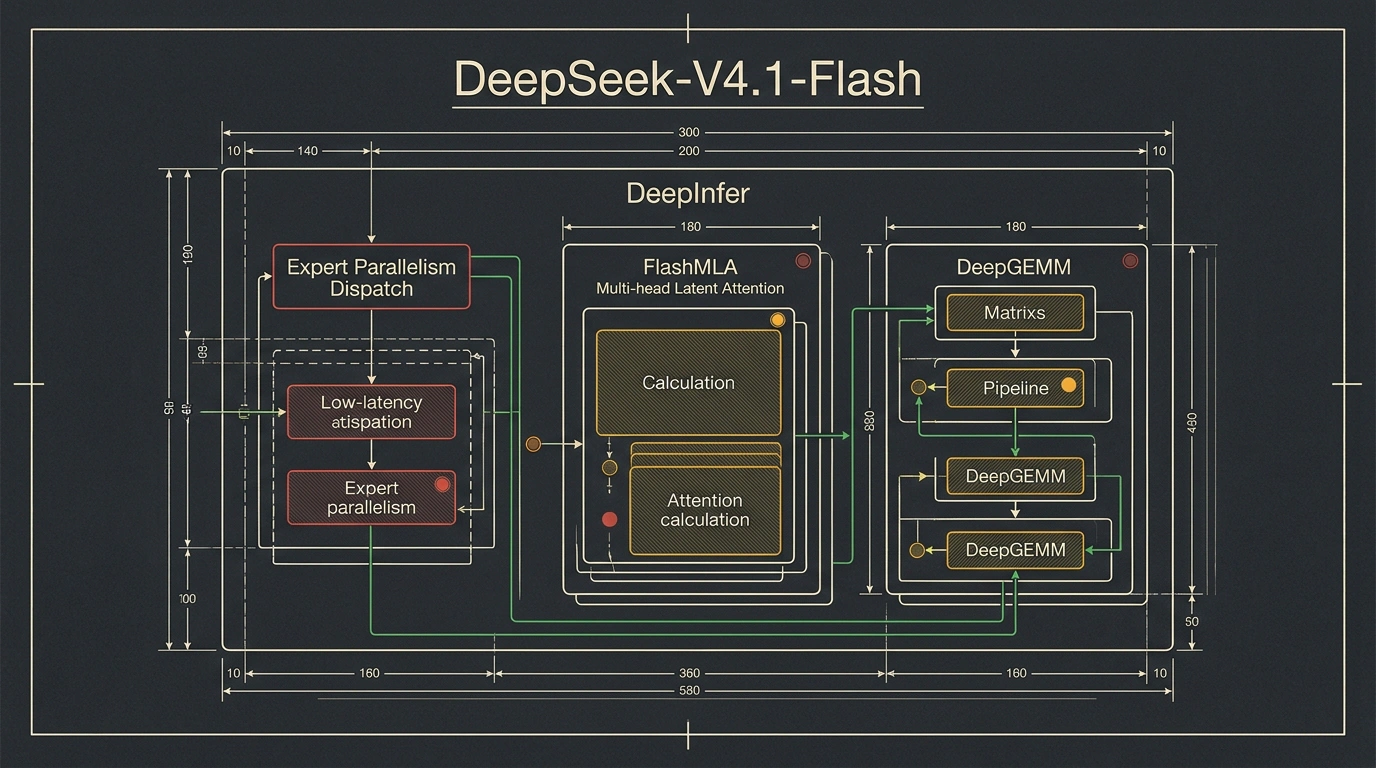
Technical blueprint of the DeepInfer inference engine architecture featuring FlashMLA and DeepGEMM modules
LongreadAIAlgorithmsDeepSeekInference

DeepSeek V4.1 Flash 1017 and the DeepInfer Engine: Record Coding Speed and Open Inference Architecture

Conventional wisdom says compact lightweight models are doomed to trail multi-billion-parameter flagships when serious coding is on the line. Chinese lab DeepSeek shattered that assumption: the fresh V4.1 Flash 1017 checkpoint beat heavyweights on real bug-fixing benchmarks by cutting out empty chatter and focusing tightly on syntax.

Alongside the checkpoint, the team open-sourced their DeepInfer inference engine under Apache 2.0. It is a low-level powerhouse with custom FlashMLA and DeepGEMM kernels, native support for NVIDIA Blackwell and Huawei Ascend chips, and paged caching that eliminates GPU memory fragmentation.

👍 0
Julian Goldie SEODeepSeek DeepInfer Repository
October 22
Still life of a developer's desk running an Ollama terminal with an unplugged Ethernet cable
LongreadAIAutomationOllamaSafety

Going Fully Local with AI: How to Run Open Models on Your Own Computer and Ditch Subscriptions

Add up your monthly charges for ChatGPT Plus, Claude Pro, and coding assistants, and you are looking at nearly a thousand dollars a year. Researcher David Ondrej built and tested a standalone stack powered by Ollama and open weights, proving that a consumer computer can comfortably handle an engineer's or writer's daily workload.

Moving to fully local AI with zero clouds or data leaks takes three steps:

  • Pick a GGUF quantization sized to your GPU VRAM or Mac Unified Memory;
  • Build a custom profile via a Modelfile with an expanded context window up to 16,384 tokens;
  • Connect Open WebUI or terminal agents to your local server.
👍 0
David OndrejOllama Modelfile Documentation
October 22
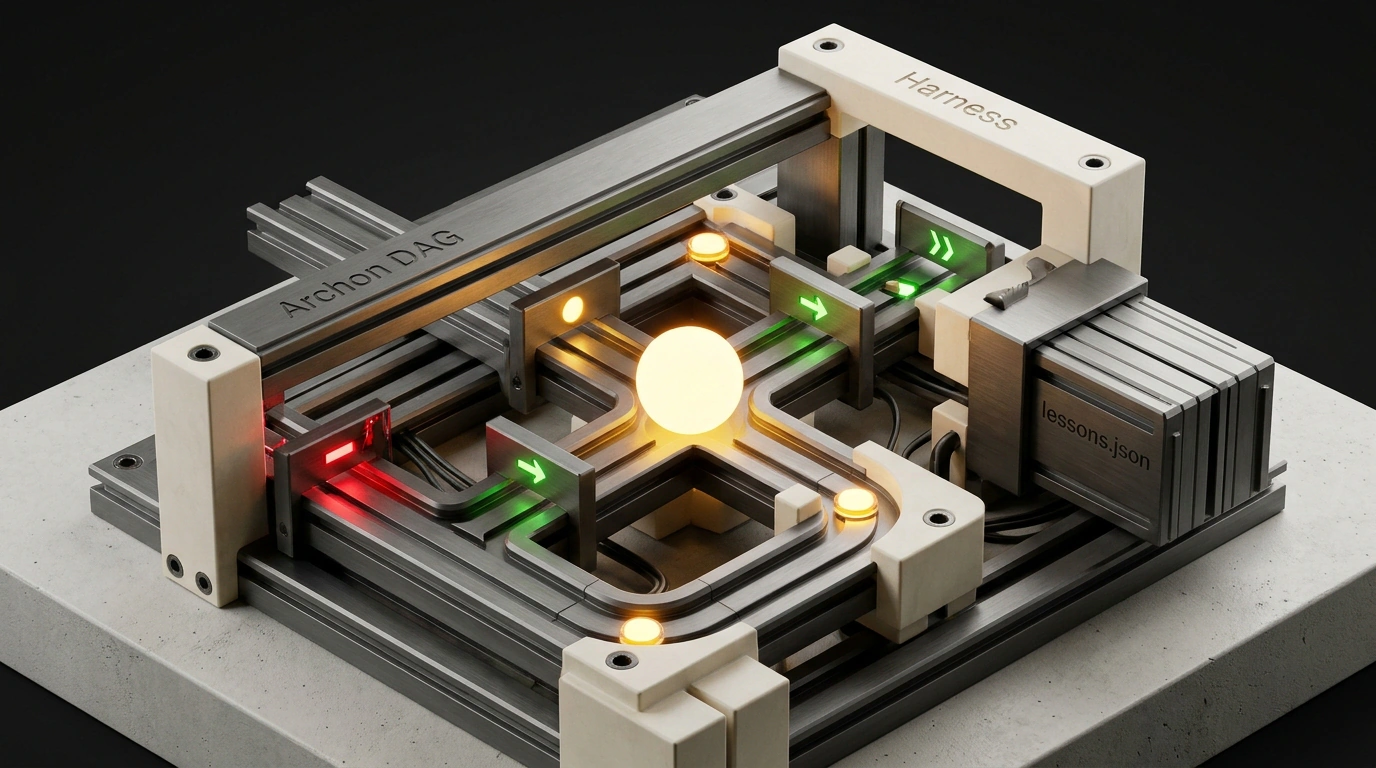
Archon harness engineering test rig with guide rails steering an AI agent
LongreadAIAutomationTestingDevelopment

Harness Engineering for AI Agents: How Archon and Google Harness² Teach Algorithms to Test and Improve Themselves

Trying to get autonomous agents to write reliable software, the industry spent years stepping on the same rake: polishing prompt wording and hoping for a miracle. Left to roam free, a raw language model inevitably hallucinates and loops on the first build error. Naive prompting is now giving way to Harness Engineering.

Cole Medin's Archon framework and Google's Google Harness² system wrap models in a strict scaffold of isolated git worktrees, directed acyclic graphs (DAGs), and a learned-lessons store. When a test fails, the agent does not spiral—it logs a concrete rule into a JSON database, cutting repeat failures by 40%.

👍 0
Cole MedinJulian Goldie SEOArchon Framework Repository
October 22
Three-dimensional procedural scene with floating geometric cubes bathed in light beams and soft fog
LongreadAIDesignFrontendThreejs

Generating Interfaces and 3D Worlds in GPT-6 Astra: From Interactive Web Layouts to Procedural Three.js Scenes

Building interactive 3D web scenes used to force a painful choice: either commission heavy GLTF models from motion designers and watch page loads crawl, or have a frontend engineer spend weeks hand-coding shaders and projection matrices. GPT-6 Astra takes a completely different route—procedural Three.js scene synthesis straight from text.

Thanks to deep spatial geometry reasoning, the model calculates physical PBR materials, places lights, and assembles a complete animation loop without a single heavy asset file. The page weighs just a few kilobytes of code, and a virtual showroom or interactive diorama comes together in one chat session.

👍 0
Julian Goldie SEOThree.js WebGL Documentation
October 22
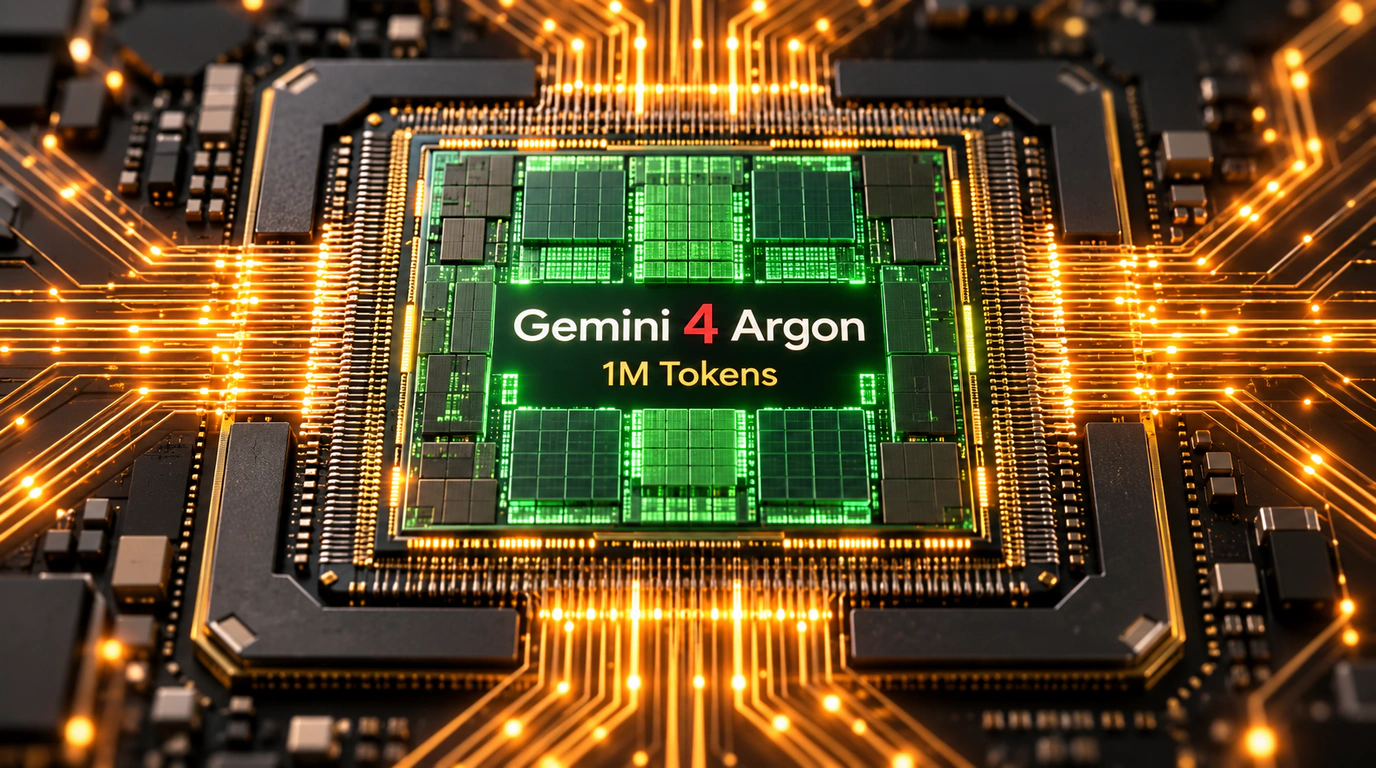
Macro shot of a Gemini 4 Argon silicon die with micro-traces representing a million-token context window
LongreadAIAIGoogleGemini

Google Gemini 4 Argon: A 1-Million-Token Context Window and Autonomous Multi-Hour Engineering Tasks

The classic trap when refactoring large repositories is assuming you can split the project into dozens of tiny prompts and still get coherent code. In reality, context shatters: the model forgets neighboring module interfaces, duplicates functions, and breaks backward compatibility. The culprit was tight output caps in older models that cut generation off at 8,000 tokens.

Google's flagship Gemini 4 Argon closes that gap with a unified architecture. The model operates across a single 1,048,576-token pool, dynamically balancing multimodal input and long continuous output. You can now feed in an entire monolith and get a restructured microservice architecture in one session without losing the big picture.

👍 0
Julian Goldie SEOGoogle Gemini 4 Argon Announcement
October 22
Layered paper collage showing Chrome browser tabs transforming into presentation slides
LongreadAIChatGPTAutomationProductivity

ChatGPT in Your Browser and Presentations: Multi-Tab Chrome Agent and Interactive Slides Without the Busywork

We are used to thinking of AI browser extensions as basic sidebars that can barely summarize a single open article. OpenAI's official ChatGPT extension for Chrome and Chromium browsers flips that script: typing @chrome lets you pull live data from dozens of open tabs at once.

In the background, the agent compares vendor quotes, builds pricing comparison tables, and fills out web forms under your supervision. Meanwhile, ChatGPT Slides cures blank-slide paralysis before meetings, instantly turning scattered notes into interactive pitch decks with clean visual hierarchy.

👍 0
Julian Goldie SEOOpenAI ChatGPT Chrome Extension Update
October 22
Exhibition sculptural installation featuring three symbolic artifacts for MiniMax, Mercury, and Ming
Thematic roundup3 sectionsAIAIModelsSynthesis

Fall 2026 Alternative Models: Ultra-Fast MiniMax M3.1 Flash, Diffusion-Based Mercury 3, and Open Voice Ming 3.0

In the shadow of OpenAI, Google, and Anthropic's loud marketing wars, fall 2026 has sparked a real uprising among independent labs. While market leaders keep feeding bigger compute budgets to traditional autoregressive networks, challengers are attacking the industry's worst bottlenecks: inference latency, coding monopolies, and closed speech pipelines.

In this roundup, we put three unorthodox contenders side by side: ultra-fast MiniMax M3.1 Flash hitting 74% on tough engineering benchmarks, text-diffusion breakthrough Mercury 3 topping 1,000 tokens per second, and the open-weight Ming 3.0 voice family cloning voices from a three-second sample.

👍 0
Julian Goldie SEOInception Labs Mercury 3 Announcement
October 22
Miniature diorama of a solopreneur workspace with a ceramic maker figurine and tiny mechanical helpers
LongreadAIBusinessStartupsAutomation

A Multi-Million-Dollar One-Person Company: How to Build a Business on the Claude Stack and AI Agents in 2026–2027

The classic rookie mistake in tech startups is rushing to hire an engineering team and raise venture capital before validating demand. Bloated payroll and endless meetings burn through seed cash while bureaucracy sinks the product. Fall 2026 proves the opposite: bulky teams are giving way to solopreneurs.

Lovable's numbers—over $2.74 million in revenue per employee—show what the modern stack can do: one founder pairing Claude Code with Make and n8n handles the entire cycle of product development, lead generation, and 24/7 customer support at up to 90% net margin.

👍 0
Nick SaraevLovable Scale Metrics and Revenue Report
October 22
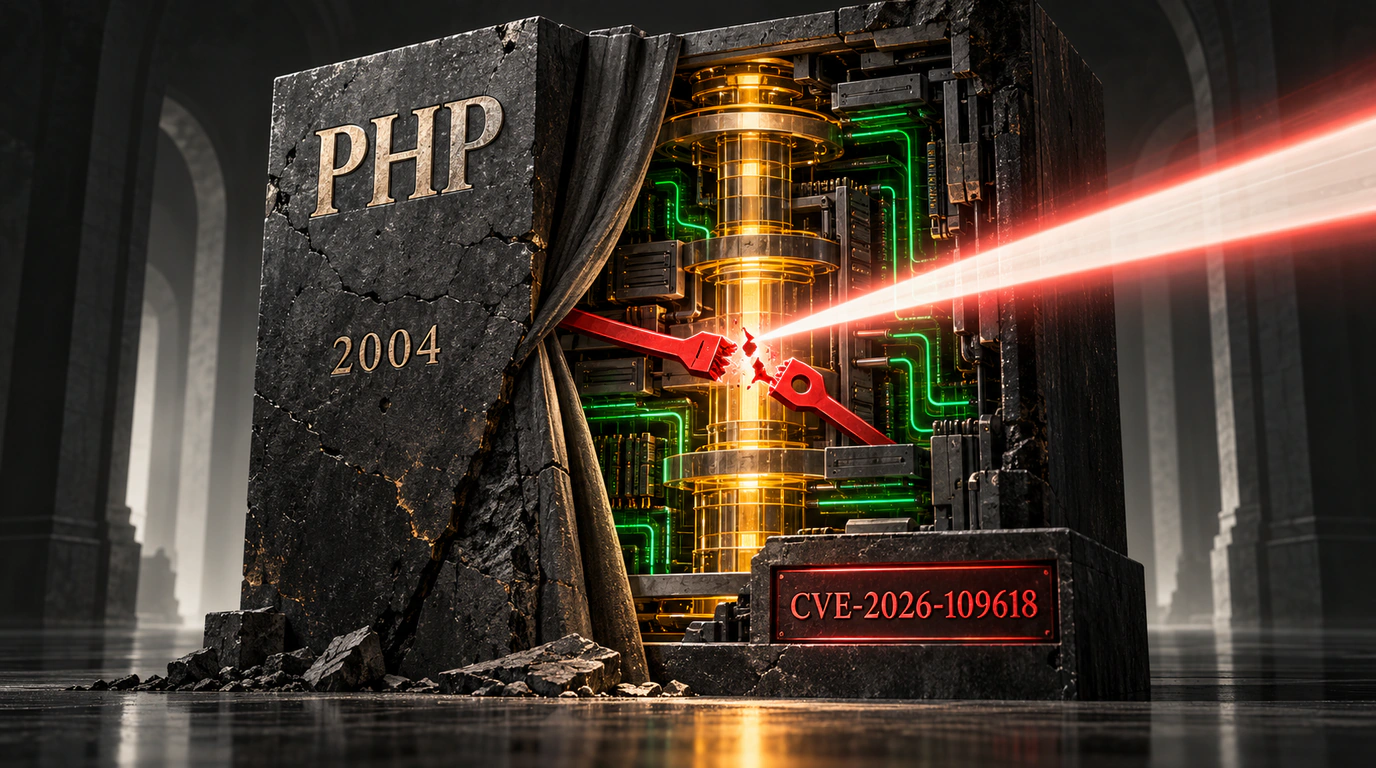
Surrealist still life with a scanning beam of light exposing a zero-day flaw inside a PHP code monolith
LongreadAISafetyVulnerabilitiesPHP

AI Guarding Web Infrastructure: How OpenAI Reasoning Models Uncovered Critical 0-Days in Legacy PHP Code

Security engineers long assumed that static analyzers (SAST) and fuzzers had combed through every corner of the web's oldest codebases. Reality just delivered a shock: OpenAI reasoning models uncovered critical zero-day vulnerabilities in the PHP interpreter that had been hiding in its C core since 2004.

Dubbed PHP2Shell with a severe CVSS 9.2 rating, these Use-After-Free flaws in upload-progress deserialization allowed remote arbitrary code execution before user scripts even started. Here is how reasoning models trace hidden memory pointers and why admins need to apply the October 21, 2026 patches immediately.

👍 0
Nick SaraevOpenAI Security Advisory PHP2Shell
October 22
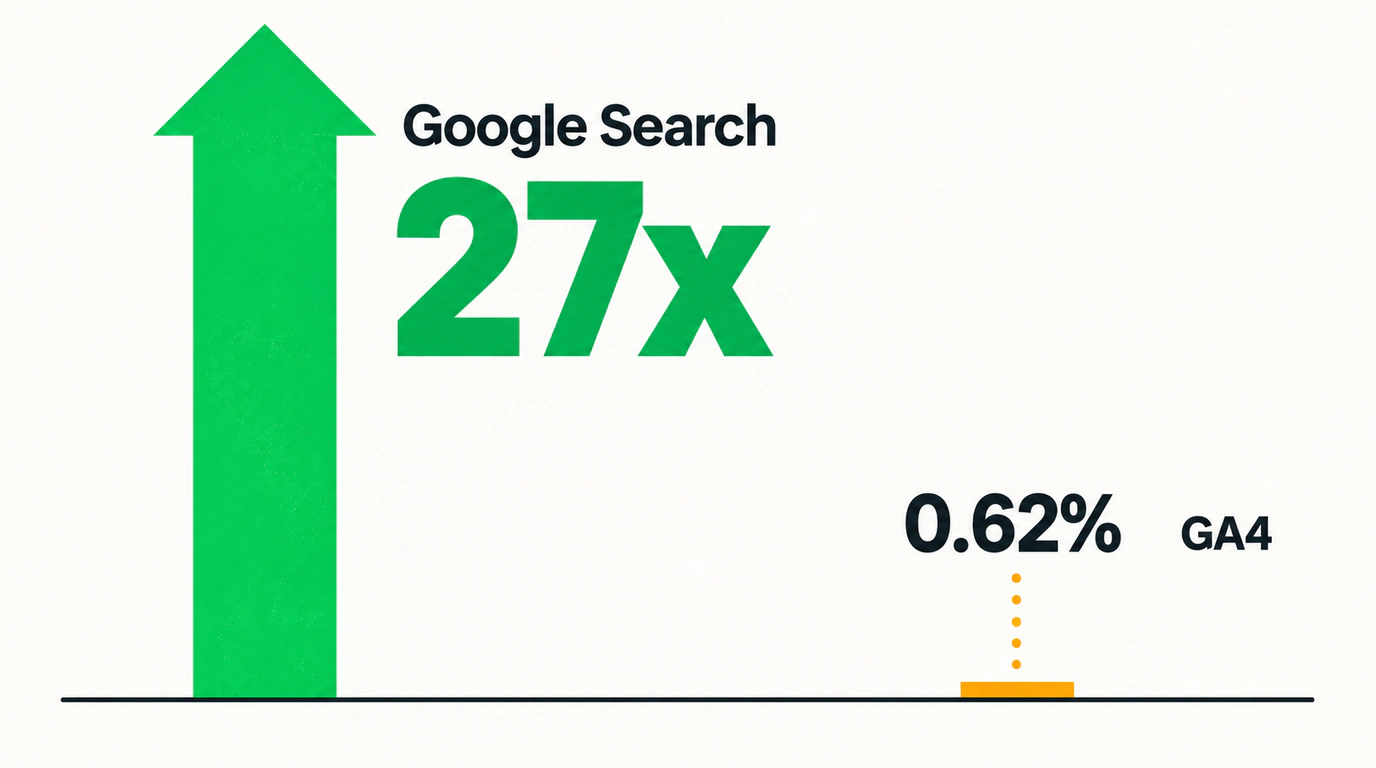
Minimalist magazine poster comparing organic search conversions against AI referral traffic
LongreadAISEOMarketingGoogle

GEO vs. Search Reality: Why Optimizing for AI Citations Distracts from Conversions and How Google AI Mode Works

You have surely heard every second digital marketer claim: "Classic SEO is dead—optimize your site for ChatGPT and Perplexity citations (GEO) right now!" It sounds urgent and dramatic. Let's take a breath and check the cold numbers from real web analytics.

Leading search specialist Marie Haynes analyzed data from 100 live client websites and proved that referral traffic from ChatGPT averages just 0.62% of Google organic traffic. In real sales and conversions, traditional search outperforms every AI chatbot in the world combined by 27x. Chasing phantom AI citations drains marketing budgets while distracting teams from fixing basic GA4 funnels.

👍 0
Julian Goldie SEOMarie HaynesMarie Haynes Consulting Research Report
October 22
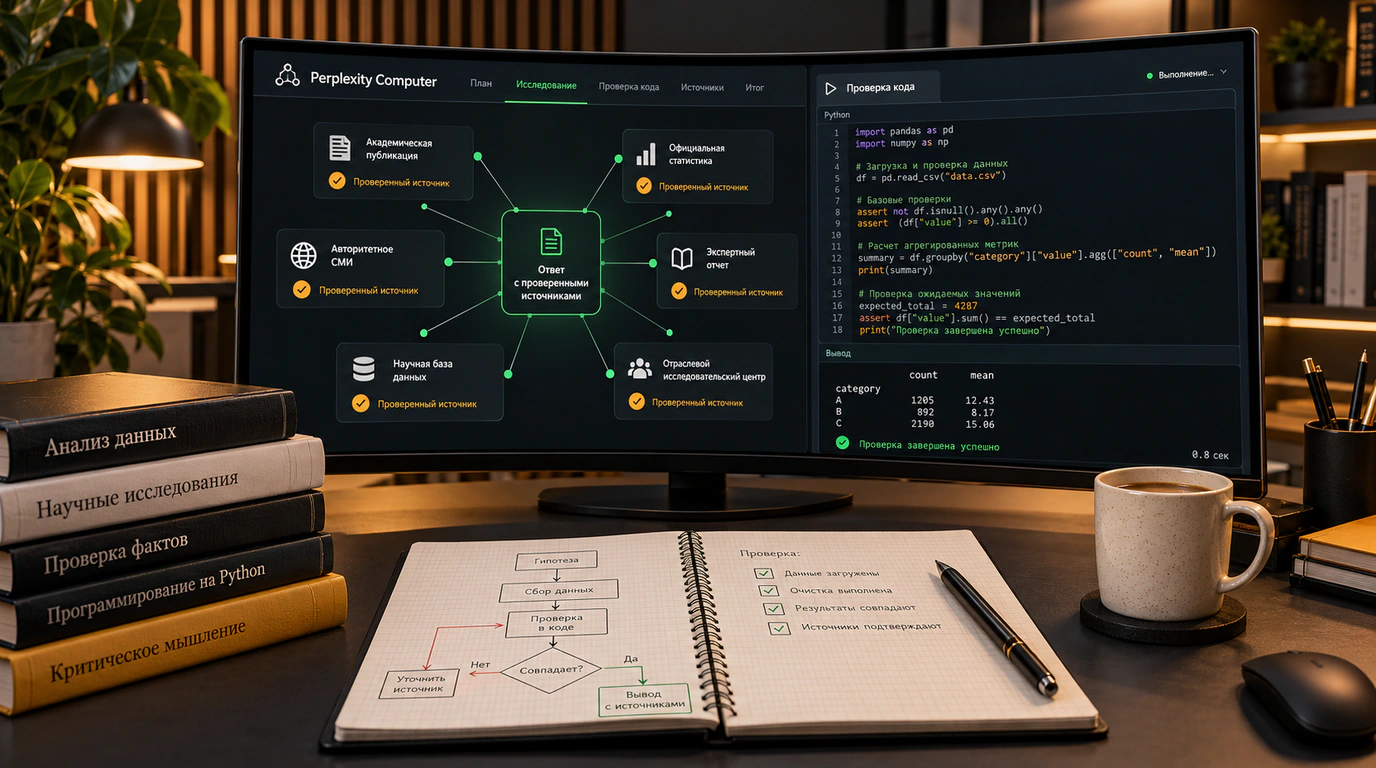
Researcher workstation with multiple Perplexity Computer displays showing a source-verification graph and the SPACE sandbox
ArticleAIPerplexitySearchAutomation

Perplexity Computer: An Autonomous Web Agent for Automated Fact-Checking, Browsing, and Coding

We are used to AI search acting like a fast concierge: type a question, get a paragraph citing a couple of snippets. Perplexity breaks that mold with its cloud-based Perplexity Computer. It is no longer a search bar in the usual sense, but a full autonomous agent environment capable of running hours-long background research across the open web.

Inside, it pairs an isolated SPACE sandbox for running Python scripts with a Model Council that cross-checks contested claims across several independent neural networks before writing the final report. The agent follows links, parses tables, and exports verified briefs down to the exact citation.

👍 0
Julian Goldie SEOPerplexity Computer Platform Announcement
October 22
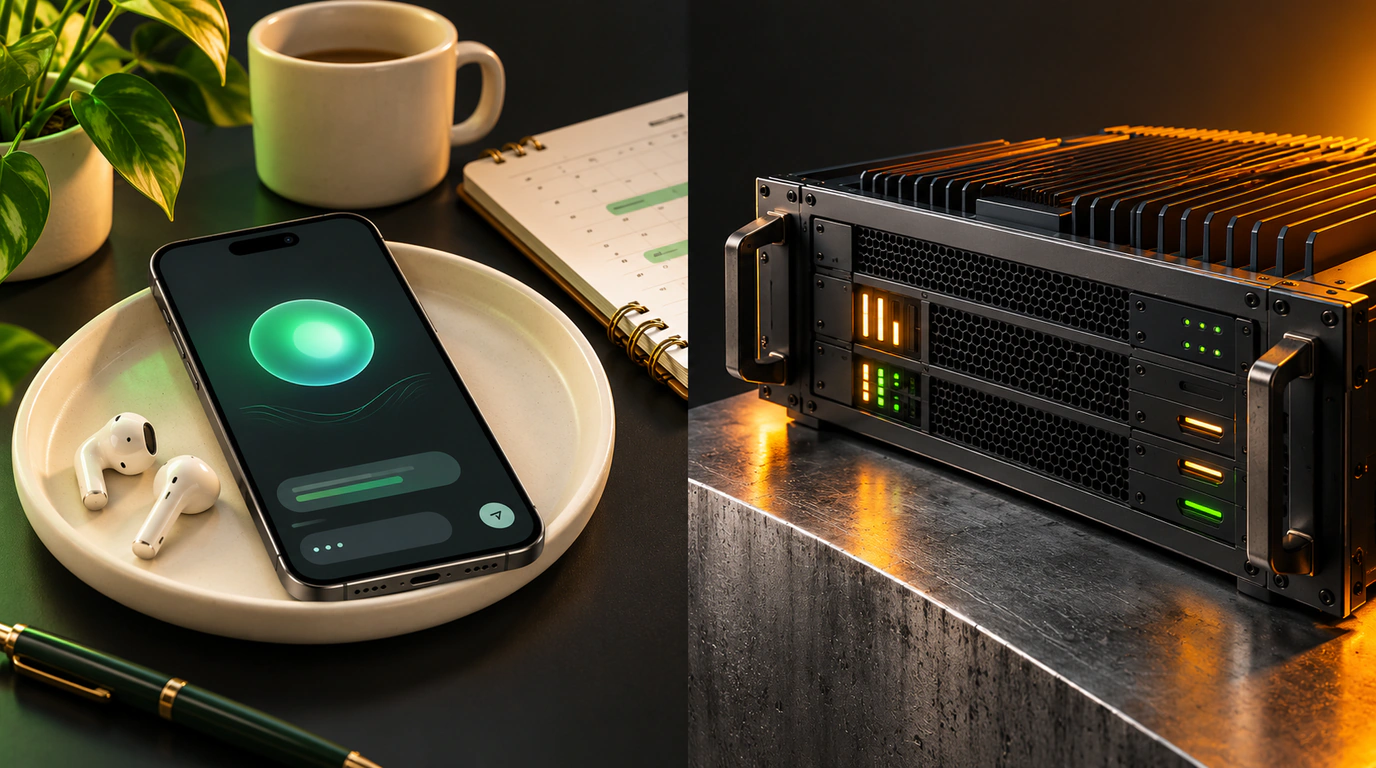
Conceptual dual still life pairing a pocket Meta Muse smartphone with a heavy Grok Bot server module on a split pedestal
ArticleAIAIAssistantsGrok

Meta Muse vs. xAI Grok Bot: Comparing Universal Autonomous Agents for Daily Workflows

When it comes to autonomous assistants for work and daily life, two tech ecosystems offer polar-opposite philosophies. On one side sits Meta Muse, built straight into your phone and WhatsApp as a discreet personal concierge with strict privacy guarantees. On the other stands Grok Bot from Elon Musk's xAI, running in the Colossus cloud cluster as an edgy squad of specialized bots.

We ran both tools side by side on real tasks—from summarizing voice notes to tracking live market trends. Here is how their strengths, user-data training policies, and business use cases stack up.

👍 0
No Code MBAMeta Muse Assistant Architecture
October 22
Monumental industrial landscape of a power substation and data center bathed in sunset light
LongreadAIStrategyInterviewCompute

Sam Altman's Big Interview: Recursive Self-Improvement (RSI), Signs of AI Consciousness, and the Chip Shortage

You have probably heard the heated debate over whether AI scaling laws hit a wall once the internet ran out of human text. In a wide-ranging interview with researcher Matthew Berman, OpenAI CEO Sam Altman gave candid answers to the industry's biggest questions.

The era of simply stuffing larger datasets into pre-training really is over: focus has shifted to Test-Time Compute and Recursive Self-Improvement (RSI), where models help design next-generation AI architectures. Yet Altman pointed out that the main physical bottleneck on the road to AGI is not silicon chips—it is a shortage of gigawatts of clean electricity and grid capacity.

👍 0
Matthew BermanOpenAI Perspectives on Long-Term Compute and RSI
October 22
Conceptual still life with precision shears trimming excess layers of bloated code from a compact monolithic block
ArticleAIAIPromptingOptimization

Ponytail 5: Context and Prompt Engineering Optimization to Cut Bloated AI Code by 53%

Every developer has watched AI assistants bloat a codebase—spitting out a wall of boilerplate, trivial comments, and clunky wrappers for a simple utility. The Ponytail 5 framework injects strict "lazy senior developer" meta-instructions that slash generated code volume by 53%.

The method relies on three practical rules for your .cursorrules file or Claude Code:

  • Ban polite preambles and comments on obvious lines;
  • Enforce a two-step pre-computation planning ladder under 20 words;
  • Favor idiomatic pure functions from the standard library over custom classes.
👍 0
Julian Goldie SEOPonytail Framework Guidelines
October 22
Isometric architectural cutaway of a virtual Hermes Agent OS office with Oracle, Writer, and Human Gate bays
LongreadAIAutomationMarketingAgents

Hermes Agent OS: Deploying a Team of Autonomous AI Agents for Marketing, Lead Generation, and Content Creation

Dumping an entire company's marketing onto one general-purpose AI agent always ends the same way: the agent loses context, mixes up audiences, and starts spamming generic posts. Nous Research tackled that problem by releasing the MIT-licensed Hermes Agent framework and the Hermes Agent OS concept.

The architecture splits work across specialized roles: analyst Hermes Oracle, copywriter Hermes Writer, and a supervisor protected by a Human-in-the-loop approval gate. Persistent cross-session memory and a library of 40+ tools let a single marketer produce and adapt up to 50 pieces of content a day.

👍 0
Julian Goldie SEONous Research Hermes Agent Repository
October 22