Over the past few months, a familiar panic has swept through marketing circles. Conference stages are packed with talks declaring "traditional search is dead," agencies are rebranding overnight as Generative Engine Optimization (GEO) experts, and site owners are fed a scary ultimatum: "If ChatGPT or Perplexity isn't citing you, your business will be invisible by the end of 2026."
Hundreds of companies rushed to rewrite their pages into awkward synthetic templates, stuff markup for language models into their HTML, and burn budgets on generative ranking consultants.
Let's cut through the hype and look at real web analytics. Well-known Google algorithm and E-E-A-T specialist Marie Haynes published a sobering research report titled "GEO is a distraction," based on a deep audit of 100 live commercial websites. The numbers are stark enough to make plenty of marketers look away.
Hard Data vs. Hype: How Much Traffic Actually Comes from Chatbots
Let's open the raw analytics logs. Haynes's study revealed the median numbers across commercial sites spanning e-commerce, local services, and B2B:
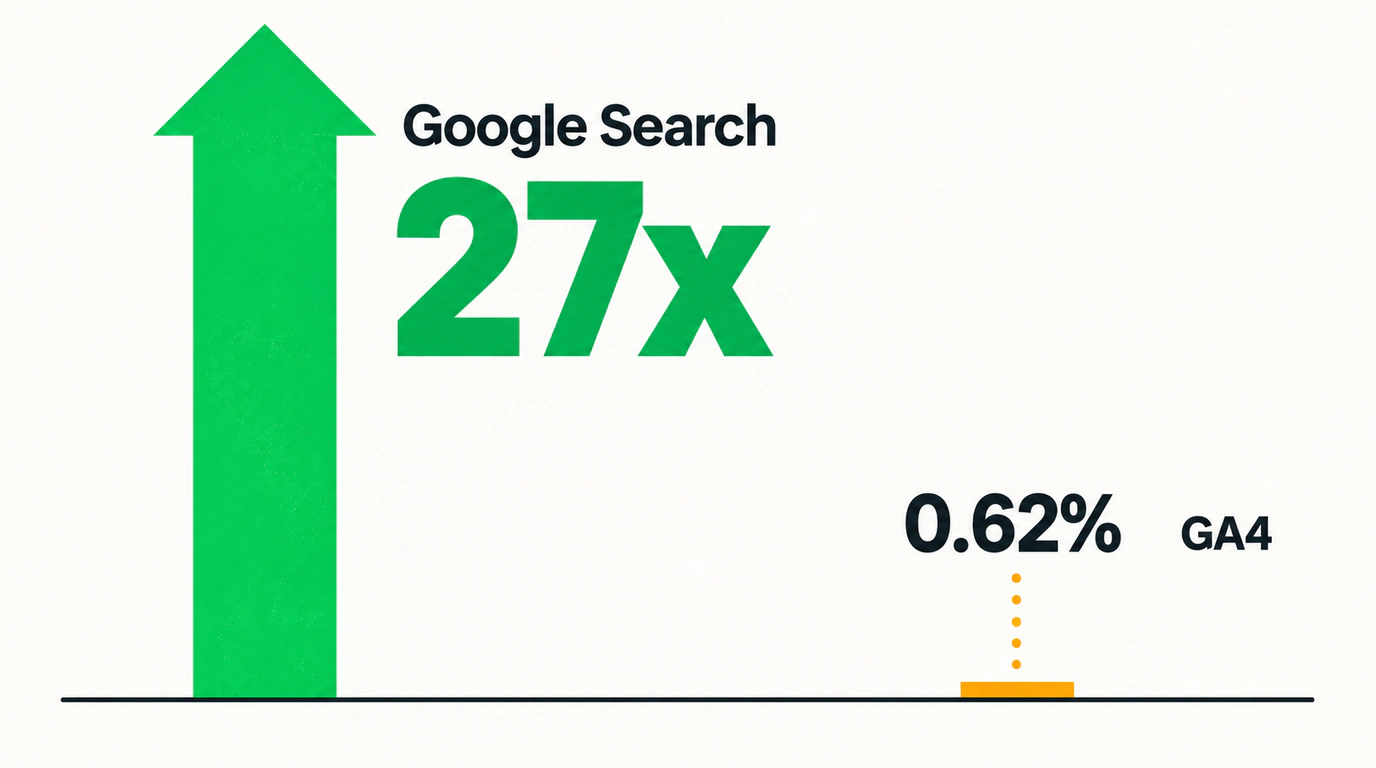
- Referral traffic from ChatGPT averages just 0.62% of Google organic search traffic;
- Combined traffic from all chatbots and AI platforms put together (including Perplexity, Claude, and Microsoft Copilot) barely reaches 0.73%.
Multi-layered tactile paper collage showing a towering green Google Search monolith next to a tiny orange chatbot beacon
Yes, people ask AI chatbots millions of questions every day. But the nature of a chatbot is that the user gets a finished answer right inside the chat window. Unless they are hunting for a specific document or making a complex purchase, they have zero reason to click tiny footnote links.
Now look at what actually pays the bills: revenue. Marketers often argue, "Sure, ChatGPT sends fewer visitors, but they are super high-intent buyers!" Haynes tested that claim too. Because of the sheer gulf in volume, Google organic search drives 27 times more real sales, leads, and conversions than all external AI search engines combined.
For a grounded look at adapting content to modern search without the illusions, read GEO Optimization Instead of SEO: How Businesses Should Adapt to Google Search in the AI Era.
Where Generative Search Actually Lives: Google AI Mode
Does this mean AI has no impact on search? Not at all. The revolution simply is not happening where GEO course sellers claim it is.
The dominant generative player on the planet is still Google itself, through AI Overviews and AI Mode. When someone types a complex query into Google, a generative block builds a structured answer right on the results page. And here is the key paradox:
Google's algorithms pick sources for AI Mode not because of trendy LLM-specific markup, but based on classic fundamentals:
- Verified human experience (the Experience in E-E-A-T): original photos, real customer reviews, and a transparent brand history;
- Accurate commercial details: live inventory counts, clear pricing without hidden fees, and straightforward shipping terms;
- Technical site health: fast page loads and zero broken links.
We also analyzed citation mechanics and anti-spam enforcement in New Rules of GEO: Citations in AI Search, entitymap.json, and Fighting Manipulation.
The Misplaced-Focus Trap: Why Businesses Lose Money
Haynes noticed a striking pattern: many founders who spend weekly standups debating GEO still have not configured proper Key Events tracking in Google Analytics 4. They do not know their Customer Acquisition Cost (CAC) or where shoppers drop out of the checkout funnel—yet they spend hundreds of thousands of rubles generating mountains of synthetic SEO copy just to please OpenAI's crawler.
Instead of polishing imaginary prompts, set up clean end-to-end tracking in GA4:
- Segment visits by
utm_source=chatgpt.comor theandroid-app://com.openai.chatgptreferrer; - Compare bounce rates and average session duration against organic Google visitors;
- You will quickly see that chatbot traffic is mostly exploratory, whereas organic search brings buyers with their credit cards already out.
Optimize your site for a real human buyer, not an AI scraper. Build clean catalog search, add honest product video reviews, and enable one-click checkout. Everything that makes a site genuinely useful to a person automatically lifts it in both classic Google results and AI Mode snippets.
Mass-producing hundreds of cheap AI-written articles to 'stuff GEO keywords' triggers direct penalties under Google's Helpful Content System. In 2026, search algorithms spot zero-value sites instantly and drop them from the index.
Equally telling is how search engines weigh author credibility: documented case studies, hands-on implementation experience, and honest client feedback always beat attempts to game citation algorithms.
Do not let trendy hype blind you. While consultants sell hot air under the GEO label, real revenue still comes from a clear product, happy customers, and solid organic search.