If you use generative search regularly, you have already bumped into its invisible ceiling. When you need a quick pie recipe or a historical date, conversational search nails it. But ask for a deep market report—comparing financial filings across five startups, cross-checking patent citations, and pulling historical pricing trends—and the system skims the surface, regurgitating generic ad snippets from the top ten results.
Perplexity decided to break past that ceiling with Perplexity Computer. It marks a fundamental shift from one-off Q&A to long-running autonomous agent sessions.
Research Architecture: From Snippets to the Full DOM Tree
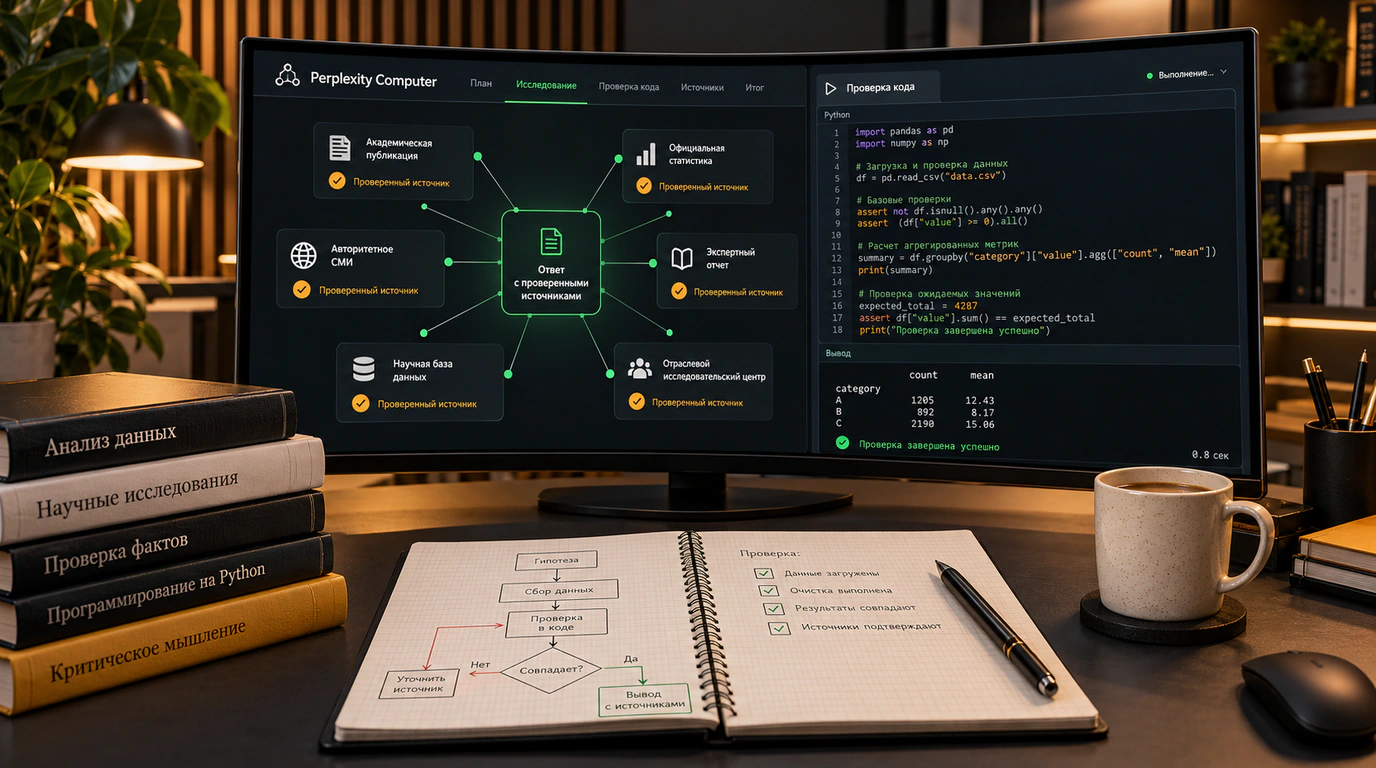
Perplexity Computer's main breakthrough is how deeply it reaches into the web. Ordinary chatbots only see metadata and short text summaries returned by a search index. Perplexity Computer deploys a swarm of parallel subagents that physically follow links, load full pages, navigate basic UI elements, and extract data directly from the DOM structure and embedded tables.
Two core components power the architecture:
- SPACE (Secure Platform for Autonomous Code Execution): when an agent needs to crunch a raw dataset or parse messy HTML, it writes a helper Python script on the fly and runs it inside an isolated container. This also neutralizes prompt injection attacks where a malicious page tries to hijack the agent;
- Model Council: to verify critical numbers and contested facts, the system cross-checks claims across multiple distinct models (Claude, GPT, and open-weight models). If their conclusions diverge, the agent triggers another round of primary-source verification.
We covered the ecosystem's desktop tools in Perplexity Computer Review for Windows: A Next-Generation Desktop AI Agent, and unpacked its new cloud automation workflows in Automations in Perplexity Computer: From One-Off Search to Recurring Background Tasks.
Do not leave your prompt at a single sentence. Specify exact verification criteria: which sources count as authoritative (such as official press releases and financial regulators), what output format you want (a Markdown comparison table), and what discrepancy threshold should flag a figure as uncertain.
Perplexity Computer excels across the open web, yet it still hits a wall on interactive CAPTCHAs, hard paywalls, and two-factor authentication. Those sources still require manual file exports upfront.
Perplexity Computer turns an analyst's research grind into a single-click workflow, restoring the internet's most valuable asset: verifiable, accurate facts.
