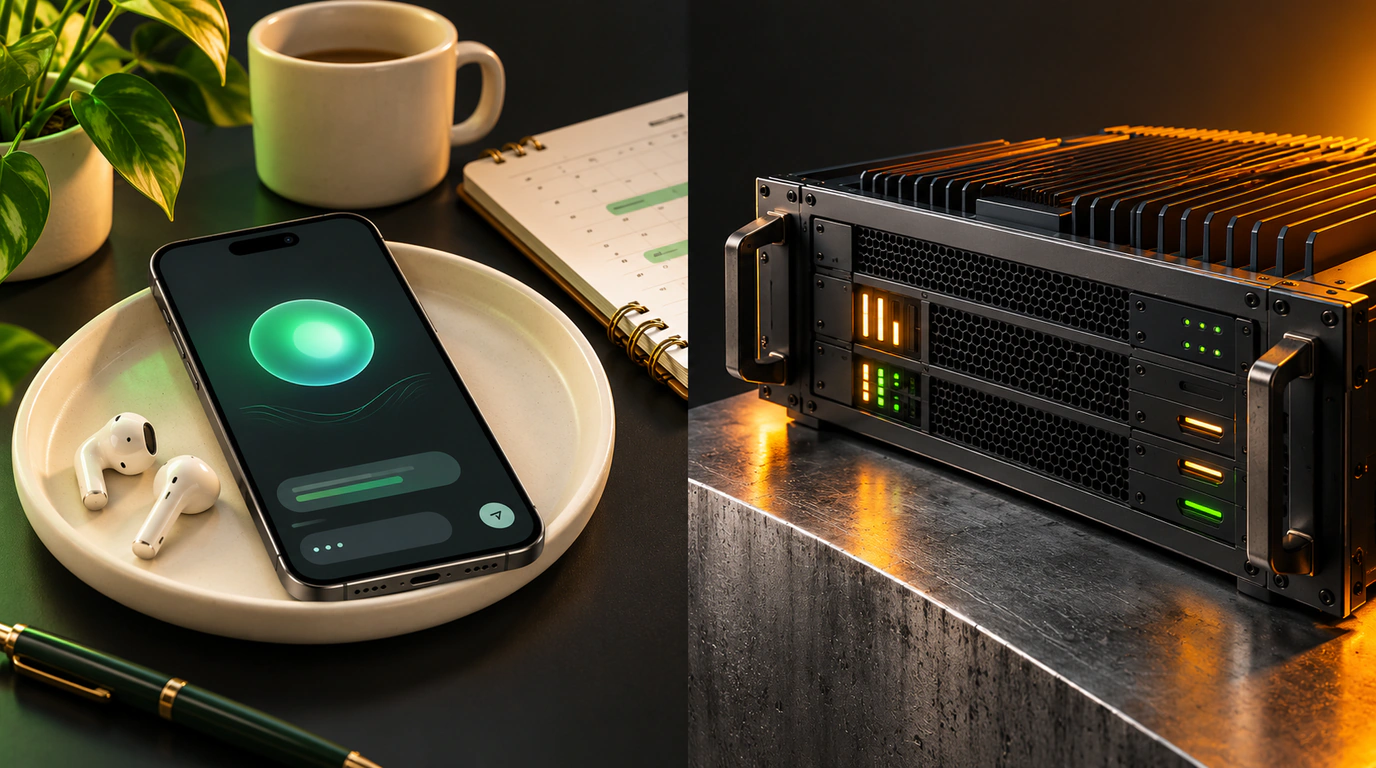
You have probably caught yourself wondering: "What should the ideal digital assistant actually look like?" Some people picture a quiet, unobtrusive secretary in their pocket who remembers workout schedules, reminds them to wish a coworker happy birthday, and politely summarizes long voice notes. Others want a sharp market analyst scanning social feeds around the clock, spotting emerging trends, and breaking down financial news without corporate sugarcoating.
In fall 2026, that divide crystallized into a head-to-head duel between two platforms: Meta Muse from Mark Zuckerberg's camp and Grok Bot from Elon Musk's xAI.
Integration Philosophy: Pocket Concierge vs. Cloud Team
The core difference between the two rivals starts with where they live:
Meta Muse: Personal Life-Admin Inside WhatsApp
Meta bet everything on frictionless accessibility. You do not have to open a separate website or keep a heavy app running: Muse lives directly inside WhatsApp and your phone's OS. It excels at daily coordination—distilling three-minute voice messages into crisp bullet points, cross-checking family calendars, and pulling an address out of a chat from two weeks ago. Meta also leans hard into privacy: personal messages are not used to train global models. We put this assistant's proactive behavior through its paces in Meta Muse AI: Test-Driving a Proactive Personal Agent and Its Data Access Risks.
Grok Bot: A Distributed Cloud Workstation
xAI went the cloud-supercomputer route. Inside Grok's interface, you are not talking to a single bot—you are managing a team of narrow specialists. Each agent has its own name, role, and access to the Colossus compute cluster. One bot scrapes posts on X, a second drafts marketing angles, and a third checks the math. Grok's trump card is direct, real-time grounding in the live pulse of X.
To see how to turn those capabilities into organic growth, read Meta Muse AI: An Autonomous Assistant for Audience Building and Social Media Outreach.
Tone and Conversational Personality
Comparing the voice modes of both systems is revealing. Muse's voice assistant speaks in a steady, impeccably polite, and supportive tone—somewhere between a therapist and an attentive executive assistant. It avoids sharp judgments and sticks strictly to the facts.
Grok Bot sounds like a sarcastic, quick-witted colleague from IT. It does not shy away from dark humor, happily pokes fun at breaking news, and operates largely free of the corporate guardrails typical of Silicon Valley firms.
If your biggest headache is personal admin chaos, endless voice notes, and calendar juggling, pick Meta Muse. If you need continuous market sentiment monitoring, news analysis, and unfiltered content drafting, plug in Grok Bot.
Keep in mind that Grok's multi-agent cloud mode requires an X Premium+ or SuperGrok subscription. Meanwhile, Meta Muse is rolling out in waves and remains restricted in jurisdictions with strict rules around biometric voice data processing.
The assistant face-off makes one thing clear: there is no single universal winner. The future belongs to deliberately splitting roles between a discreet guardian of your personal boundaries and a bold scout for external intelligence.
