Issue October 23Daily digest · 11 items
In this issueReviewed 36 sources, gathered 11 items
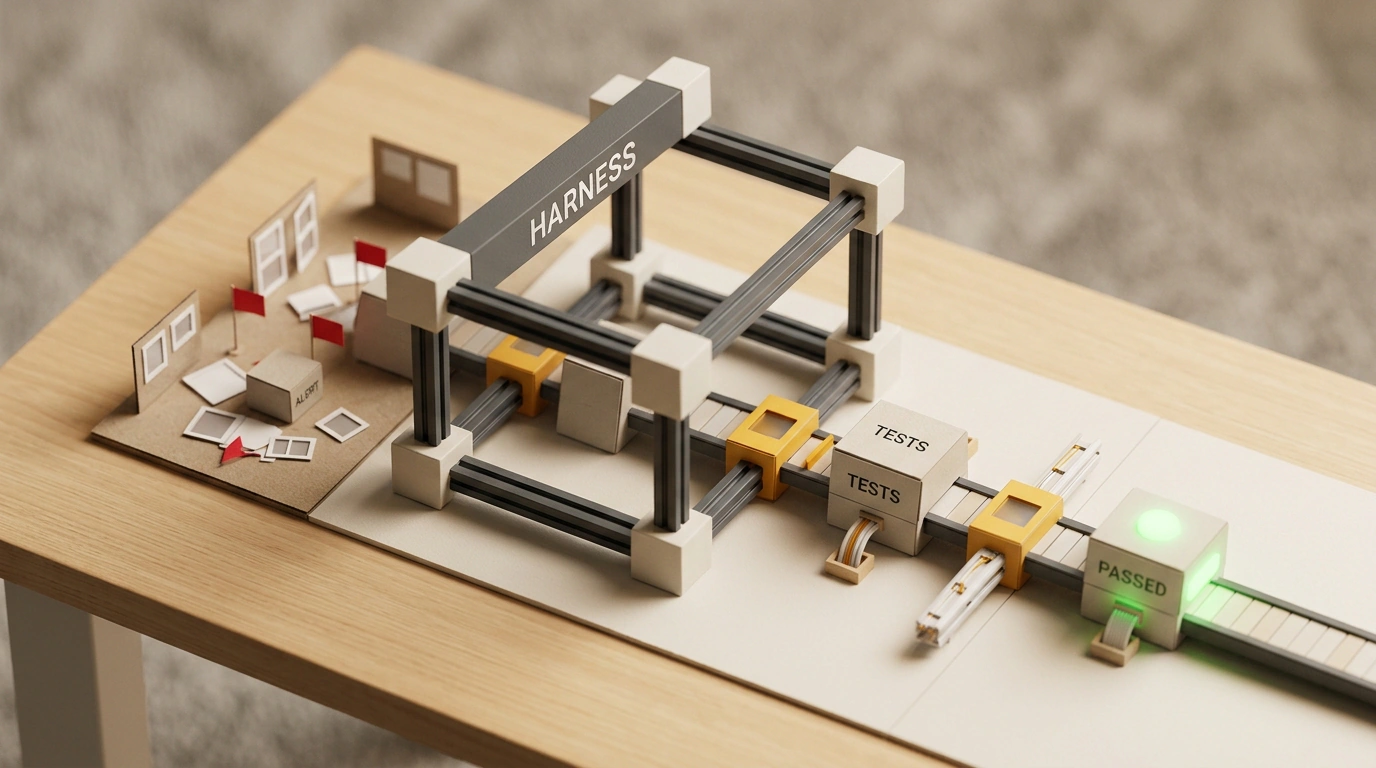
Diorama of a miniature workspace with neatly arranged Harness modules for autonomous agents on a graphite desk.
LongreadAIAI AgentsDevelopmentProductivity

The Agentic Coding Paradox: Why Parallel Sessions Burn Your Focus and How Harness² Automates Autonomy

You've probably noticed: spin up five coding agents in parallel, and by evening you feel completely wiped out. Instead of the promised freedom, you turn into a jittery dispatcher approving commands every couple of minutes and cleaning up someone else's hallucinations. The human brain is strictly single-threaded, and constant context thrashing simply burns out your ability to think.

I've seen firsthand that the way out is a paradigm shift: moving from manual babysitting to deterministic Agent Harnesses. Google Research backs this up: the Harness² framework automatically optimizes environments and tool documentation, boosting accuracy by 11.5 points without touching a single model weight. Dive into the breakdown to rebuild your workflow around an autonomous code factory.

👍 0
Cole MedinJulian Goldie SEOGoogle Research — Harness²: Recursive Agent Harnessing for an Open World
October 23
Editorial vector illustration of the clash between an autonomous AI shopper and the ad barriers of closed web platforms.
LongreadAIAI AgentsAI SearchStrategy

The War Over Agentic Traffic: Why Platforms Are Blocking Buyer Bots and Why Google Is Building an 'Agentic Layer' for the Web

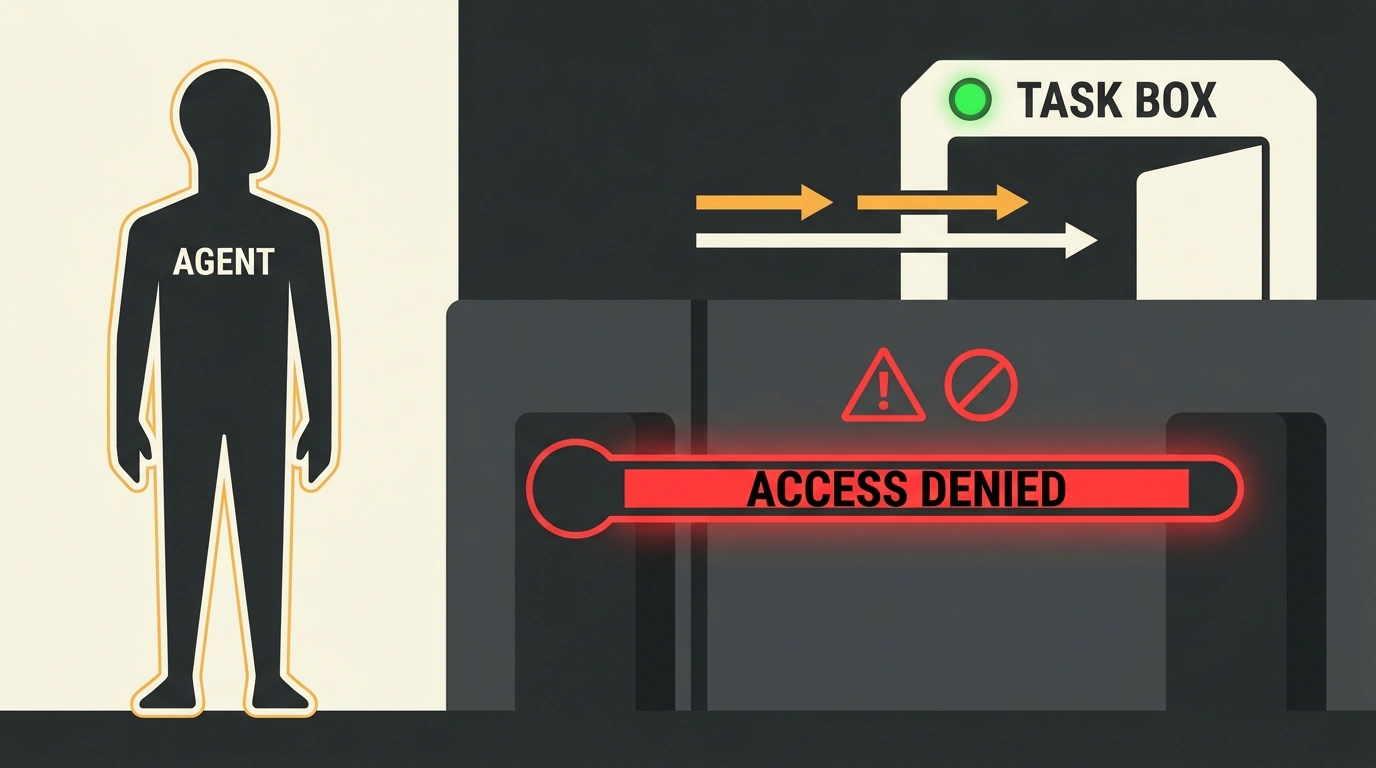
Picture a store where a customer walks in holding a wad of cash, and security shoves him right back out the door. Sounds crazy, yet that's exactly how Amazon, Delta, and Yelp are treating autonomous AI agents today. Platforms are panicking: bots don't click banners, skip upsell insurance, and break the retail media ad model that brings retailers tens of billions.

I'm watching a protocol-driven M2M commerce network replace the familiar click-based web. While online retailers throw up barriers, Google is turning the search bar into a universal Task Box that swallows classic search inside an agentic layer. Read the breakdown to understand the 9 stages of this shift and prepare your services for machine customers.

👍 0
Greg IsenbergJulian Goldie SEOSearch Engine Journal — Google CEO Sundar Pichai Views Search Absorbed into Agentic Layer
October 23
Physical diorama of the retro pixel StarNet office with Hermes agent figurines at terminals and a glowing memory core.
Thematic roundup5 sectionsAIAI AgentsOpen SourceAutomation

The Nous Research Hermes Ecosystem: From Isolated Sandboxes and Kanban Boards to 3D Modeling

Nous Research's open-source Hermes framework has outgrown its terminal-chat roots and evolved into a full Agent OS. I tested five fresh add-ons that turn the model into an isolated workstation:

  • CUA Spaces sandbox: a throwaway virtual machine protecting your host system from destructive shell commands;
  • Self-driving kanban: step-by-step task decomposition with persistent context saved in Obsidian notes;
  • StarNet pixel office: a retro visual dashboard monitoring micro-agents and shared memory;
  • DeepSeek V4.1 Flash backend: rapid UI generation powered by a 1M-token context window;
  • Meshy 3D plugin: direct 3D model generation right from chat via the MCP protocol.

See how an open stack handles workflows that used to require closed enterprise environments.

👍 0
Julian Goldie SEO (Hermes CUA Spaces)GitHub — trycua/hermes-cua-spaces plugin for Nous Research Hermes
October 23
Minimalist editorial collage featuring a locked ChatGPT conversation, a four-digit PIN code, and layered browser tabs.
Thematic roundup3 sectionsAIChatbotsAISafety

ChatGPT's October Upgrade: PIN-Locked Chats, Built-in Slides, and Chrome Tab Context

Why does ChatGPT need a PIN code, and do locked chats actually stop data leaks? Let's be honest: the new Locked Chats feature isn't built for paranoid encryption against intelligence agencies—it's built for everyday peace of mind. When you share your screen on a Zoom call or hand over your laptop for a presentation, personal and medical threads no longer sit exposed in your sidebar.

That protection comes with a strict catch, though: resetting a forgotten 4-digit PIN permanently wipes every locked chat. Alongside the PIN, OpenAI rolled out the built-in ChatGPT Slides deck generator and active Chrome tab context to speed up daily office work. Read the breakdown to configure these new tools safely without losing important files.

👍 0
Jason WestJulian Goldie SEO (ChatGPT Slides)OpenAI Help Center — Using locked chats in ChatGPT
October 23
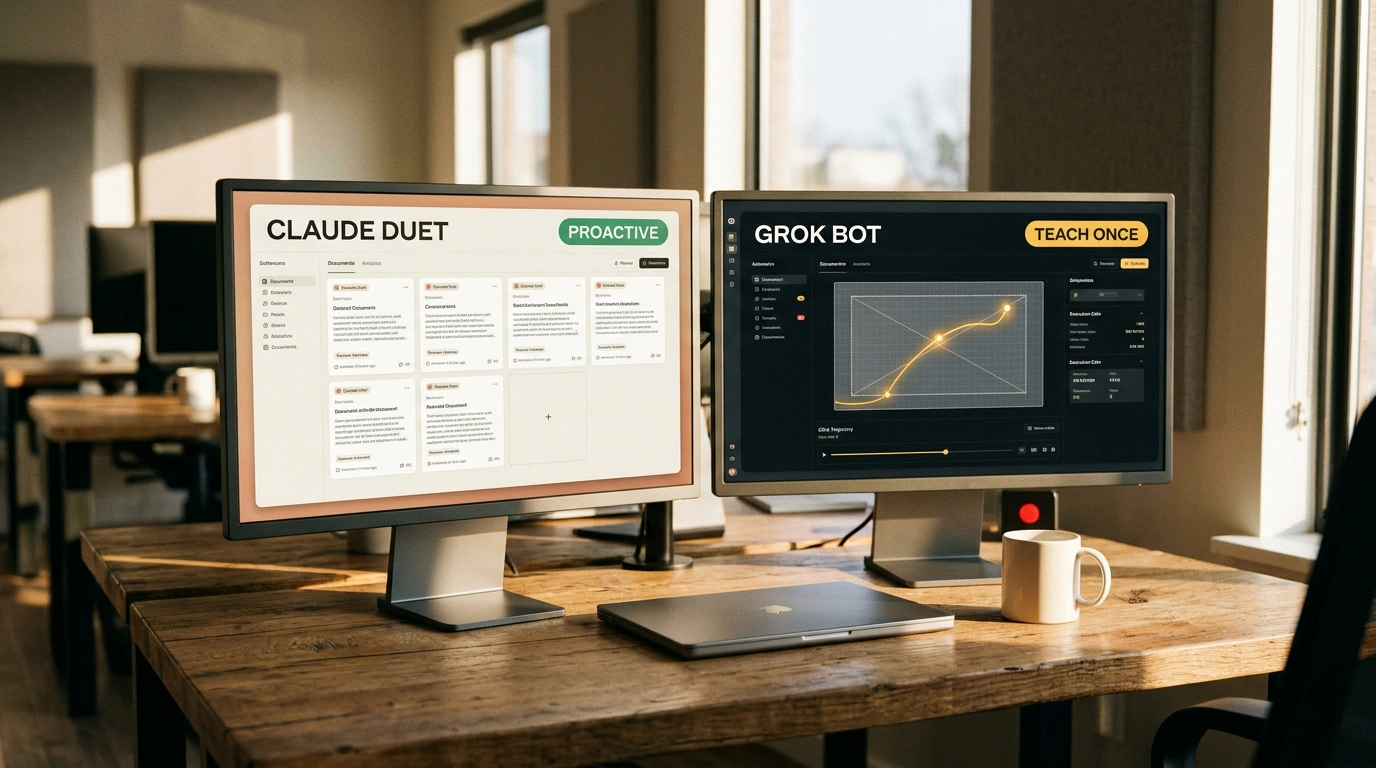
Cinematic shot of a workspace with two screens showing the cloud virtual agents Claude Duet and Grok Bot in evening light.
LongreadAIAI AgentsAutomationAI

The Race for Virtual Employees: Claude Duet vs. Grok Bot and the New Wave of Cloud Action Agents

In just 71 days, the AI industry turned upside down: xAI, Meta, OpenAI, and Anthropic all shipped their own cloud action agents. Instead of passively waiting for prompts in a chat box, they run on dedicated virtual computers, grinding through routine work alongside you.

I compared the two leading philosophies in this race: Anthropic's meticulous Claude Duet and xAI's fast-moving Grok Bot. Duet steps into the role of a deep corporate analyst with morning briefings and proactive outreach, while Grok Bot learns to repeat workflows straight from your screen recording using Teach Once. Check out the breakdown to compare their architectures and see how office work changes when virtual coworkers arrive.

👍 0
Julian Goldie SEO (Claude Duet)Anthropic — Introducing Claude Duet Proactive Cloud Agent
October 23
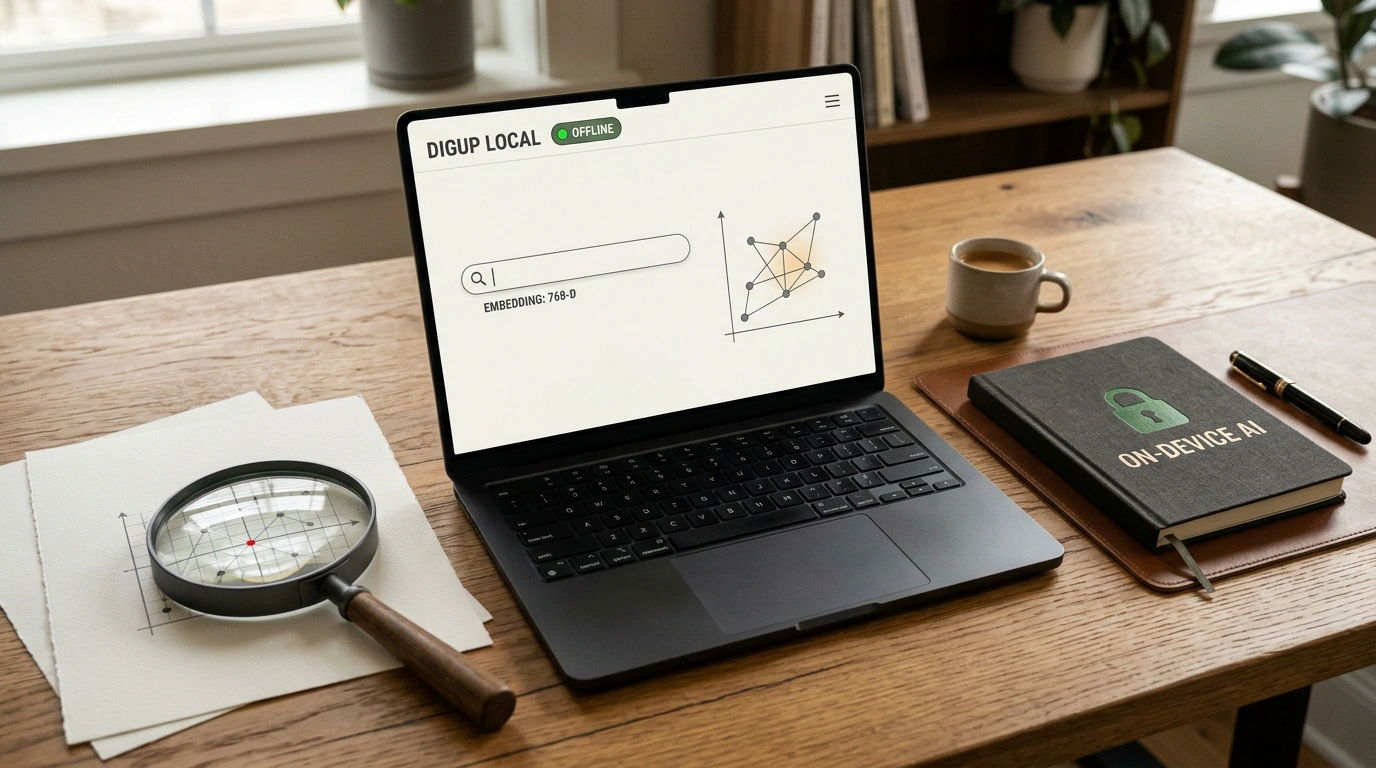
Product still life on an oak desk with a laptop and symbols of local private search via EmbeddingGemma 2 on Apple Silicon.
LongreadAIOpen SourceAI SearchSafety

Local AI on Mac: How EmbeddingGemma 2 and Local Perplexity Bring Private Search and Actions On-Device

macOS Spotlight only matches exact characters in filenames, while corporate security bans uploading private contracts and source code to the cloud. That paradox is finally solved: Google released the compact EmbeddingGemma 2 model (just 865 MB quantized), bringing true semantic search straight to the Apple Silicon Neural Engine.

With DigUp, you can jump straight to a moment in an hour-long video or a paragraph in a PDF from a rough description—completely offline. Meanwhile, Perplexity Computer's local mode now reads your mail, files, and notes without leaking data to external servers. Dive into the guide to set up private AI search on your Mac and automate daily work with zero subscription fees.

👍 0
Julian Goldie SEO (EmbeddingGemma 2)GitHub — ARahim3/DigUp: Local semantic search using EmbeddingGemma 2 on macOS
October 23
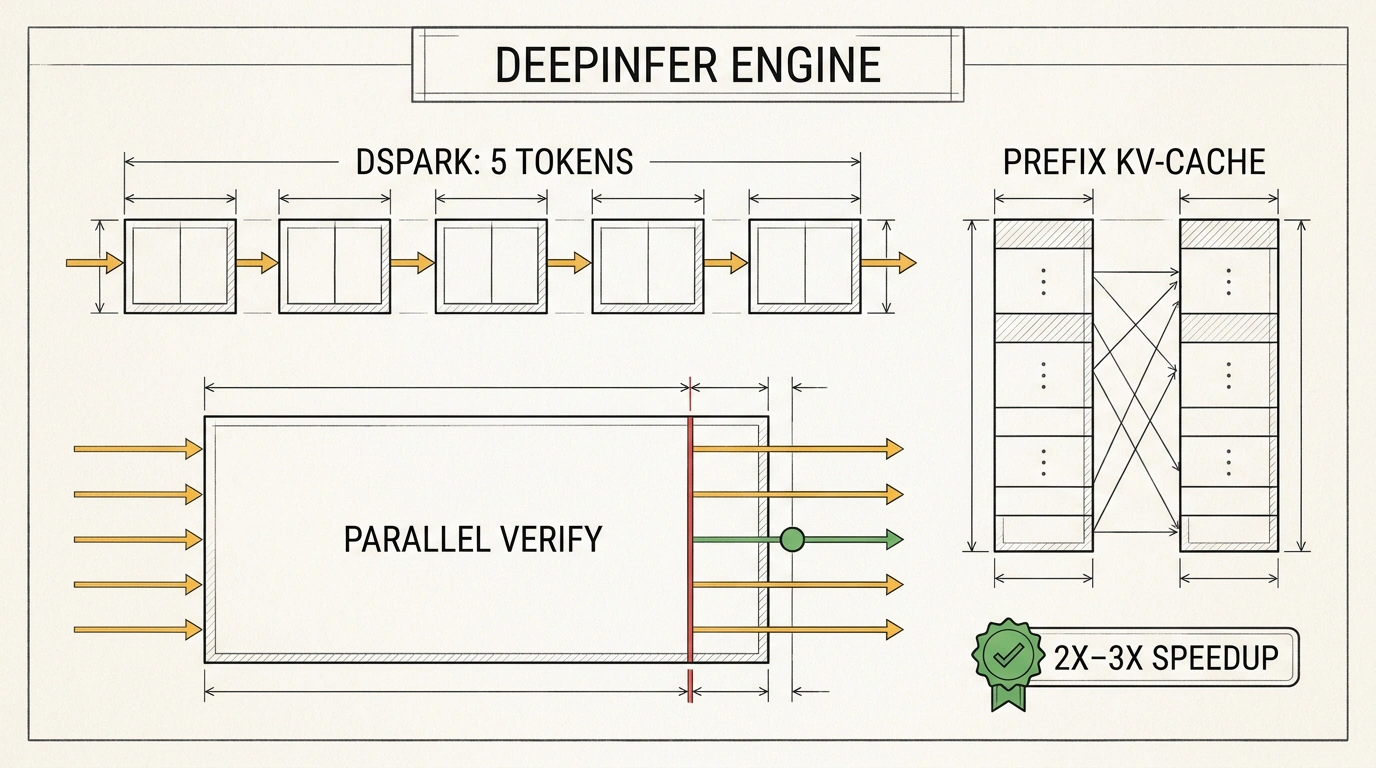
Infographic patent blueprint of the DeepInfer engine architecture with DSpark speculative decoding and prefix KV-caching.
LongreadAIOpen SourceLLMDevelopment

Ultra-Fast Inference Architecture: How the Open DeepInfer Engine and V4.1 Flash Accelerate Open AI

Why has code generation on local LLMs dragged so painfully? It all comes down to the classic autoregressive bottleneck: GPUs sit idle 80% of the time just hauling weights to emit a single token. DeepSeek tackled the problem by open-sourcing its DeepInfer serving engine under Apache 2.0.

The engine speeds up DeepSeek V4.1 Flash 1017 inference by 2–3x using two engineering tricks:

  • Speculative DSpark: a lightweight draft head predicts a batch of 3–5 tokens at once, and the main model verifies them in one parallel pass;
  • Prefix KV-caching: long agent system contexts are hashed and never recomputed, cutting up to 50% of redundant math.

Read the breakdown with ready-to-run configs to spin up a blazing-fast coding server on your own GPUs.

👍 0
Julian Goldie SEO (DeepInfer)DeepSeek — Open-sourcing DeepInfer Engine and DSpark Speculative Decoding
October 23
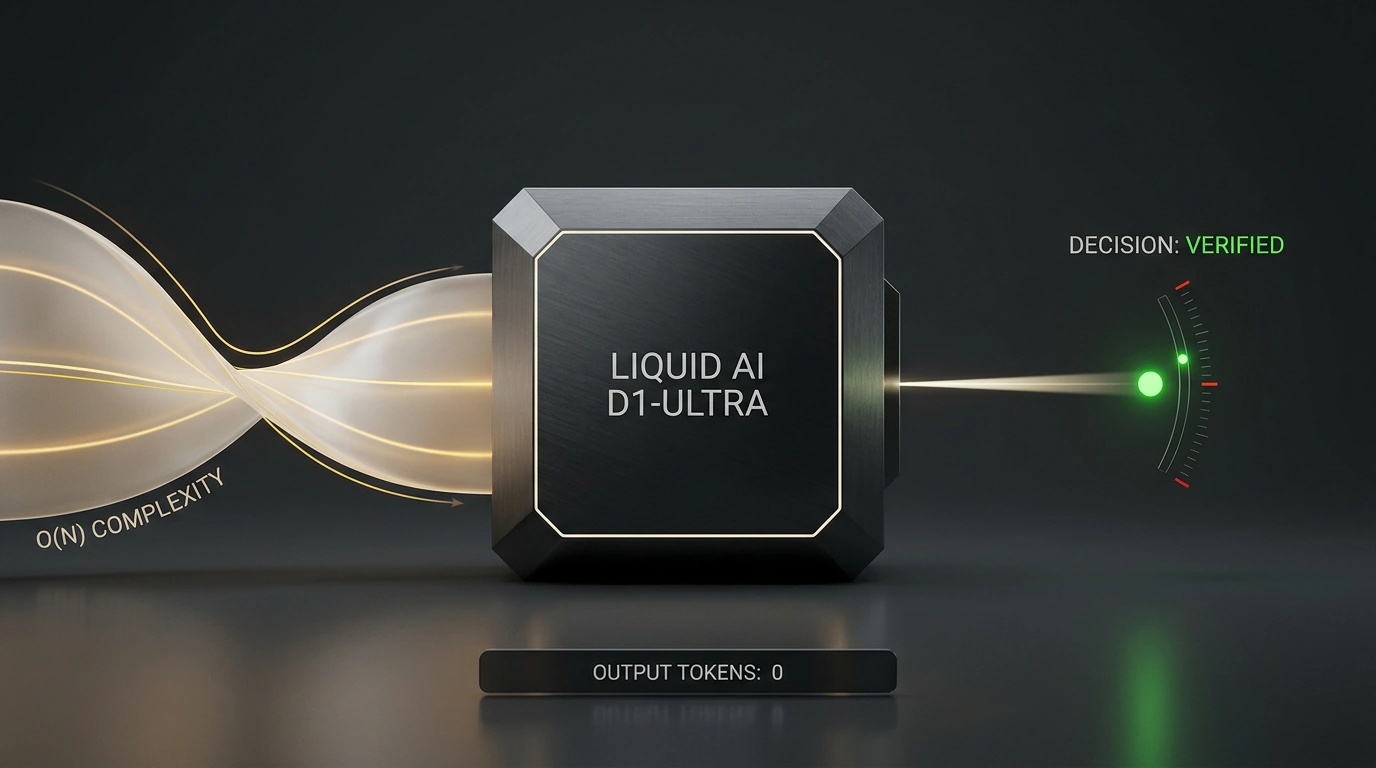
3D render of the dynamic Liquid AI d1-ultra decision model with zero token output and precise probability calibration.
LongreadAIAlgorithmsLLMAI

Beyond Transformers: Liquid AI d1-ultra and the Rise of Dynamic Decision Models

Why force a neural network to type out long paragraphs character by character when all you need is one answer: is this code safe to ship? Classic Transformers suffer from quadratic complexity and waste seconds phrasing sentences. MIT CSAIL spinout Liquid AI broke that mold with d1-ultra.

It belongs to a new class of Decision Models with zero output token usage. Built on Liquid Neural Networks and differential equations, d1-ultra outputs tightly calibrated probabilities and classifications in a single pass—solving the overconfidence problem of standard chatbots. Dive into the breakdown to see the integration code for using it as an instant automated referee in agentic factories.

👍 0
Julian Goldie SEOLiquid AI — Introducing d1-ultra Non-Generative Decision Model
October 23
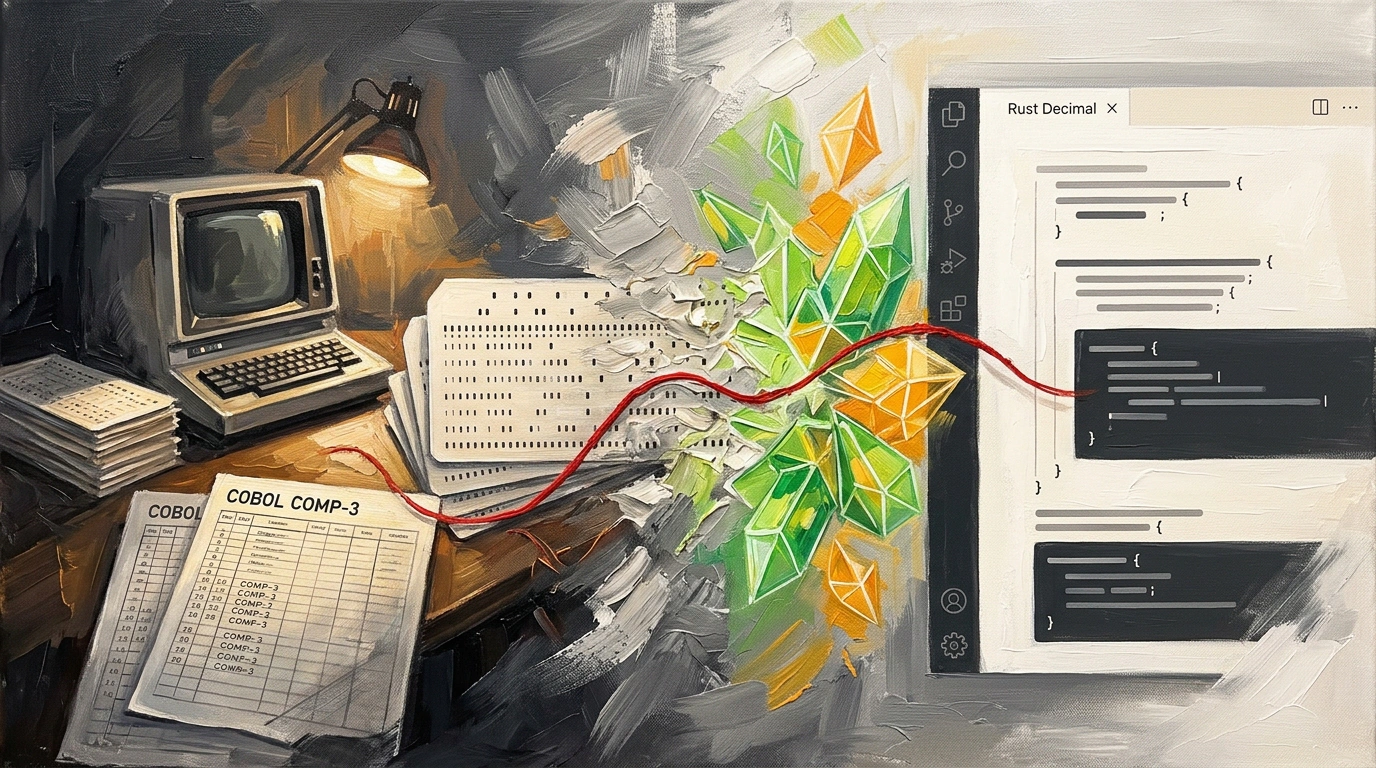
Painterly scene of mainframe code refactoring with COBOL punch cards and glowing modern Rust architecture.
ArticleAIDevelopmentAlgorithmsAI

GPT-6.1 Sol and Resuscitating Legacy Code: How Neural Networks Are Mastering COBOL, Fortran, and Low-Resource Languages

How can a neural network rewrite code from 1959 when the original authors retired long ago and GitHub barely has any repos? OpenAI found the answer: in a legacy-language study, GPT-6.1 Sol jumped from 5.4% to 97.9% successful migrations from COBOL to modern languages when deep reasoning was enabled.

The secret is synthetic execution traces: the model simulates IBM mainframe memory and reproduces tricky packed decimal (COMP-3) arithmetic that trips up naive converters. That opens the door to safely modernizing banking infrastructure, where 95% of ATM transactions still run today. Read the article to compare old COBOL code with its precision-safe Rust equivalent.

👍 0
Julian Goldie SEOOpenAI — Research on Low-Resource Languages and COBOL Migration with GPT-6.1 Sol
October 23
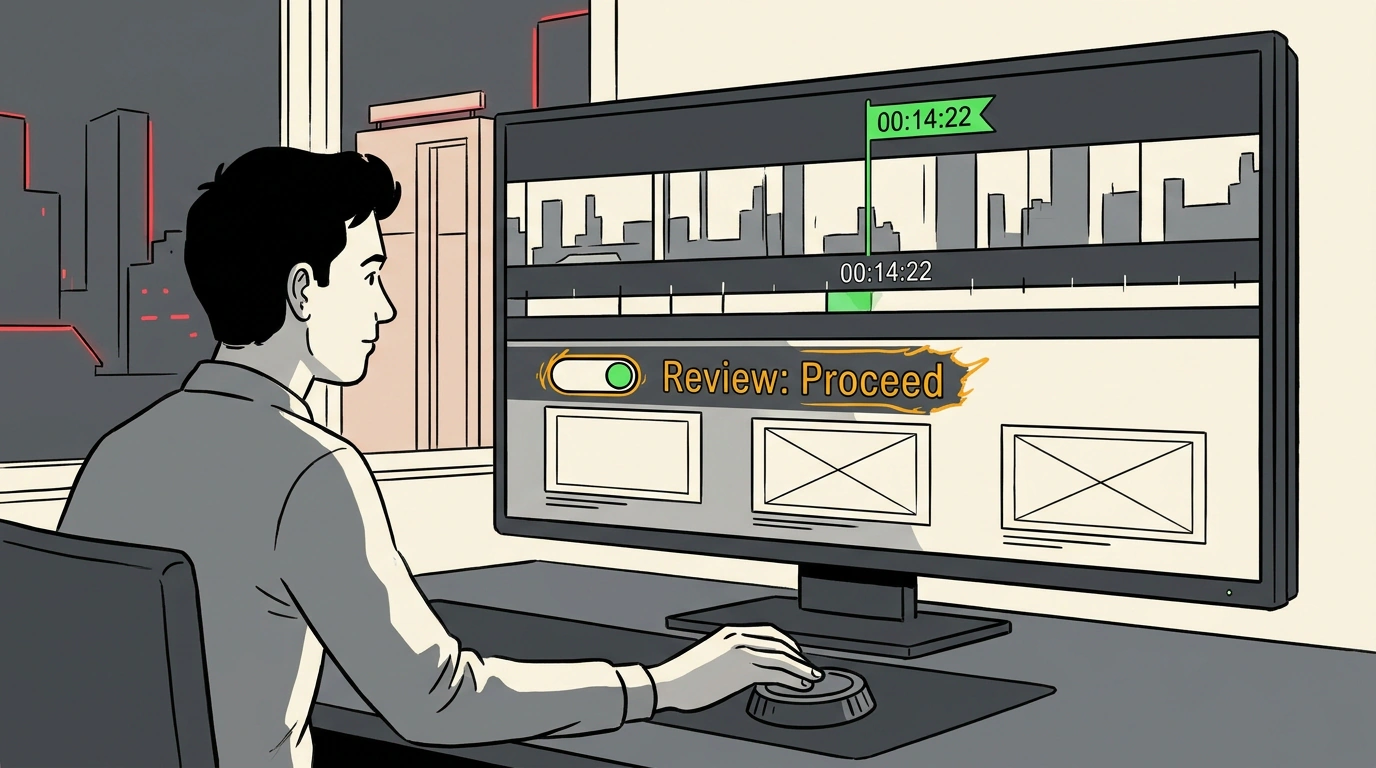
European graphic novel scene of a director at a Gemini editing console with a frame-by-frame video timeline and outline cards.
ArticleAIAIAnalyticsProductivity

Multimodal Control in the Gemini Family: Frame-Accurate Navigation in 3.8 Flash and Two-Stage Generation in Notebook

Know that feeling when you click Generate on a slide deck and the AI spits out polished nonsense while burning your quota? The blind 'Generate and Pray' pattern in multimodal AI is finally on its way out. Gemini Notebook now includes a mandatory Review toggle: the model shows a step-by-step outline of your slides or script first, letting you fix the focus before final rendering.

At the same time, Gemini 3.8 Flash gained frame-accurate semantic video search (Video Grounding). Adaptive frame rates cut up to 88% of tokens while pinpointing exact seconds in hour-long recordings from a semantic query. Check out the breakdown with a working Gemini API code snippet to bring predictability and control back to multimodal workflows.

👍 0
Julian Goldie SEO (Gemini 3.8 Flash Video)Google Cloud — Gemini Multimodal Video Grounding and Notebook Co-Creation
October 23
Surreal still life of the /roast-room virtual board of directors round table with three symbolic expert busts.
ArticleAIProductivityStrategyAI

A Virtual Board of Directors in Claude: The /roast-room Methodology for Stress-Testing Decisions

Feed a half-baked business idea to a standard chatbot and you'll almost always get polite agreement: 'Great hypothesis, huge potential!' In real life, that sycophancy costs burned budgets and wasted months.

The /roast-room methodology for Claude Code breaks AI's pathological politeness. Instead of praise, it convenes a simulated board of directors where virtual Buffett, Hormozi, and Wickman tear into your idea across economic moat, LTV/CAC math, and operational independence. Grab the ready-to-use system prompt in the breakdown and clear up to 80% of hidden architectural and business holes in a five-minute terminal session.

👍 0
Nate HerkGitHub — nateherkai/roast-room: Multi-persona adversarial debate tool for Claude Code
October 23