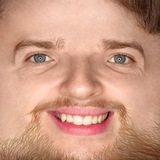
Scroll through your YouTube feed and you'll catch an odd feeling: a familiar creator is on the thumbnail, yet something looks off about their face. Smooth waxy skin, a stranger's smile — meet the "AI creepy twin."
Creators comfortably hand roughly a third of design and video production chores to AI. Going one step further and generating a thumbnail portrait from scratch is tempting, and both food reviewers and AI channels are falling into the trap. Audience quality expectations are rising, and faith in AI tools dulls critical judgment. The creator gets used to the image, while viewers spot a stranger in one second.
In a 2022 PNAS study by Sophie Nightingale and Hany Farid, people told unfamiliar AI faces from real photos with just 48–50% accuracy — essentially a coin flip. Algorithms produce smoothed, averaged features. That works on a stranger, yet on your own channel, viewers know your real face. When waxy skin and off-kilter proportions appear on a thumbnail, the "uncanny valley" kicks in — a quiet sense of falseness in an almost-real face. The thumbnail immediately reads as mass-produced clickbait and hurts recognition.
Draw a simple line: let AI handle backgrounds, lighting, props, and outfit swaps on a real photo, while keeping your actual face and expressions untouched.