Issue October 25Daily digest · 13 items
In this issueReviewed 68 sources, gathered 13 items
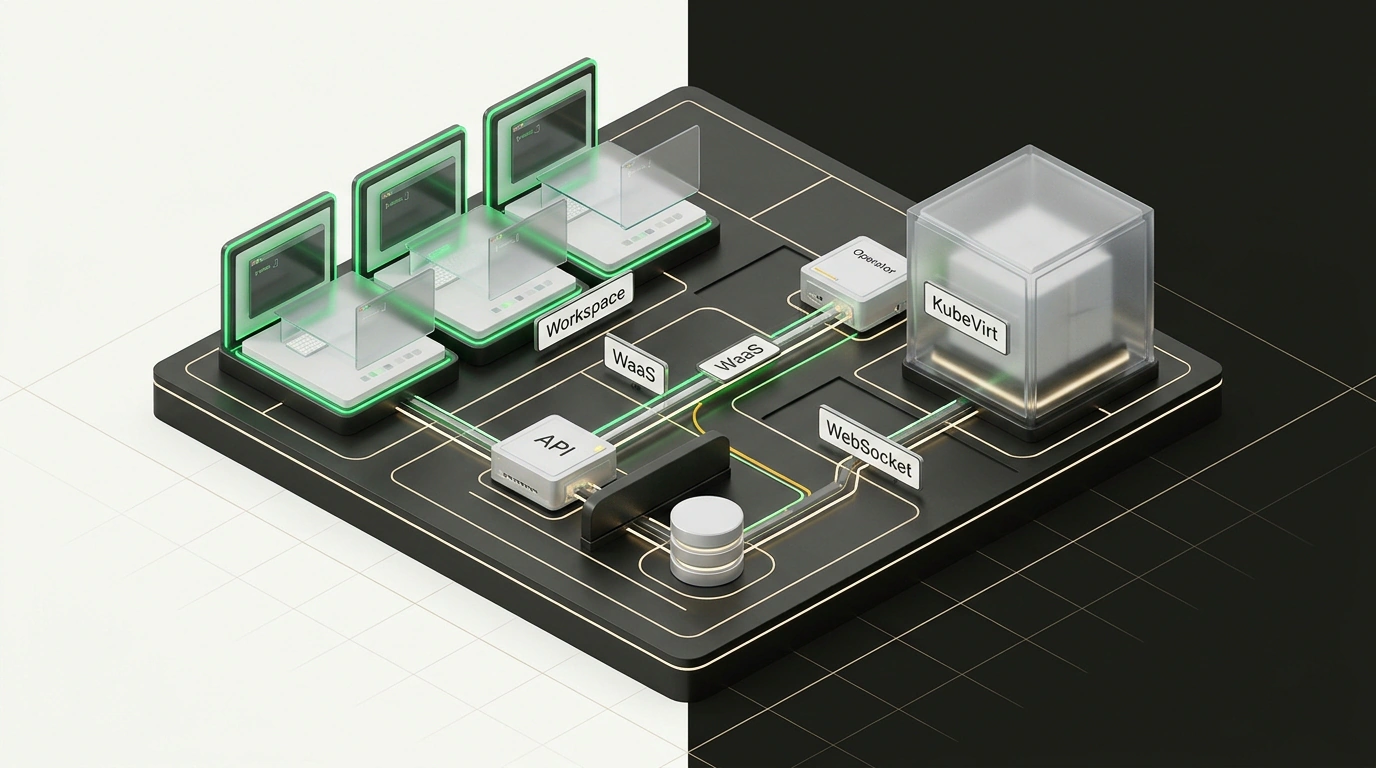
Architectural isometric diagram of a Kubernetes cluster launching isolated Linux and Windows workspaces via the WaaS platform.
ArticleDevelopmentOpen SourceKubernetesInfrastructure

WaaS: Spinning Up Isolated Desktops Directly Inside Kubernetes

Conventional wisdom says setting up remote desktops for engineers always means bulky proprietary VDI suites, dedicated virtualization servers, and sky-high licensing bills. Yet if your company already runs a Kubernetes cluster, building a separate zoo of servers next to it makes little sense.

The open-source WaaS platform turns graphical workspace provisioning into a standard Kubernetes manifest: Linux boots in a container in seconds, while Windows spins up via KubeVirt right in the browser. Developers get a familiar graphical desktop over WebSocket, and all source code stays inside the protected corporate perimeter without risking leaks onto personal laptops.

👍 0
DevOps&SRE LibraryXoRHub/waas — Kubernetes-native Workspace-as-a-Service
October 25
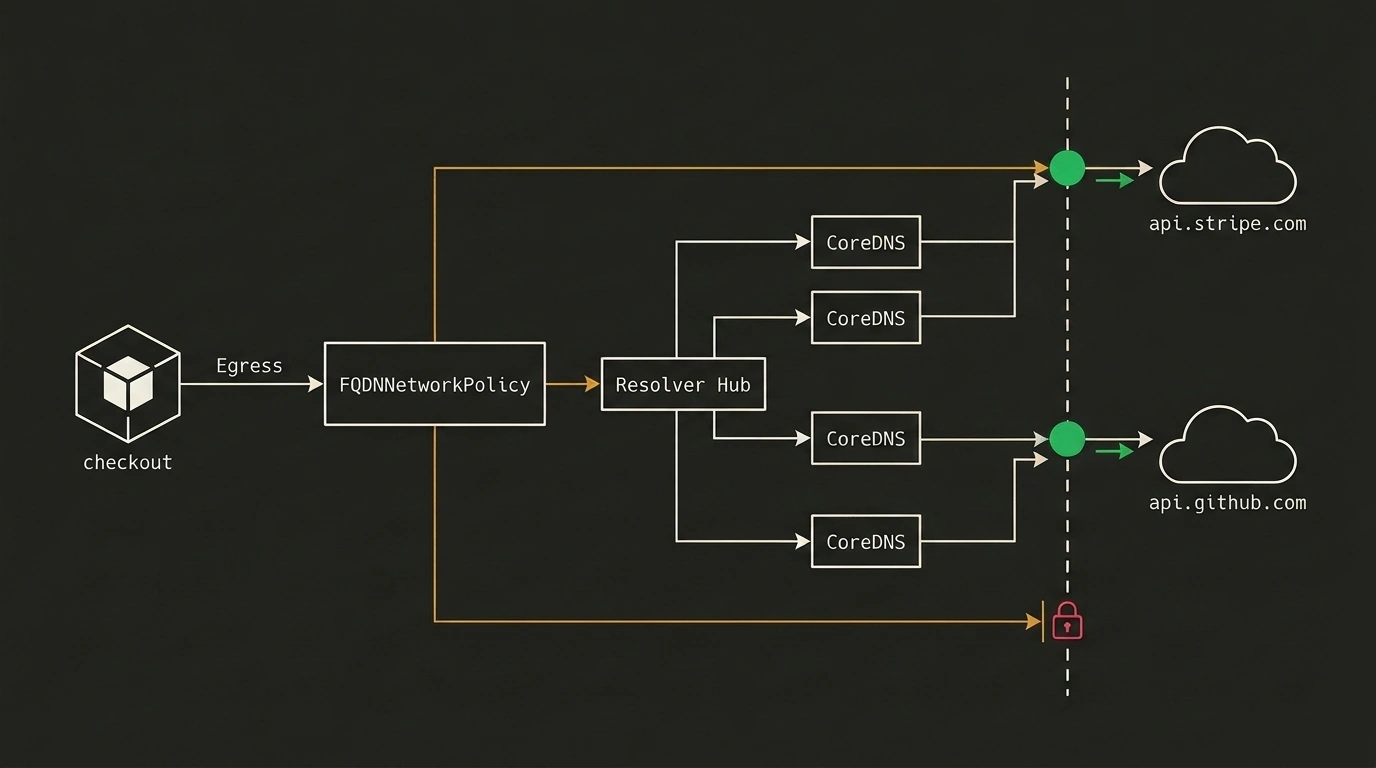
Patent-style engineering blueprint of a Kubernetes network controller filtering outbound traffic to payment gateways by domain name.
ArticleSafetyOpen SourceKubernetesDevOps

fqdn-network-policy: Filtering Outbound Kubernetes Traffic by Domain

Trying to restrict outbound microservice traffic in Kubernetes with standard NetworkPolicy manifests quickly turns into a headache: modern APIs and payment gateways sit behind CDNs with rotating IP addresses, while Kubernetes only knows how to filter packets by static CIDR ranges. Teams end up either opening access to the entire internet or embarking on a heavy migration to specialized CNIs.

The open-source fqdn-network-policy controller closes that gap: it continuously resolves domain names across a pool of four independent DNS servers and updates standard NetworkPolicy rules on the fly. All filtering runs natively on top of any existing CNI—no memory-hungry sidecar proxies required and no risk of breaking production when a cloud provider rotates IPs.

👍 0
DevOps&SRE Librarykunaldevxxx/fqdn-network-policy — GitHub
October 25
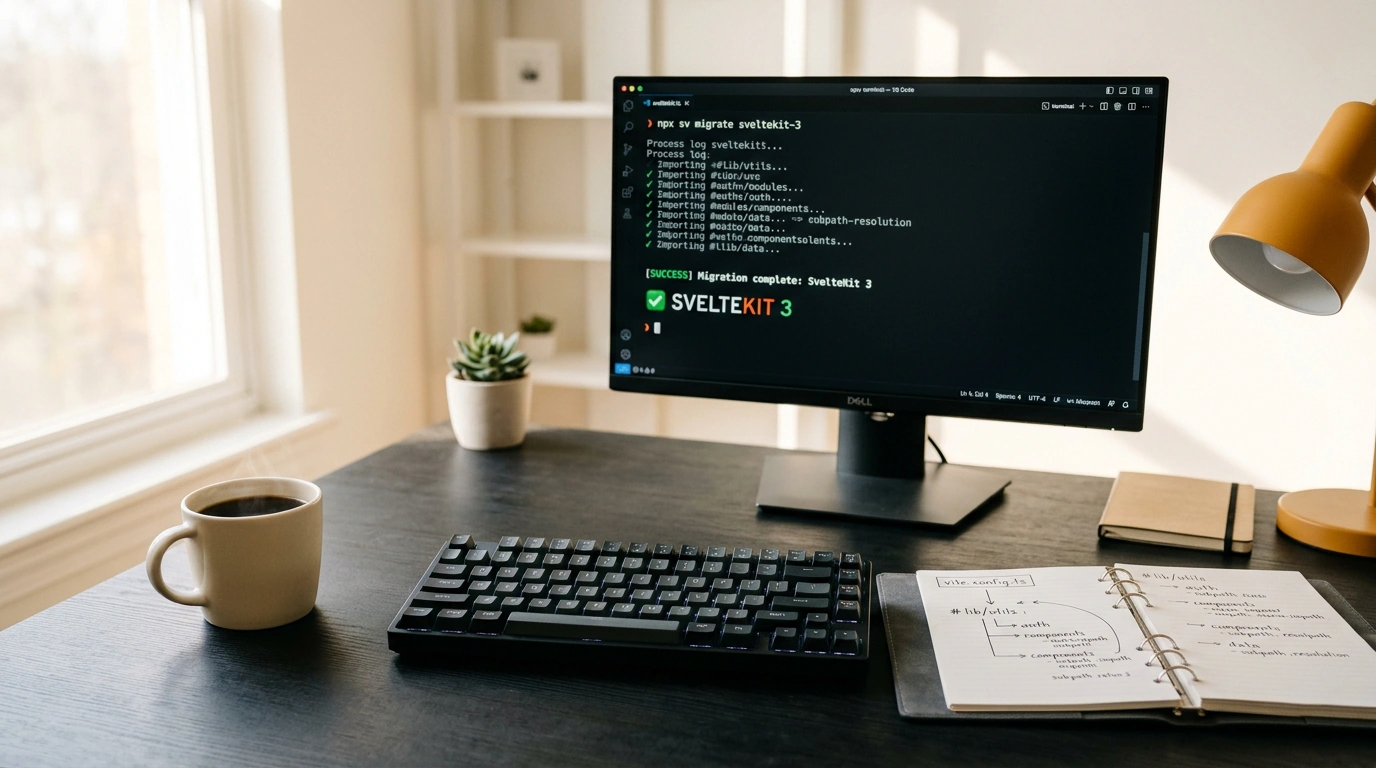
Clean studio still life of web developer tools alongside a screen showing migration to SvelteKit 3 and the sv 1.0 CLI.
ArticleDevelopmentPracticeSvelteFrontend

SvelteKit 3 and sv 1.0 CLI: What Changes in Adapters and Migration

The major SvelteKit 3 release draws a line under old architectural compromises: the framework finally drops the proprietary $lib alias in favor of native Subpath Imports #lib, consolidates scattered configs into a single vite.config.ts, and rewrites its core server adapters.

The biggest shift hits the server side: Cloudflare Workers drops the platform object completely for the strictly typed cloudflare:workers module, while the Node.js adapter moves to instant static-asset validation via ETag hashes. The official sv 1.0 CLI automates path and config rewrites, though developers will still need to review file-handling and server hook logic by hand.

👍 0
Библиотека фронтендераWhat’s new in Svelte: October 2026 — Svelte Blog
October 25
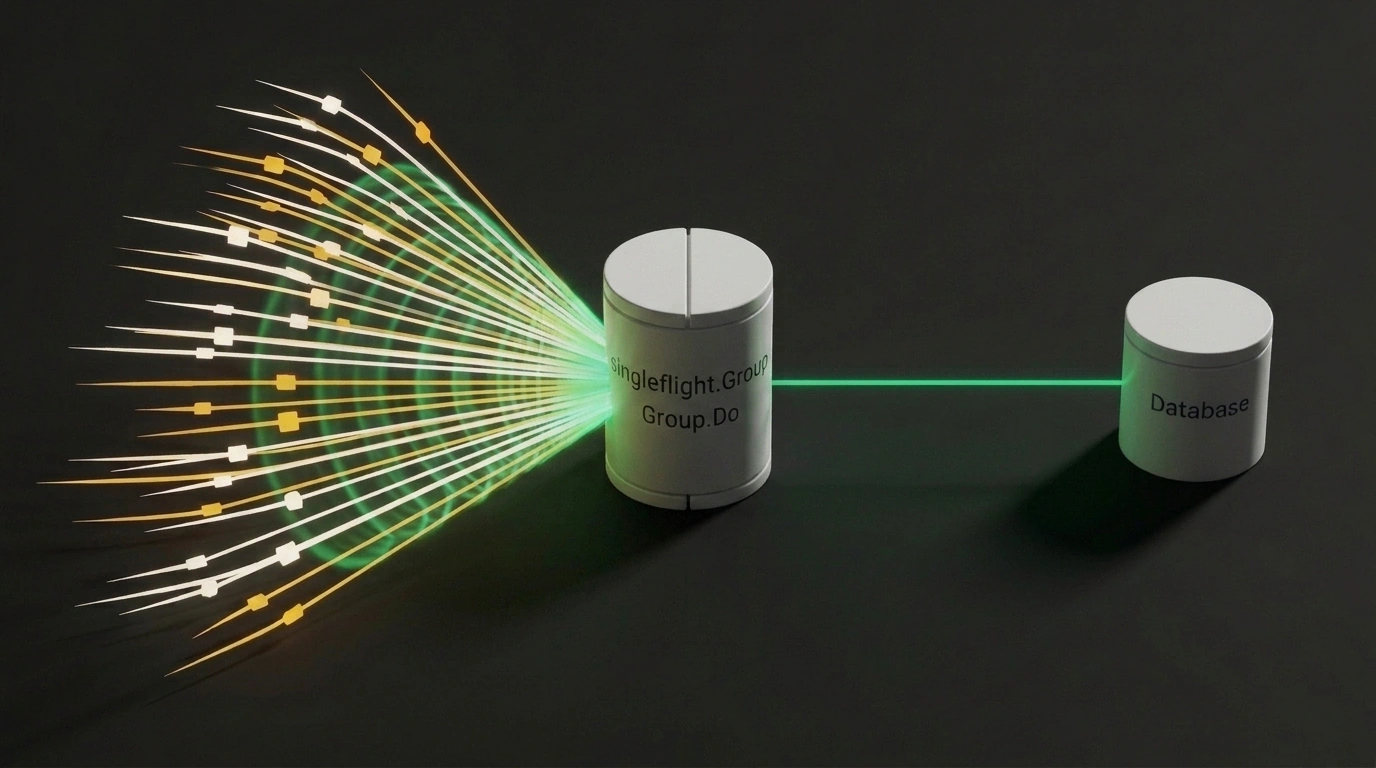
Metaphorical scene of a Go singleflight synchronization gate shielding a database from an avalanche of simultaneous requests.
ArticleDevelopmentEfficiencyGolangBackend

Go singleflight: Protecting Your Database from a Flood of Identical Requests

High-load backends harbor a nasty trap: a service can serve 50,000 RPS smoothly from a fast cache, yet the moment a hot key expires, hundreds of concurrent goroutines hit a miss and stampede the primary database for the exact same data. A textbook Cache Stampede ensues: the DB connection pool overflows and the database goes down.

The singleflight package from golang.org/x/sync solves this without distributed locks or extra overhead: Group.Do collapses concurrent calls in process memory into a single execution. Only the first request actually hits the database while the rest wait patiently and receive the result together, cutting DB load by orders of magnitude.

👍 0
Библиотека Go-разработчикаPackage singleflight — pkg.go.dev
October 25
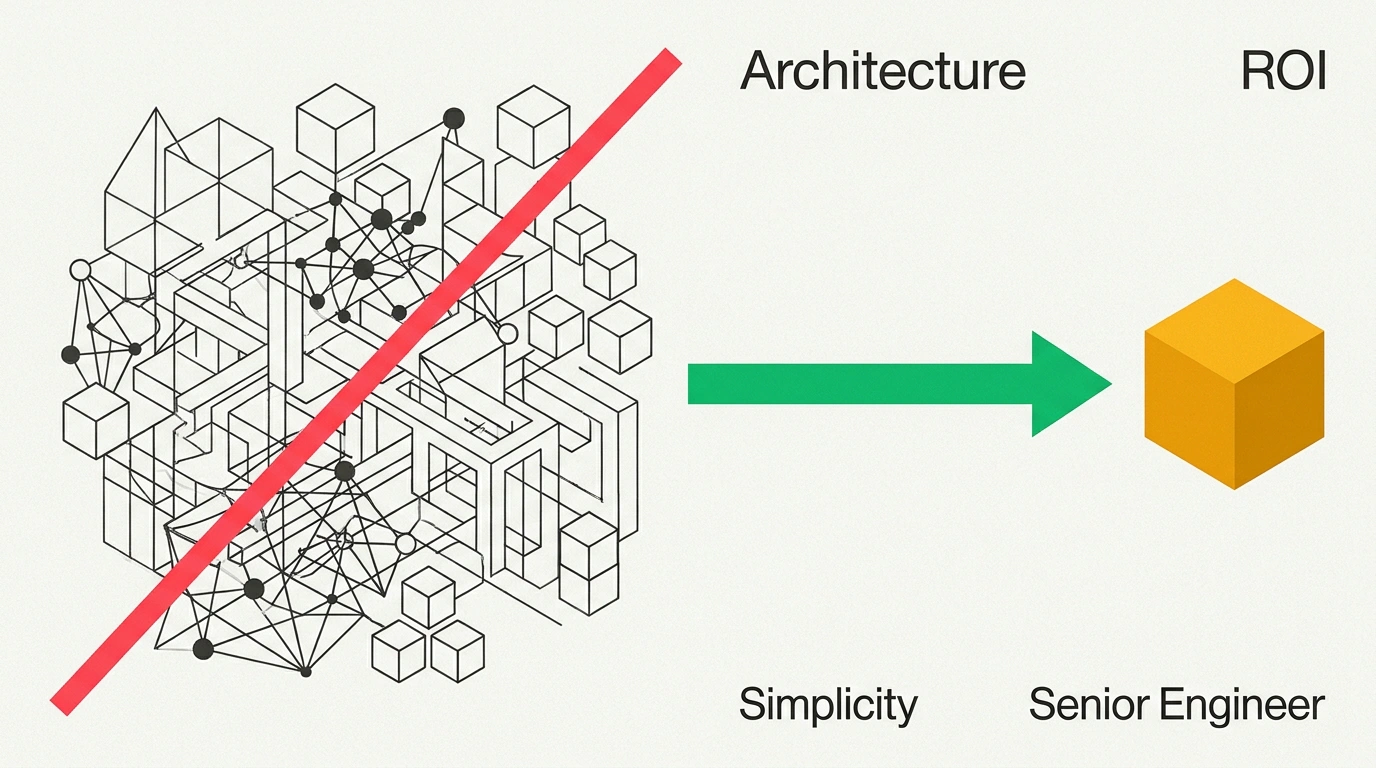
Minimalist editorial poster illustrating the shift in a senior engineer's role from overbuilt architecture to product impact.
ArticleCareersHiringHREngineering

Why Senior Developers Are Being Laid Off: How Engineering Expectations Are Shifting

Why are companies laying off expensive seniors with ten years of experience even when their resumes bristle with complex tech? Has the industry simply decided to cut corners and replace veterans with cheap juniors using AI?

The answer is pragmatic: the market has finally grown tired of overengineering and 'architectural vanity.' For years, specialists justified high salaries by building multi-layered microservice abstractions where a simple monolith would suffice—slowing feature launches and bloating infrastructure bills. Today AI agents handle syntactic routine, and an engineer's primary value lies in solving business problems with the smallest volume of reliable code.

👍 0
HowProgrammingWorksВлад Тен и Тимур Шемсединов: Почему увольняют даже опытных программистов — YouTube
October 25
Comparative scene of three AI model tiers in software engineering: a flagship strategist, a reliable mid-tier builder, and a compact code searcher.
ArticleAILLMDevelopmentAI

Large Reasoning Models in Code: Why Bigger Isn't Better

For a long time, developers treated it as an axiom: the larger a reasoning model and the deeper its chains of thought, the cleaner and more reliable the code it writes. Handing a task to a top-tier flagship seemed like a guaranteed shortcut to spotless architecture.

In practice, flagship reasoning models routinely produce catastrophic overengineering: instead of five lines of code, they erect custom microservice frameworks and drag in hundreds of unwanted dependencies. Real coding breakthroughs come not from inflating model size, but from strict role separation: flagships handle conceptual sparring, mid-tier models write code to contract, and output quality is driven by the strictness of the test harness.

👍 0
Node.js Ukraine / MetarhiaТимур Шемсединов: Чому найпотужніші моделі не завжди найкращі для програмування — YouTube
October 25
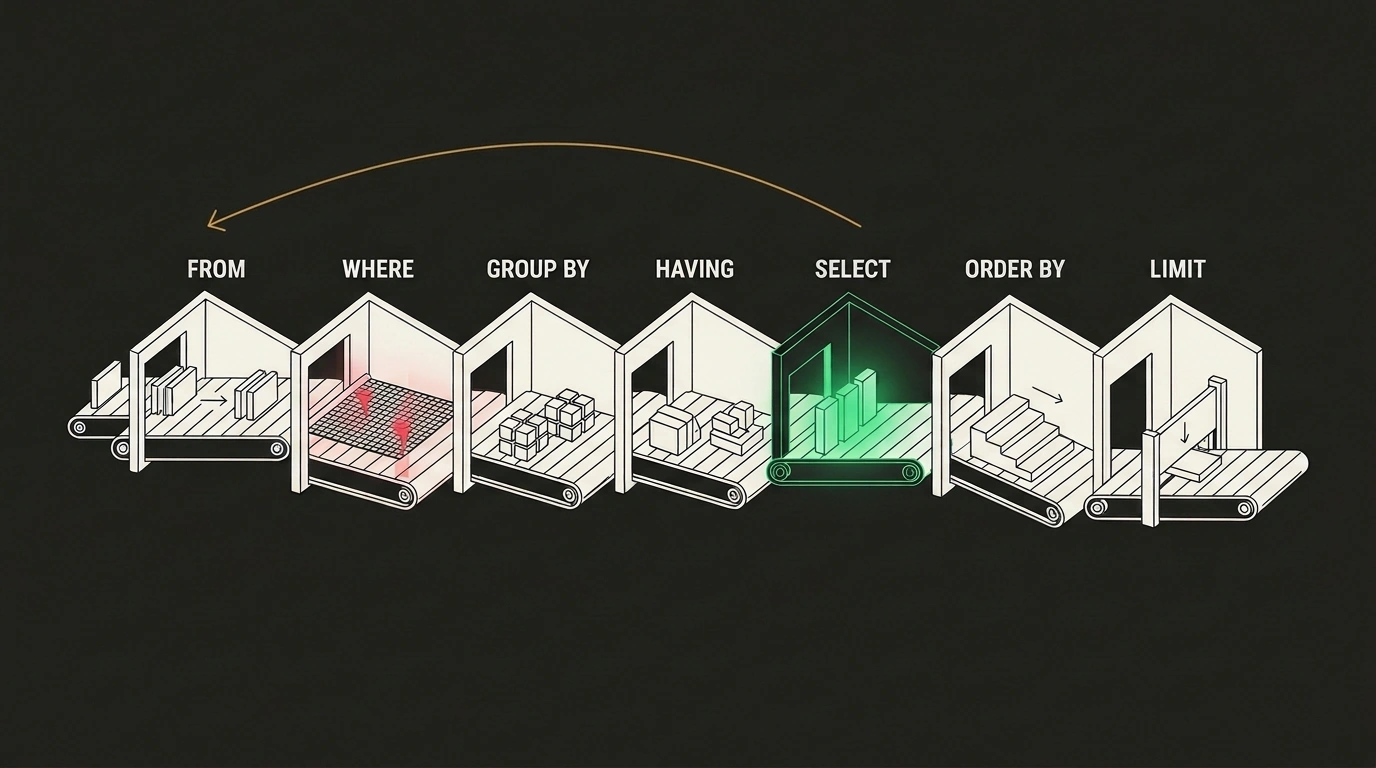
Clear infographic diagram comparing a database engine's SQL query execution pipeline against syntactic order.
Thematic roundup2 sectionsDataPracticeDatabasesSQL

Data Processing Cheat Sheet: 50 Common Operations and SQL Execution Order

When switching from analytical SQL to Python scripts or distributed PySpark code, most time goes into hunting down syntactic equivalents and catching subtle filtering bugs. Yet the fundamentals of working with tables follow the exact same relational logic everywhere.

Our thematic roundup pairs two practical cheat sheets for fast, error-free data work:

  • 50-operation matrix: a side-by-side reference of filters, JOINs, aggregations, and window functions for seamless translation between SQL, Pandas, and PySpark.
  • Logical DBMS pipeline: a step-by-step walkthrough of the 7 stages of query execution (from FROM to LIMIT), explaining why the engine evaluates SELECT second to last and where column aliases disappear.

Understanding that execution sequence prevents costly grouping mistakes and helps you write fast queries on any runtime.

👍 0
SQL Portal — 50 операций с даннымиPandas Documentation — Comparison with SQLApache Spark — PySpark DataFrame APIPostgreSQL Documentation — Queries and SELECT Execution
October 25
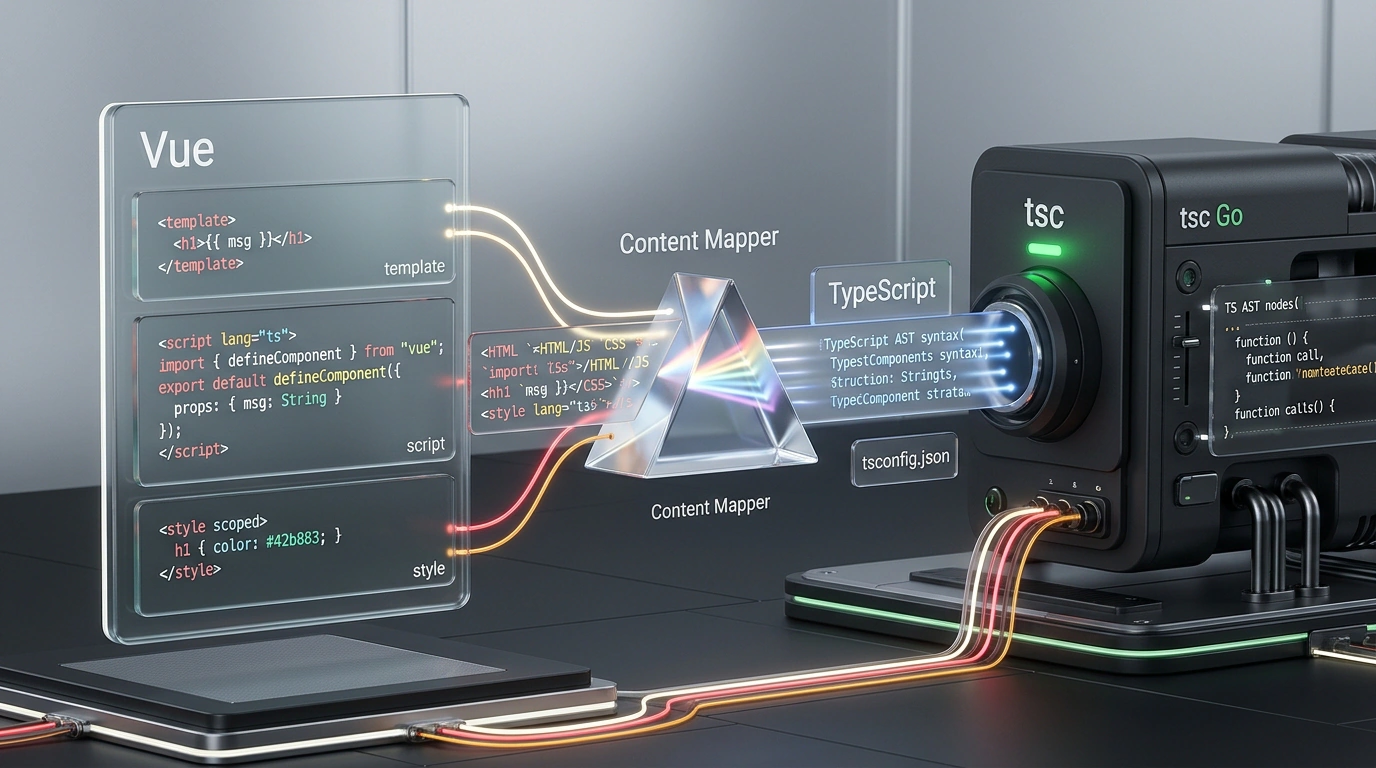
Macro composition of the Content Mappers architectural bridge linking Vue components with the native Go-based TypeScript 7 compiler.
ArticleDevelopmentPracticeTypeScriptVue

TypeScript 7.1 Content Mappers: Direct Type Checking in Vue Without vue-tsc

For years, Vue developers lived with a compromise: type-checking .vue single-file components meant relying on vue-tsc, a wrapper that monkey-patched TypeScript compiler methods in Node.js memory on the fly. When TypeScript 7 moved to a fast Go runtime, that old trick stopped working overnight.

The rescue arrived via standardized Content Mappers in TypeScript 7.1, letting tsc type-check .vue components directly with no third-party wrappers. In a real-world test on the Directus CMS codebase, the new pipeline delivered a 4.6x speedup in type checking while catching 2.5x more hidden template type errors, freeing CI/CD from compiler forks for good.

👍 0
VueDigestGoodbye vue-tsc? Moving a Vue Project to TypeScript 7.1 Content Mappers — alexop.dev
October 25
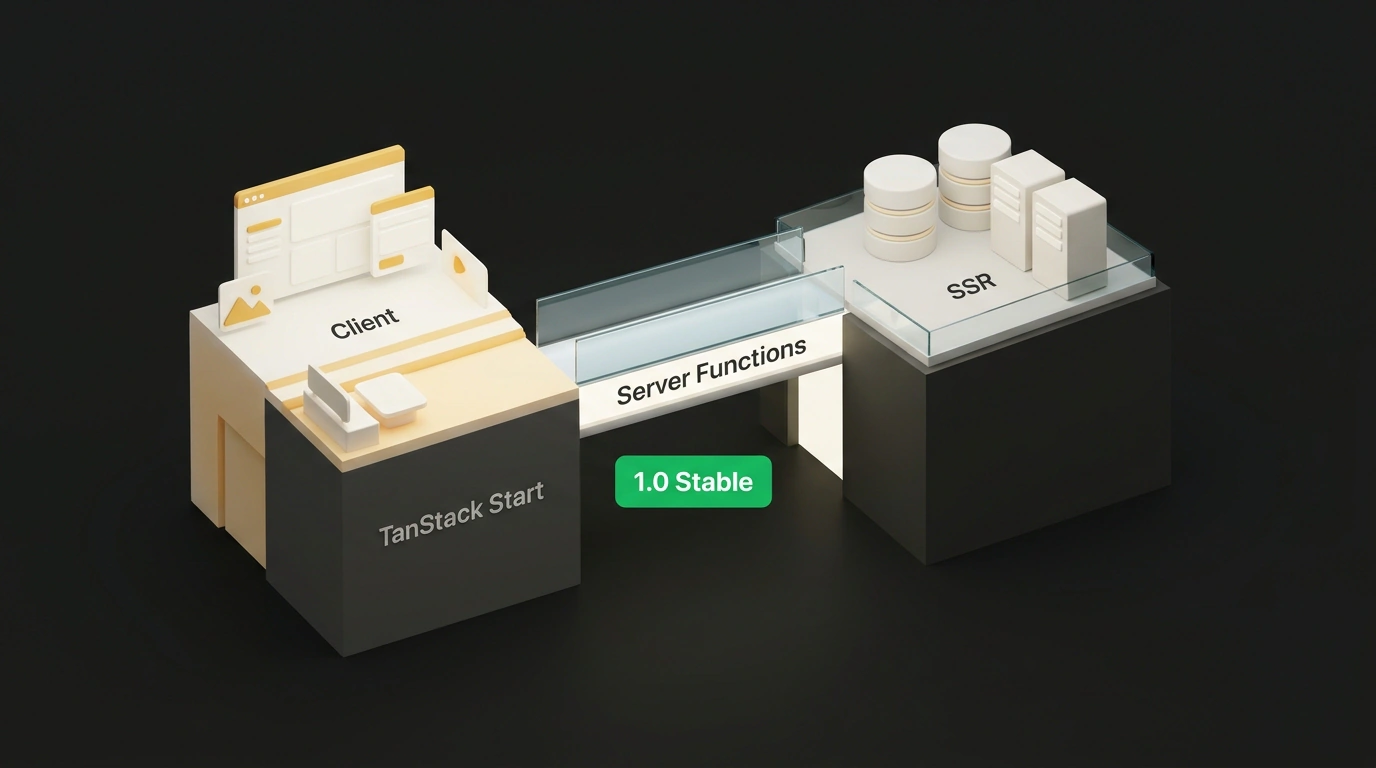
Clean minimalist 3D composition of the full-stack TanStack Start 1.0 framework with a type-safe Server Functions bridge.
ArticleDevelopmentOpen SourceReactFrameworks

TanStack Start 1.0: A Stable Full-Stack React Framework Without the RSC Cult

In recent years, the React ecosystem has lived under the mandate of React Server Components: teams rewrote apps around 'use client' directives and put up with tricky debugging just to check a box. The stable 1.0 release of TanStack Start from Tanner Linsley offers a welcome alternative.

The framework brings back the familiar simplicity of a classic SPA with client hooks while adding server-side rendering and end-to-end type-safe RPC via clean Server Functions. In benchmarks, Start outperforms Next.js 16.4 by 2.9–8.6x in dynamic request throughput and deploys anywhere on top of the open-source Nitro engine.

👍 0
Node.JS [ru]React Status #494: TanStack Start Reaches 1.0TanStack Start — Full-stack React Framework
October 25
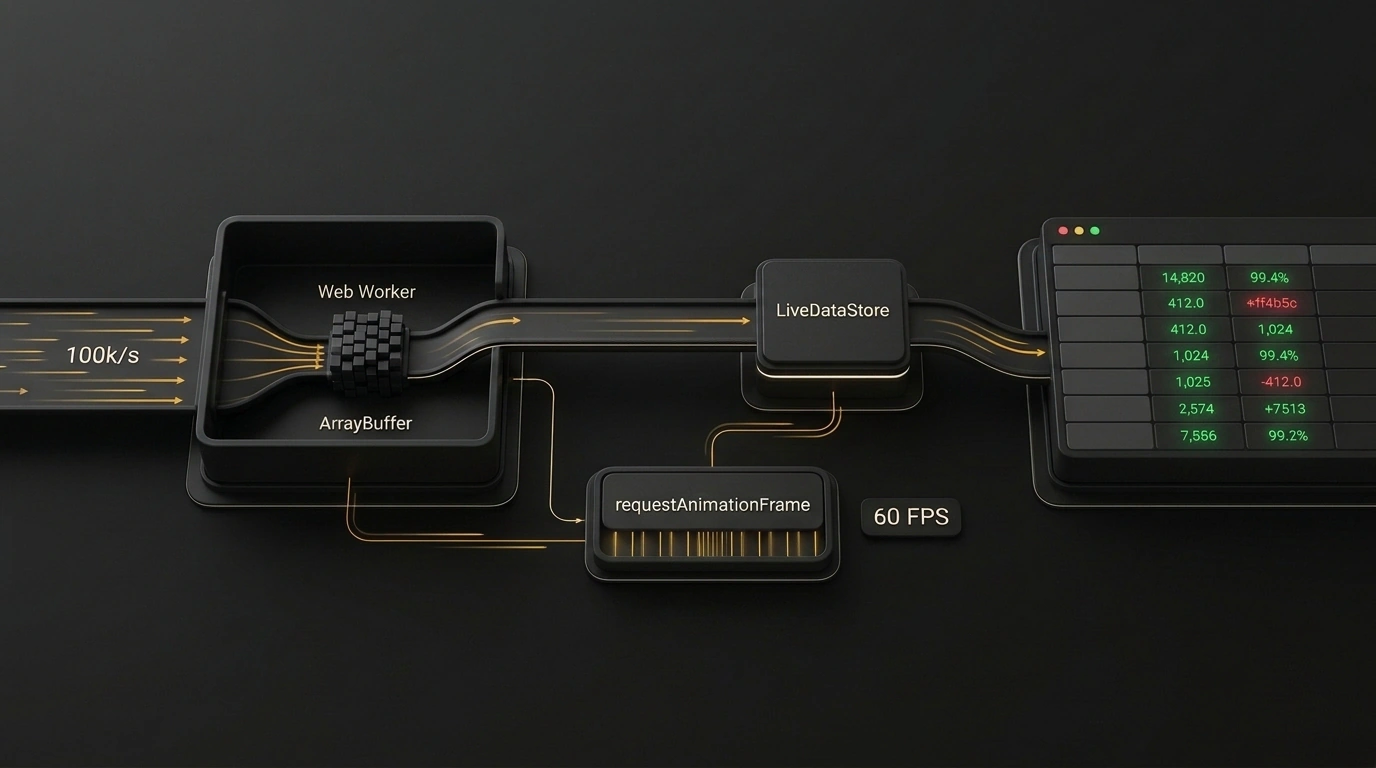
3D diagram of a high-performance React data pipeline with a Web Worker, zero-copy buffer, and mutable store handling 100,000 updates per second.
ArticleDevelopmentEfficiencyReactPerformance

100,000 Updates per Second in React: WebSockets, Web Workers, and a Custom Store

Rendering a 100,000-row table fed by live WebSocket updates is a classic frontend nightmare: drop that stream into useState or Redux and the browser's main thread chokes on JSON parsing, the garbage collector drowns in temporary objects, and the UI freezes solid.

The fix is a three-tier separation of concerns: move the socket into a background Web Worker using a binary protocol (ArrayBuffer) and keep a mutable JavaScript store outside the React tree. Data crosses threads zero-copy via Transferable Objects, updates flush on requestAnimationFrame, and a virtualized UI holds a steady 60 FPS under 100,000 updates per second.

👍 0
Node.JS [ru]Как подружить React с 100 000 live-обновлений: WebSocket, Web Workers и кастомный стор — Хабр
October 25
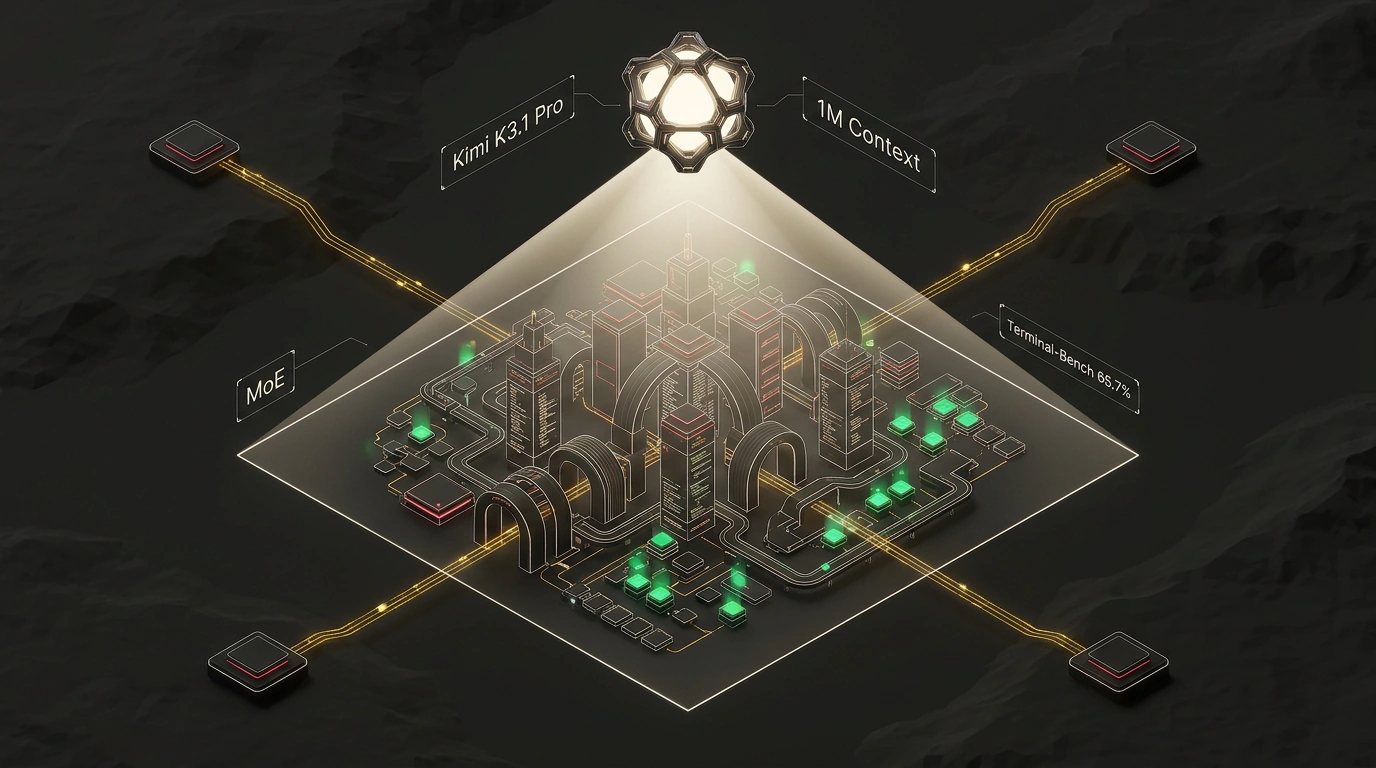
Conceptual isometric visualization of the Kimi K3.1 Pro model analyzing a one-million-token monorepo context.
ArticleAILLMAIAI

Kimi K3.1 Pro: 3 Trillion Parameters, 1M-Token Context, and Coding Agents

When analyzing large monorepos, traditional RAG pipelines constantly stumble: slicing code into tiny vector chunks severs cross-cutting architectural links and triggers cascades of hallucinations. Moonshot AI's new Kimi K3.1 Pro model aims to eliminate that bottleneck through sheer scale.

Its flagship 3-trillion-parameter Mixture-of-Experts architecture supports a 1-million-token context window, letting you load up to 100,000 lines of code into a single prompt. On the Terminal-Bench 4.0 autonomous coding agent suite, it scored 65.7%—beating GPT-6 Astra—and the team plans to release open weights on November 4 for air-gapped local deployment.

👍 0
Node.JS [ru]Introducing Kimi K3.1 Pro — Kimi.ai Blog
October 25
Foldable smartphone in book pose displaying an adaptive dual-screen interface on a developer's desk beside a diagram notebook.
LongreadDevelopmentDesignSafariLayout

Safari 27.1 and Foldable Screens: The Complete Guide to Device Posture and Viewport Segments APIs

For years, developers treated foldable smartphones like ordinary tablets, assuming a standard width media query would neatly snap layouts into two columns. In reality, a physical hinge runs right down the middle, slicing through text and burying buttons in the crease.

Safari 27.1 for iPhone Duo ushers in standardized dual-screen web design through the W3C Device Posture and Viewport Segments APIs. New media features and six CSS env() variables let you align columns to exact screen segments and offset hinge width cleanly without brittle hacks or User-Agent sniffing.

👍 0
WebKit BlogW3C Device Posture API SpecificationMDN Web Docs — Viewport Segments API
October 25