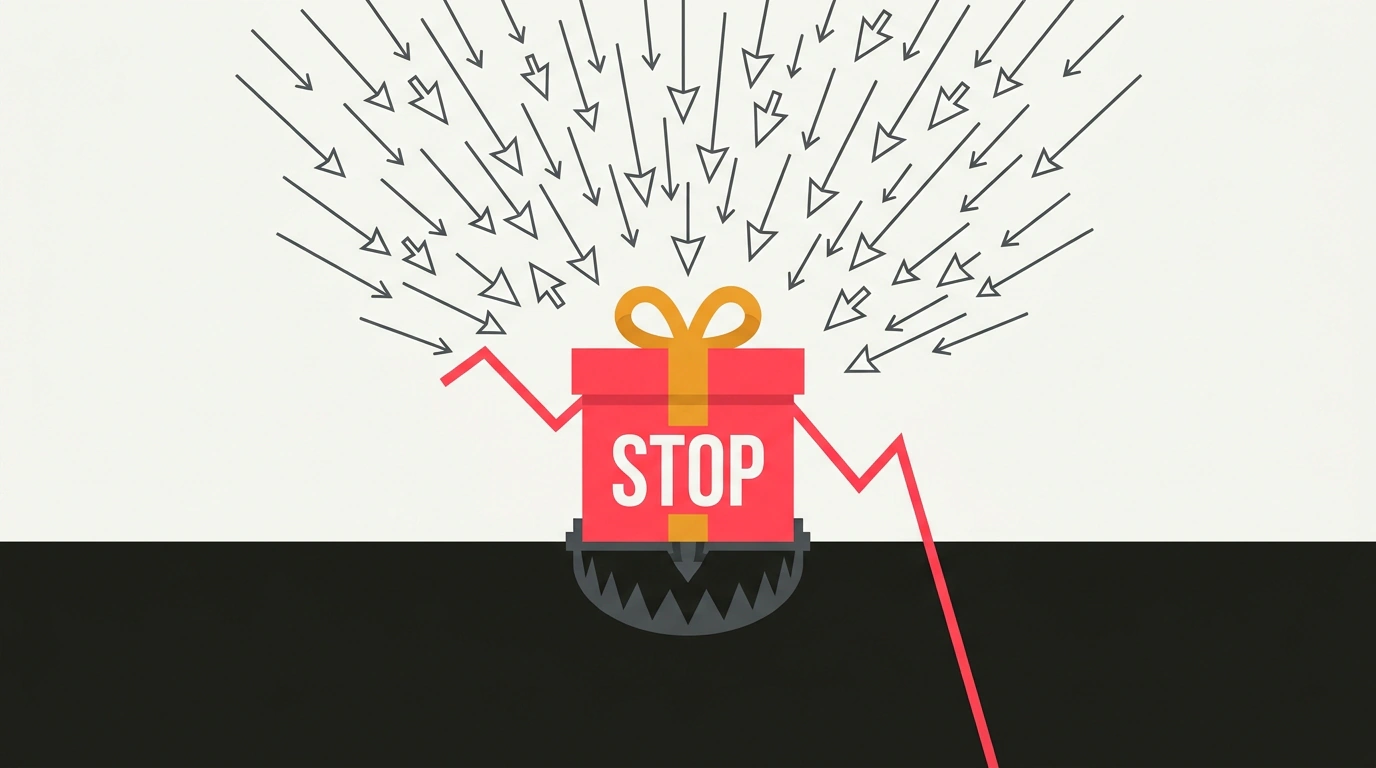
You've seen this classic social media circus plenty of times: "Drop any comment—whoever posts last before we say STOP wins the prize!" Or even simpler: follow, repost, and win a gift card. Ten years ago, in the early days of Russian SMM, marketers shamelessly exploited human greed to pad their monthly reports. Social media expert Alexey Tkachuk (Dnative blog) recalls how that tactic was even dressed up in whole methodologies like "taming a wild deer": first get people spamming pointless comments, then try to sell them a complex product.
Ten years later, smart social feeds have evolved into intricate neural ranking systems, yet those archaic mechanics refuse to die. Just look at a major retailer page like FixPrice, where the promise of 100 bonus points (worth 100 rubles) got people to leave 1,700 comments in four hours. To an SMM agency, that looks like a triumph: engagement shoots through the roof, the client sees a buzzing feed, and KPIs are crushed. Look at it through unit economics and ranking algorithms, though, and you're staring at pure digital self-sabotage.
Anatomy of a Prize Hunter: Why Freebies Wreck Your Algorithmic Karma
Who are the thousands of people willing to camp in a comment section for hours just for a shot at 100 rubles or a branded mug? They are not your future buyers. Across the Russian internet, massive closed communities of professional prize hunters have formed—people whose feeds consist exclusively of hundreds of lottery reposts and whose browsers run auto-commenting scripts. They couldn't care less about your brand, your product's value, or your actual offers.
The real damage hits the moment the giveaway wraps up. Audience behavior studies and Dnative measurements show brutal numbers:
- Up to 85% of giveaway entrants mute notifications, archive the page, or unfollow outright within the first two weeks.
- The remaining "dead weight" turns into ghost followers: the community's average Engagement Rate drops 40–60% over the 30 days after the contest ends.
Modern smart feeds don't measure your raw follower count—they measure the share of active reactions relative to your total base. When the algorithm sees a page with 50,000 followers where a new expert post gets opened and read by only 200 people, it draws a clear conclusion: this content is dull and nobody wants it. Worse still, annoyed prize hunters see your regular posts in their feed and tap "Hide from feed" or "Show less from this source." To a platform, that's a loud negative signal. The outcome is predictable: the algorithm quietly throttles your account, and even loyal customers who genuinely want your updates stop seeing your organic posts. To spot destructive tactics like this before signing a retainer, see Dislike for the Contractor: A Complete Guide to SMM Agency Red Flags, Pricing Audits, and Legal Risks.
When Giveaways Make Sense: Filtering Through Effort
Does that mean every giveaway mechanic should be banned forever? Not at all—you just have to flip its architecture upside down. The only reliable shield against a stampede of prize hunters is setting a high bar to enter:
- Offer a niche prize instead of universal cash. Raffling off an iPhone, marketplace gift cards, or vacations guarantees an influx of hundreds of thousands of freebie seekers. Raffle off something valuable exclusively to your B2B buyers or narrow specialists: access to a closed industry database, specialized equipment, or a 1-on-1 consult with a top expert.
- Require a creative or intellectual filter. Ditch "repost and hit like." Ask participants to solve a tough case study, record a professional breakdown, or enter an industry hackathon. Task difficulty instantly filters out 99% of junk traffic, leaving a qualified core inside your funnel.
Keep this straight: reach and follower counts in a slide deck have zero value on their own. In business, revenue conversion is what pays the bills. Better to have 3,000 dedicated readers who open every post and buy your product than 100,000 prize hunters burying your organic reach in the archive.