Every practicing specialist hits the same wall sooner or later: attracting high-paying clients requires posting consistently, shooting videos, and writing deep breakdowns—yet when you're juggling ten client projects, there's barely time to sleep. Social feeds go quiet, and inbound inquiries dry up right alongside them.
Practitioner Olesya Avdeenko found a clean way out: handing the routine side of content marketing to a personal AI agent. This summer she managed eight projects simultaneously while spending only 2–3 hours a week on her blog—growing her audience organically to nearly 10,000 followers without spending a single ruble on paid ads. Prep time per expert piece dropped from three hours to a record 25 minutes. Let's look under the hood at how that virtual assistant's weekly loop runs.
The Autonomous Assistant's Weekly Sprint: From Goal to Keyword Trigger
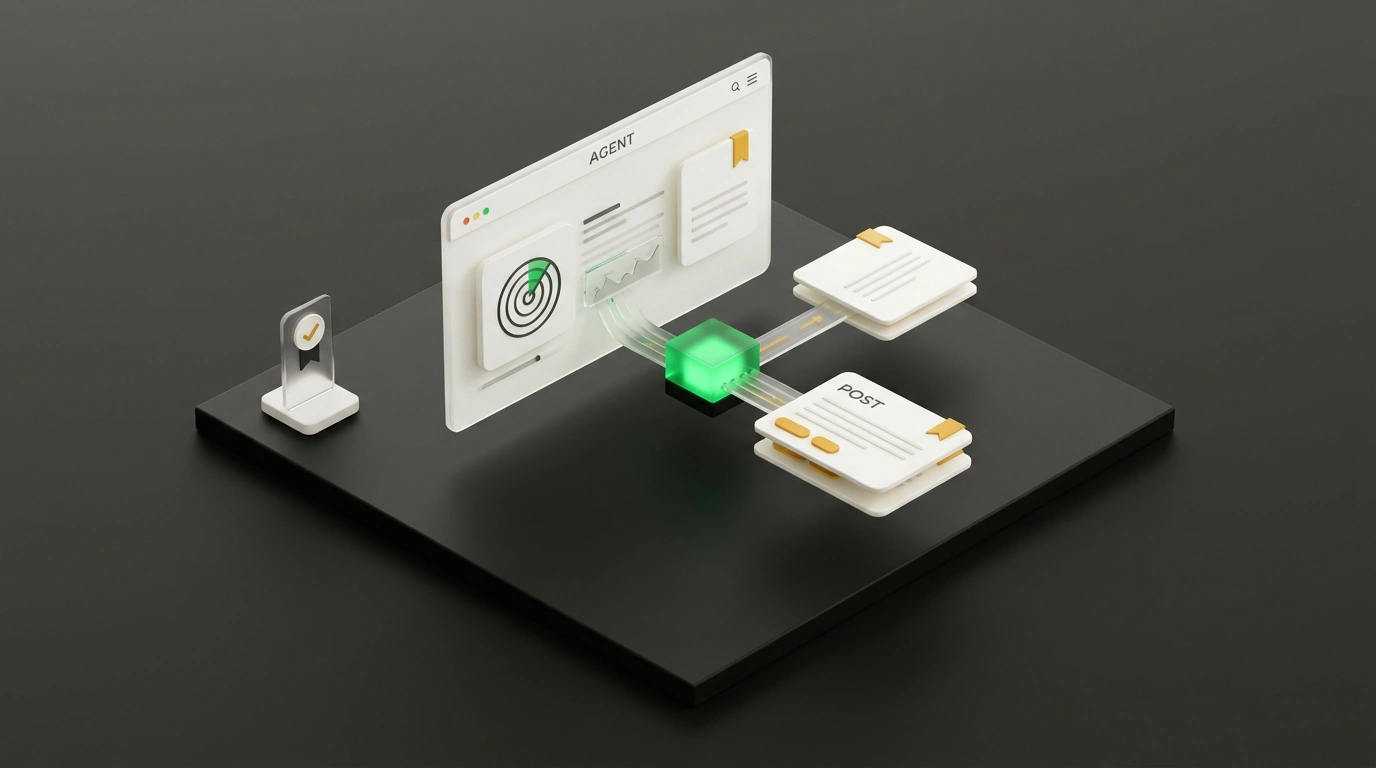
The magic doesn't come from tossing random prompts at a chatbot—it comes from a tightly structured weekly cycle. Avdeenko built her agent (she named it Kira on Claude, though the exact same setup works smoothly in ChatGPT) around a fixed schedule:
- Monday — Focus calibration. First, the agent asks for the week's main business goal: pulling cold traffic, warming up buyers for a flagship product, or driving direct consultation bookings. Based on that goal, it maps a balanced content plan: formats, 30-second video topics, and specific lead magnets tied to trigger keywords.
- Wednesday and Thursday — Substance assembly. The agent never invents talking points out of thin air. It pulls from a database of verbatim client quotes—real pains, fears, and recurring sales-call objections—and shapes them into sharp scripts.
- Automated delivery via trigger words. Every piece of content ends with a prompt to comment a specific keyword. A bot platform (such as ChatPlace) instantly delivers the promised guide or video lesson, then triggers a message sequence guiding the reader to recognize the problem. This kind of content-marketing automation for AI agents turns views into a clean contact list 24/7.
- Monday, 9:00 AM — Analytics rollup. The assistant outputs a transparent funnel report: how many users typed the keyword, how many downloaded the asset, which exact message caused drop-off, and hypotheses to lift conversion. Just like monitoring competitors with AI agents, all data gathers with zero manual labor.
Quick-Start Checklist: Training the System Without Writing Code
The #1 rookie mistake is dumping your entire company strategy onto an AI on day one. To get useful output in week one, you only need five core inputs:
- 20 verbatim client quotes: real questions from DMs, consultation objections, and comments;
- 5 benchmark posts: writing samples that capture your exact Tone of Voice and pacing;
- An editorial ban list: filler words, corporate clichés, and phrasing that must never appear;
- One practical lead magnet: a short guide or checklist paired with a keyword trigger;
- One clear sprint goal: a crisp statement of the business target for the next 7 days.
To calibrate, feed the model a prompt to sort client quotes into pains, fears, and doubts, pick the 10 strongest first-screen hooks, and draft short-video scripts without inventing facts. The moment a warmed-up reader submits a service inquiry, the automation steps back and hands the conversation to a live human expert. Offloading mechanical prep to algorithms lets you keep your authentic voice while freeing hours for deep client work.