Grocery e-commerce is one of the most unforgiving verticals in performance marketing. There are no 80% info-product margins here and zero room for sloppy bidding: net profitability rarely tops 10–15%, average order value fluctuates, and much of the catalog is perishable stock with tight shelf-life deadlines. If your cost-to-revenue ratio (CRR, known locally as DRR) creeps even 3–5 percentage points above target, the entire business slips into operating loss.
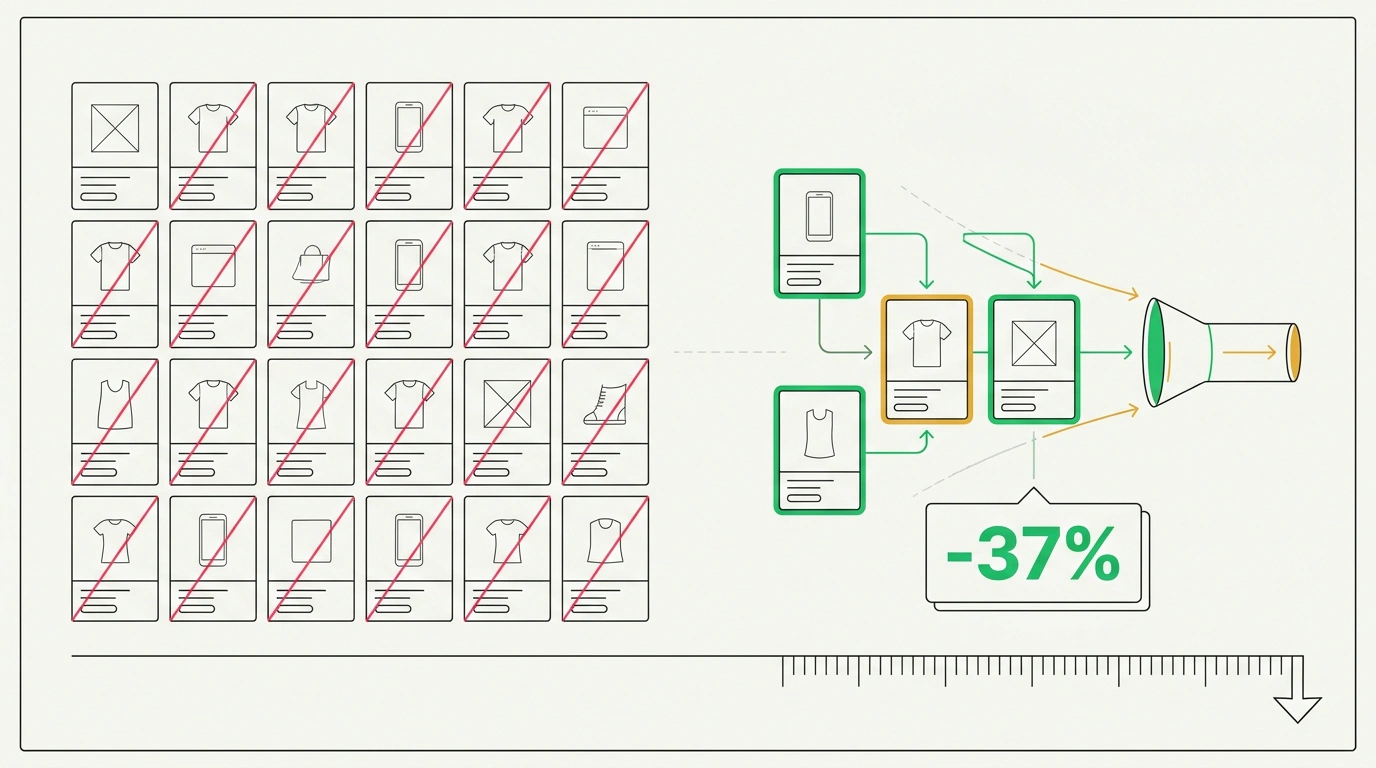
That was the exact bind facing the online grocery store Nashenka. The project already had historical data and active ad campaigns, yet performance swung wildly month to month: CRR routinely blew past critical thresholds while automated bidding burned budget on off-target queries. Context ad specialist Artem Makurin and his team at Media Insight (a partner agency in the eLama program) stepped in to rebuild the ad account from the ground up. Over five months of methodical work—from April to August 2026—they cut CRR by 37% (from 13% down to 8.23%) while growing total order volume and lifting cart conversion by 22%. Let's pop the hood on that engineering overhaul.
Total Feed Overhaul: Why You Can't Advertise the Whole Catalog
The first and deadliest mistake most online stores make is feeding Yandex a single 10,000-SKU product feed and switching on Campaign Wizard or an automated strategy targeting average CPA. The algorithm optimizes for click and conversion volume—not your net profit. Inevitably, the system starts aggressively pushing cheap staple items: everyday bread, milk, or promo-priced sugar. Clicks roll in, carts fill up, yet margins on those items hover near zero while the cost per order (CPA) wipes out every ruble of profit.
The team started by strictly clustering the feed on a margin-and-turnover matrix:
- Category A (high-margin items): delicacies, farm-direct goods, specialty cheeses, in-house prepared foods. Paid traffic and higher target bids were concentrated here.
- Category B (mid-margin staples): pantry goods, quality preserves, seasonal produce. Traffic was bought under tight maximum CRR caps.
- Category C (low-margin and loss-leader basics): matches, basic grains, bottled water. These SKUs were COMPLETELY excluded from paid first-click acquisition. They work fine as in-cart cross-sells, but paying search clicks to acquire someone for a bag of sugar is a fast track to bankruptcy.
Filtering the feed like this immediately healed unit economics: average order value climbed across campaigns, and every ruble of ad spend started bringing in real profit instead of widening a cash gap. To steer demand even more precisely, you can layer in marketplace tools—for example, Promo Codes for Product Selections on Yandex Market: Setting Up Targeted Discounts for External Traffic let you nudge basket composition in the right direction.
Splitting Channels: Taming Auto-Targeting and Cleaning Up RSYA
Step two meant untangling the account structure. Originally, Search and the Yandex Advertising Network (RSYA) were lumped together, causing the algorithm to scatter impressions haphazardly. Grocery search intent is urgent: someone wants dinner delivered right now. In ad networks, by contrast, users respond to visual cues and special offers.
Search and RSYA were split into separate campaigns with dedicated budgets. The main battle was against auto-targeting, which Yandex pushes hard by default. Left unfiltered in grocery e-commerce, auto-targeting instantly pulls in junk near-match queries: borscht recipes, diet reviews, calorie counts. The team added hundreds of negative keywords at campaign and ad-group levels and turned off broad targeting categories, leaving only commercial-intent queries geo-fenced to the store's fast-delivery zones.
In parallel, they launched Dynamic Search Ads (DSA) and Smart Banners. Smart Banners were segmented by interest: shoppers who browsed meat and grilling gear saw matching sauces and marinades, while health-food browsers saw organic snacks. That produced an immediate lift in converting abandoned views into paid orders.
Training Automated Bidding: The Power of Target CRR
Once the feed and account structure were spotless, it was time to turn on Yandex Direct's machine learning. Trying to train automated bidding on a messy account is a textbook budget leak: the robot trains on junk and scales junk. Once only high-margin clusters and clean search queries remained, though, Yandex's algorithms started delivering.
Campaigns were switched to "Conversion Optimization" capped by target CRR. Those caps were tiered by margin: categories with a 40% markup were allowed up to 15–18% CRR, while tighter niches were locked at a 6–8% ceiling. Automated bidding could then raise bids for shoppers likely to build a big basket and pull back on low-AOV browsers. During scaling phases like this, co-funding programs are especially helpful—when Yandex Direct Triples Sellers' Ad Budgets to Grow Standalone Online Stores, you can scale your customer base without straining working capital.
Pitfalls and Seasonal Recalibration
The biggest technical risk every retail marketer must watch for is seasonal swings and automated-bidding relearning lag. Grocery demand shifts fast: May holidays trigger a spike in barbecue meat and charcoal, while the first autumn frost sends hot soups and ready meals soaring.
The catch with Yandex Direct's automated strategies is that they need 7 to 14 days to gather fresh data and recalibrate bids. If you abruptly swap out catalog stock or prices in the feed, the algorithm keeps bidding on last week's patterns for days—causing either an impression cliff or a local CRR spike of 30–50%. Media Insight's experience proved that transitioning to seasonal lines requires gradual bid adjustments and spinning up parallel campaigns early while the core catalog holds target numbers.
Cutting CRR by 37% wasn't the work of one secret checkbox in the ad dashboard. It came from methodical engineering: clustering the product feed by net margin, ruthlessly pruning auto-targeting, and training smart algorithms on real revenue instead of empty clicks.