Every commercial director has felt that quiet flash of irritation while opening a monthly PR report. Across the screen stretches a grand tapestry: hundreds of links, sentiment pie charts, and a proud headline figure—"total publication reach hit 48 million people." It sounds monumental, as if a third of the country just learned about your company. Then finance puts that vanity parade next to the bank statement, and an awkward silence falls: sales haven't moved, and the PR retainer evaporated into thin air.
Media-analytics practitioner Vladimir Gryozov nailed the root cause. The issue isn't that media and social monitoring are useless—it's that teams keep feeding executives raw, aggregated fluff. Online reach gets padded by bots, press-release syndications on junk sites are read by zero living humans, and comment sentiment swings wildly off two loud trolls. For monitoring to work as a commercial compass, its metrics must be segmented cleanly for three internal stakeholders: marketing, HR, and top leadership.
Marketing Block: From Empty Reach to Share of Voice and Demand
The first fatal mistake is judging media performance by raw mention count. If your brand got 100 mentions, is that good or bad? Impossible to tell without competitive context. If your main rival pulled 1,500 mentions that same month, your brand is practically invisible.
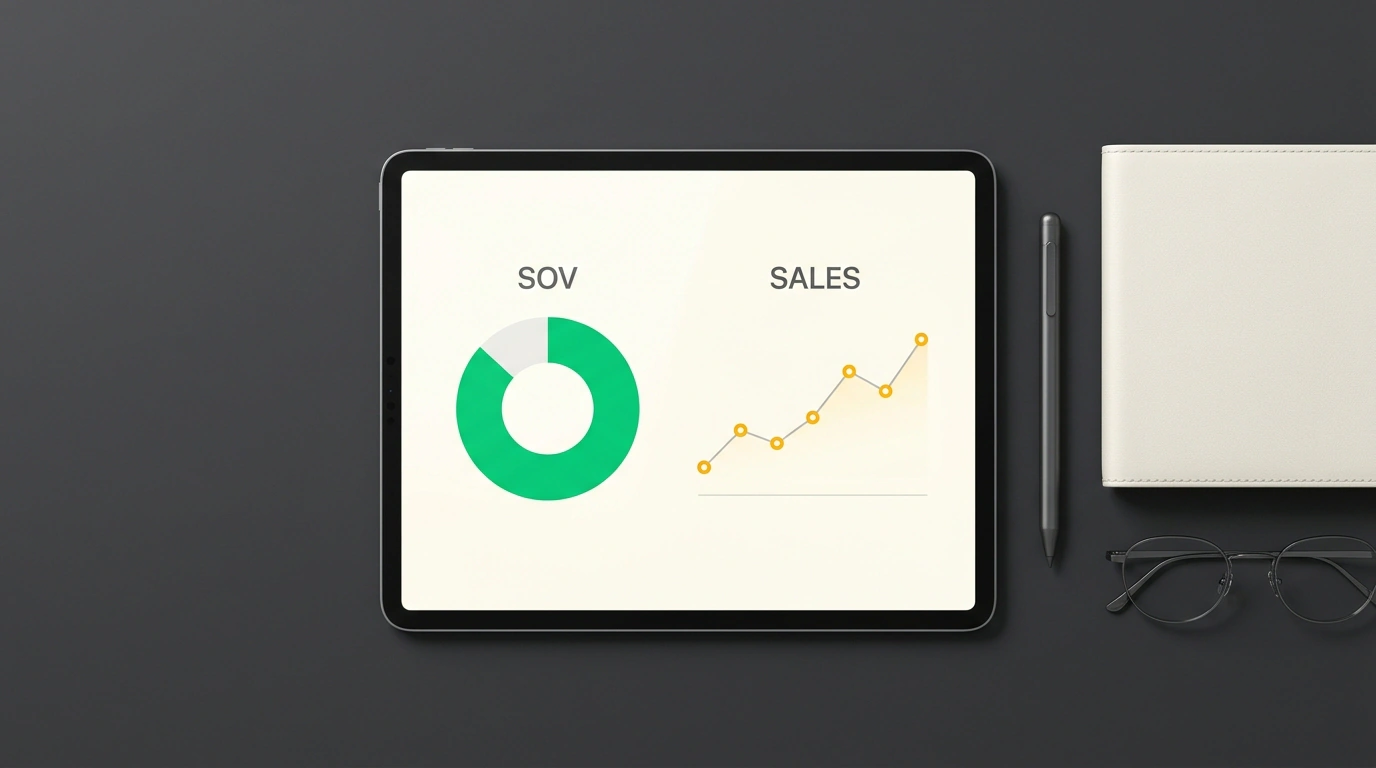
Marketing's anchor metric is Share of Voice (SOV)—your brand's share of total industry conversation:
Crucially, weight sources by authority. One CEO column in Kommersant or a respected trade outlet builds more trust and citations than 50 identical reposts in anonymous regional Telegram channels. Measurements across Brand Analytics and Medialogia prove a direct financial link: growing SOV by 10% over a quarter drives a statistically verified 12–15% lift in organic branded search traffic after a typical 3-week lag. That's why Syncing PR and Performance is essential—so search ads and retargeting catch the wave of reputation-driven demand.
Metric number two is Net Sentiment Rate (NSR):
Track it as a trendline, not a static snapshot. If NSR suddenly dips while total mentions hold steady, you're looking at an early warning sign of a product, logistics, or support failure—giving you time to step in before returns spike.
HR Block: Employer Brand Reputation and Fraud Defense
The second stakeholder teams routinely overlook is HR. In a tight talent market, hiring a skilled engineer or senior developer can cost hundreds of thousands of rubles. And what's the very first thing a candidate does before an interview? Googles your company name and reads employee reviews.
Here's what HR monitoring should track:
- Employer review platforms (DreamJob, HH, PravdaSotrudnikov): skip the average star rating (stars are easily gamed) and cluster recurring complaints—late payroll, toxic management, unpaid overtime;
- Coordinated smear and bot-attack detection: if ten identical one-star reviews drop in 24 hours from brand-new accounts sharing the same punctuation quirks, that's a targeted competitor hit—document it and appeal to platform support;
- Labor-market recon: tracking rival job posts and salary bands in your operating regions helps anticipate turnover waves early and adjust compensation before talent walks.
A clean employer brand directly compresses recruiting funnels: candidates accept offers faster and probation-period churn drops, saving millions in hiring overhead.
Executive Block: Early Industry Signals Beyond Brand Mentions
Here's the paradox: the most valuable intelligence for a CEO or owner doesn't mention their company name at all. A report counting past mentions stares strictly into the rearview mirror. Leadership needs a clear view through the windshield.
Mature monitoring gathers weak signals across three fronts:
- Regulatory shifts: draft bills, labeling mandates, environmental rules, or tariffs circulating in ministries. Laws often simmer in expert committees for six months; teams tracking first-reading debates rebuild supply chains before rules take effect.
- Macro and counterparty risk: early rumblings of logistics bottlenecks, raw-material price spikes, or bankruptcy filings hitting key suppliers and partners.
- Regional social climate: public sentiment in company towns and manufacturing hubs, helping prevent sudden local friction.
When judging media impact, lean on How to Measure Reach's Real Contribution to Direct Sales so you separate signal from noise. And in the LLM era, Managing Reputation in AI Search Results matters more than ever, since AI search engines train on curated, authoritative media.
Financial Hygiene: Reading Media Dashboards Without Fluff
To stop monitoring from turning into a paperwork factory, commercial leadership only needs three strict reporting filters:
- Ban raw vanity reach: score placements solely on weighted target-audience reach adjusted for outlet authority;
- Tie PR waves to branded search: cross-check every coverage spike against branded query trends in Yandex Wordstat and Google Trends;
- Split trends into a 1-page executive summary: put key industry risks and regulatory shifts on the CEO's desk every Monday morning—capped at one page.
Media monitoring numbers record the past, while structural trends shape the future. Translate media metrics into rubles, strip out informational noise, and put your data to work ahead of the market.