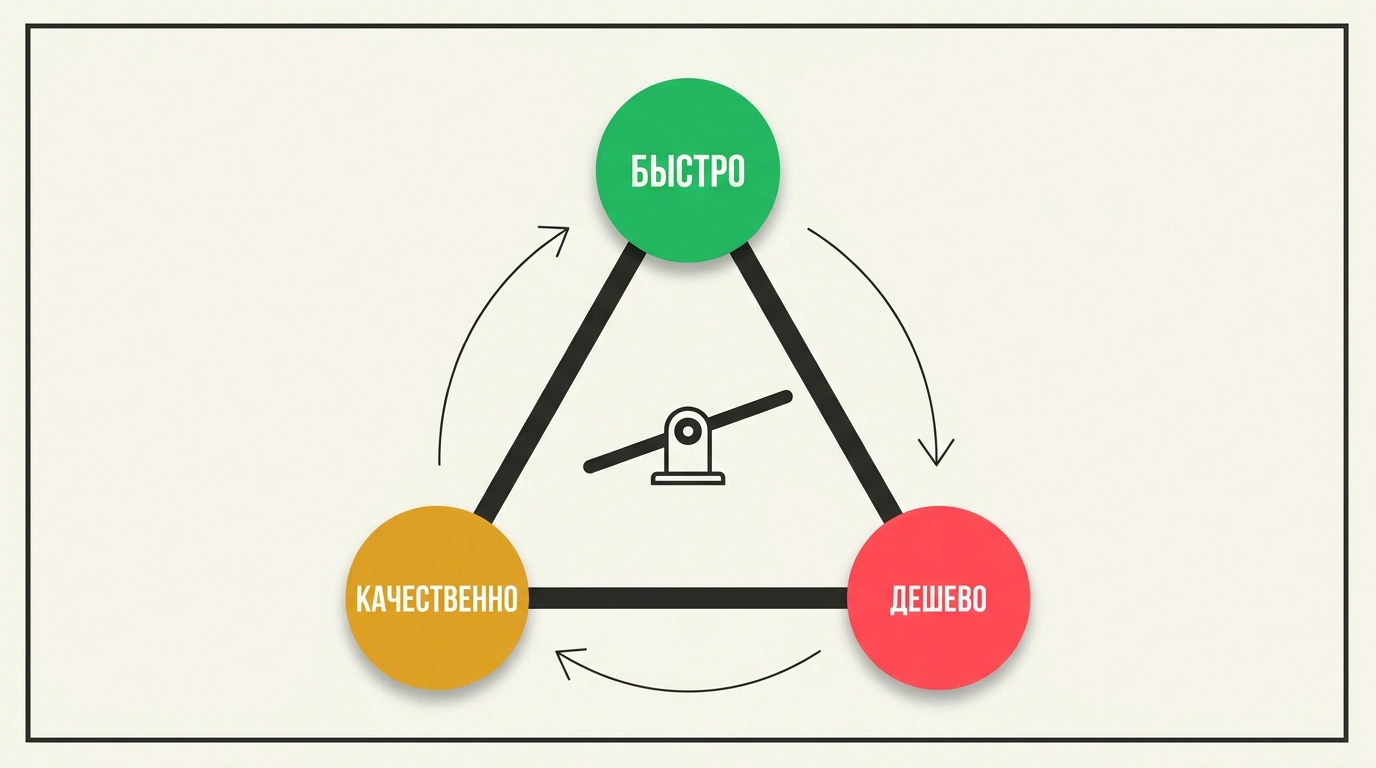
If you work in agency or in-house marketing, you've definitely noticed this odd new delusion: the moment AI learned to generate images and coherent copy, clients collectively decided the laws of physics had been repealed. The classic project triangle—"fast, good, cheap," where you could always pick only two—is now demanded all at once. The killer argument? "You have ChatGPT and Midjourney now—hit a button and hand me a masterpiece for pennies by lunch."
Let's take off the rose-tinted glasses and unpack that myth. A dangerous sleight of hand has crept in: producing content really has gotten several times faster, yet selling through it hasn't gotten any easier. Cutting campaign prep from a week to half a day only saves internal labor hours. For the end consumer, things actually got noisier: feeds are flooded with synthetic filler, banner blindness is worse, and genuine attention is scarcer than ever. When a business demands five posts a day "because AI is free," it only multiplies digital clutter and torched reach. As we showed in How to Build a Working Lead-Gen System Through Content, one rule never changes: hitting real customer pain beats posting frequency every time.
Assembly-Line Architecture: Batching and Rigid Template Matrices
The only way to avoid burning out on endless client whims is turning chaotic craft into a structured production line. Experts at SMMplanner pulled compelling numbers: switching from frantic daily post creation to batching content 2–4 weeks ahead cuts team time costs by 40–45%.
When a copywriter and designer stop sitting down every evening wondering "what do we ship tomorrow?" and instead run two fixed sprints a month, focus stays sharp. Work splits into clear modules:
- Content-pillar sync: map your product matrix into defined editorial tracks with clear goals (lead gen, retention, engagement).
- Modular visual templates: the designer builds a Figma design system once, turning routine card layouts into a five-minute job with zero font debates.
- Role assembly line: the writer drafts the substance, an editor checks facts and logic, and a specialist schedules everything in a publishing tool. Splitting those roles cuts silly typos and errors by exactly 4x.
Locking in a rigid content-pillar matrix also slashes approval revisions by up to 80%. The client evaluates an agreed structure rather than reacting to today's mood. If you need to untangle bottlenecks inside your own production team, revisit Business Growth Levers and Finding Operational Bottlenecks.
The Real-Time Content Trap and Boundary Management
The main risk of a tightly packed content calendar is losing agility. Big industry news breaks, and your feed is already booked solid for three weeks. Trying to rip up a monthly schedule on the fly for every trending meme paralyzes output and drags the team right back into panic mode.
The fix belongs in your rules of engagement. Set a clear split in the contract or SLA upfront: 80% of the feed goes to planned, evergreen pillars, while 20% stays reserved for rapid newsjacking. Crucially, an unplanned reactive post replaces an existing slot—it never gets piled on top with a "need this in twenty minutes" rush order.
Technology handed us a high-speed excavator to replace a shovel. Dig a trench without a blueprint or foundation plan, though, and the excavator just buries you under revision requests twice as fast. Protect your team's boundaries, standardize routine work, and don't let clients confuse word-generation speed with marketing strategy.