Walk into any modern supermarket or open the coffee section on a popular marketplace, and you are greeted by an endless lineup of stylish kraft bags. Every single producer promises high-altitude 100% Arabica, careful roasting, and a rich bouquet of flavor notes. When competitors' visual aesthetics and product claims blur into one uniform smear, marketers inevitably slide into a margin-killing discount war.
The way out of this dead end is meaning-driven marketing instead of push-button mechanics. Rather than competing over brighter labels, forward-thinking brands move the touchpoint into the buyer's personal audio space. A standout example of this unconventional approach is the project by retail chain VkusVill and audio marketing agency Kubik Media, which turned a morning drip coffee pouch into an immersive multisensory experience.
The Multisensory Hack: Why Sound Changes How We Taste
For years, traditional retail treated audio marketing solely as background music in store aisles—pleasant lounge tracks meant to slow shoppers down between shelves. Yet modern brand communication can't stop at the checkout counter. The deepest, most intimate contact with a product happens at home: in the kitchen, with headphones on, or in front of a smart speaker.
Foundational consumer psychology research published in the Journal of Consumer Psychology confirms the phenomenon of cross-modal perception:
- Engaging multiple senses simultaneously (taste, smell, sight, and hearing) increases a physical product's subjective value in the consumer's eyes by 20–30%.
- Curated audio accompaniment activates the brain's taste receptors: crisp high frequencies amplify perceived sweetness, while deep velvety tones emphasize bitterness and body.
- Emotional immersion in a consumption ritual paired with a soundtrack dramatically lowers a buyer's price sensitivity on their next store visit.
Global brands have experimented with this mechanic for years. Just think of Barilla's iconic Spotify campaign, where the brand built playlists timed to the exact second for boiling different pasta shapes—spaghetti, penne, and fusilli. Kubik Media pioneered this direction in Russia, crafting audio concepts for the Bristol retail chain, music for blood donation centers, and sound design for fashion labels Idol and 12 Storeez. Still, the drip coffee case unlocked a whole new level of packaging interactivity.
VkusVill's Project: Three Geographic Origins and Three Soundtracks
By the time the project launched, VkusVill's private-label drip coffee was already a bestseller: shoppers were buying over 41,000 pouches of various origins every week. Grocery category brand manager Tatiana Larina proposed accompanying the launch of a new six-pack assortment with a custom soundtrack for the brewing ritual. Kubik Media was brought in to build the musical architecture.
The box featured three single-origin coffees from different corners of the globe, and the music editors crafted a unique soundscape for each:
- China Dongka. Hand-picked high-altitude coffee with a light body and notes of citrus, dried apple, and sweet nuts. In the audio concept, this origin evoked sunrise and quiet morning contemplation. After collaborative revisions, the editors steered clear of cheesy folklore clichés and composed a modern meditative piece: traditional guzheng and pipa instruments blended seamlessly with classical violin and ambient synths.
- Rwanda Kigali. Coffee from a region of regular tropical rains, boasting bright berry acidity with notes of rosehip and cane sugar. Its sonic image was a hot, energy-packed midday. The playlist was built around upbeat Afro-jazz, dense ethnic folk, and polyrhythmic drum textures delivering a serious jolt of energy.
- Mexico Chiapas. Volcanic soil and a mild, warm climate yield an enveloping flavor with hints of raisin, spices, caramel, and dark chocolate. The musical association was mystical evening twilight. The soundtrack wove together acoustic Spanish guitars, maracas, castanets, and melancholic Latin American indie folk for unhurried unwinding after work.
Each playlist runs for exactly 30 minutes—just enough time to boil water, pour over the drip bag, and savor a hot cup of coffee without rushing.
A Play Button on the Tear Line: How the Packaging Interactivity Works
The biggest engineering and marketing win of this case lies in packaging usability. Alexandra Shtengauer, head of the Kubik Media music service, points out that most brands make the mistake of burying audio links in distant corners of social media or obscure website banners, where less than 1% of buyers ever find them.
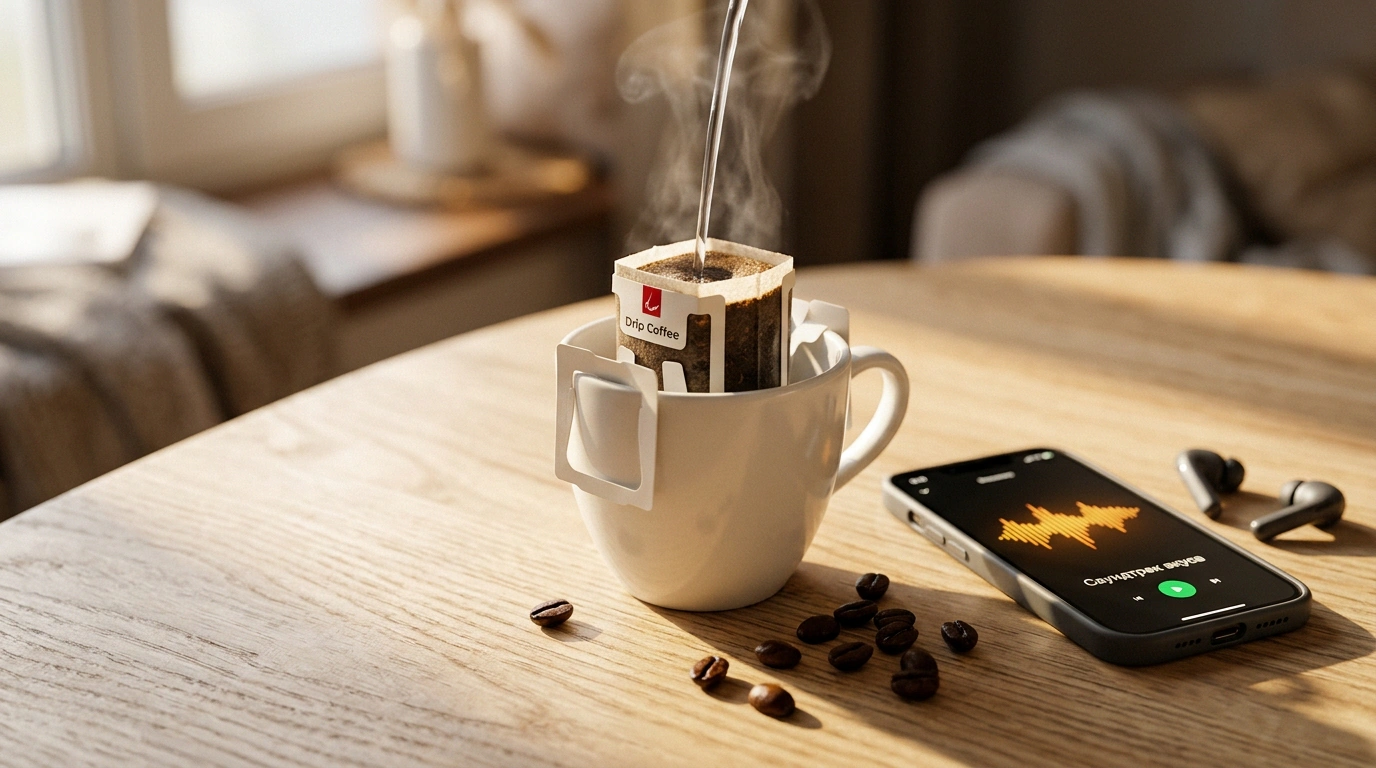
At VkusVill, the physical print on the pack became the trigger for the digital experience. A graphic Play button icon was printed directly onto the perforated tear-off strip of each individual pouch. When a customer opens the foil packet, their fingers physically press "Play" and tear along the line. On the back of the pouch sits a direct QR code that instantly launches the ready-made playlist on Yandex Music and VK Music—no logins or clunky redirects required.
This thoughtful mechanic fused graphic design, the tactile sensation of tearing paper, and instant audio playback into one seamless user journey. A physical object turned into an interactive content terminal.
Engagement Metrics and the Viral Tail of Sensory Branding
The project launched on August 7 and delivered phenomenal engagement results:
- Repeat Scan Rate: the rate of customers returning to the playlists via QR code hit a staggering 38%! To put that in perspective, the global retail benchmark for scanning promo codes on FMCG packaging hovers around a modest 3–5%.
- Organic UGC in reviews: product pages inside the retailer's mobile app filled up with emotional comments. Shoppers shared personal associations: "you point your phone and the music transports you straight to the heart of Mexico," "making coffee at work turned into a mindful slow-down ritual," "I listened to China and felt like a character in a Hayao Miyazaki film."
- Economic stability: without resorting to aggressive price dumping, the new SKU immediately hit the planned sales volumes of flagship items in the coffee category.
This case clearly proves the power of winning loyalty through unconventional communications. To sell a physical product at a healthy margin, stop selling only its material properties. Add a personal soundtrack, emotional context, and a clear ritual—and your customers will stick with you even when the brand next door starts handing out discounts.