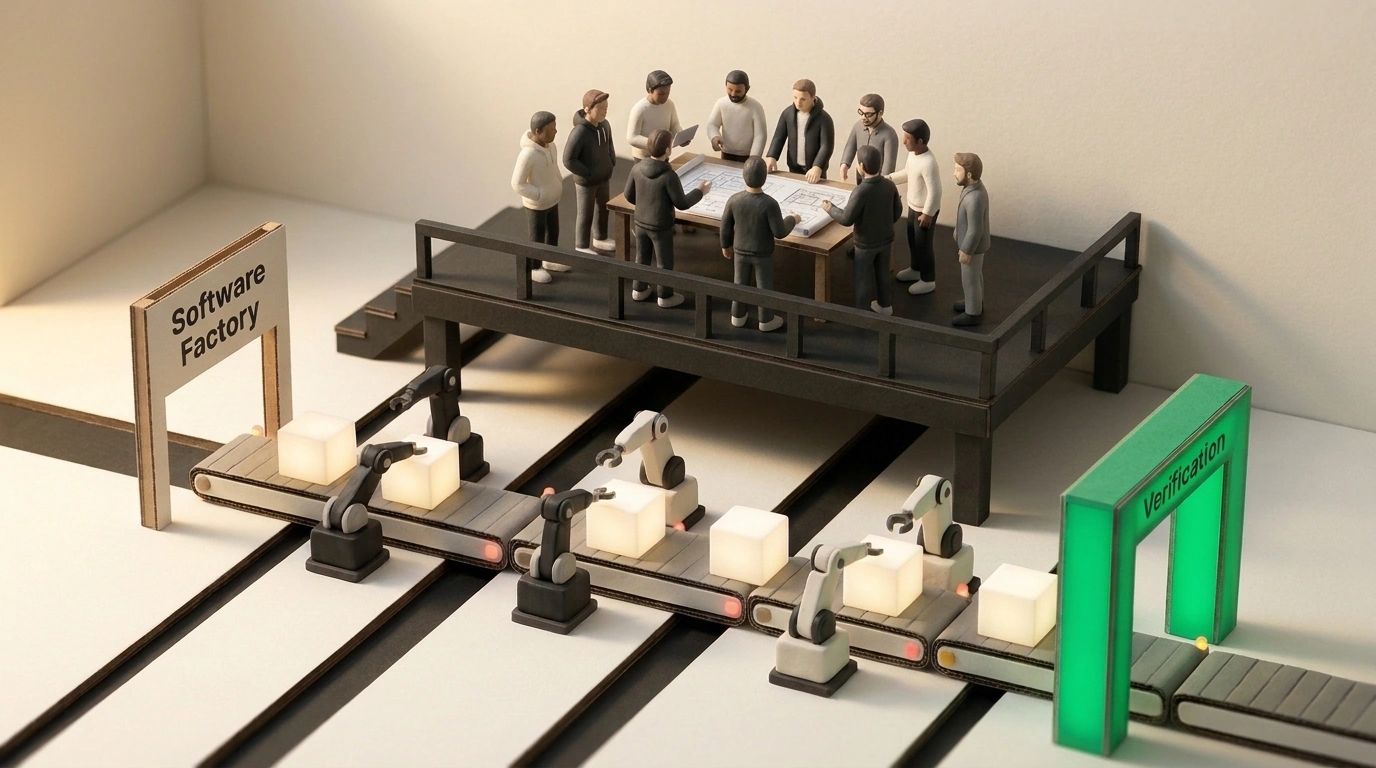
'They're not building the software—they're building the software factory that builds the software.' That's how Satya Nadella described the team behind Microsoft's new Cowork AI agent at the New York Times DealBook Summit. It sounds upbeat. Yet just one month earlier, in October 2026, Microsoft sent roughly 60,000 employees—about 27% of its entire workforce—an offer to leave voluntarily with a payout.
Admit it, the contrast looks strange. On stage, the CEO insists AI isn't replacing programmers, while in company inboxes, nearly a third of the staff has a 'take the money and leave' button. Let's look at what's really happening inside 51-year-old Microsoft.
Freedom of Choice or a Soft Ultimatum
Officially, the program is called a Voluntary Exit Offer—a buyout. The company pays people to resign voluntarily instead of announcing another round of blunt layoffs. Speaking with journalist Andrew Ross Sorkin (covered by TechCrunch), Nadella framed it as caring about employees: with so much anxiety around AI, he argued, people deserve to feel they have 'agency.'
On paper, the logic is easy to follow: the company is 51 years old, built long before neural networks, and everything inside has to change—workflows, performance criteria, and compensation systems. The transformation is harder and slower than leadership expected, so some people will naturally choose another path.
In practice, TechCrunch reads the signal much more bluntly. Employees face a two-door choice: either rebuild your job around AI and accept major changes to your role, or take the payout and walk out the door. Microsoft hasn't disclosed how many of the 60,000 actually took the offer.
Cowork's 'Software Factory': 11 People Instead of 100
To explain what this shake-up is for, Nadella outlined three stages industry leaders went through. First came skepticism: 'AI can't write real code.' Then came panic: 'Why do we even need programmers?' Now comes the realization: there will only be more software development, just done very differently.
The flagship showcase for this new approach is the Cowork team—an AI agent inside Microsoft 365 apps. It has just 11 developers. By Nadella's own public estimate (no independent audit exists), the old way of working would have required a hundred people for a product like this. Instead of writing all the code by hand, those 11 engineers build a 'software factory'—a pipeline of AI agents that creates and checks the product.
Nadella expanded on the technical side a week earlier on Gergely Orosz's The Pragmatic Engineer podcast (Software engineering after code becomes cheap with Satya Nadella). Generating code is dirt cheap today, and CLI agents like Claude Code have already moved work outside the traditional IDE. As a result, the main bottleneck is no longer writing code, but verification—review, architecture, and quality control. Developers increasingly act as orchestrators: assigning tasks to a pool of agents and making sure the system doesn't collapse.
Wait—What About QA, Analysts, and Legacy Code?
That raises an obvious question: 'Sure, a new team of 11 strong engineers looks great. But what about a QA tester, an analyst, or an engineer who has spent five years maintaining a huge legacy service? How exactly are they supposed to "manage agents"?'
Right there sits the biggest gap in Microsoft's story. Alexey Rybak, author of the System Design & Highload channel, pointed straight at it. Nadella insists working through AI agents will touch every role, and on the podcast he adds that managers must redesign org charts and transition people into new roles. Yet neither the summit nor TechCrunch explained how QA engineers and analysts inside a giant corporation are actually supposed to rebuild their day-to-day work.
The second issue is scale. Putting together 11 motivated engineers from scratch on a greenfield product like Cowork is completely different from moving a 51-year-old giant with legacy code onto the same tracks. Cowork works well as a showcase, but it doesn't yet prove that a 'software factory' works in every enterprise department. As Rybak aptly wrapped up his post, all we can do is send a spark of support to everyone currently forced to retrain or switch jobs in a hurry.