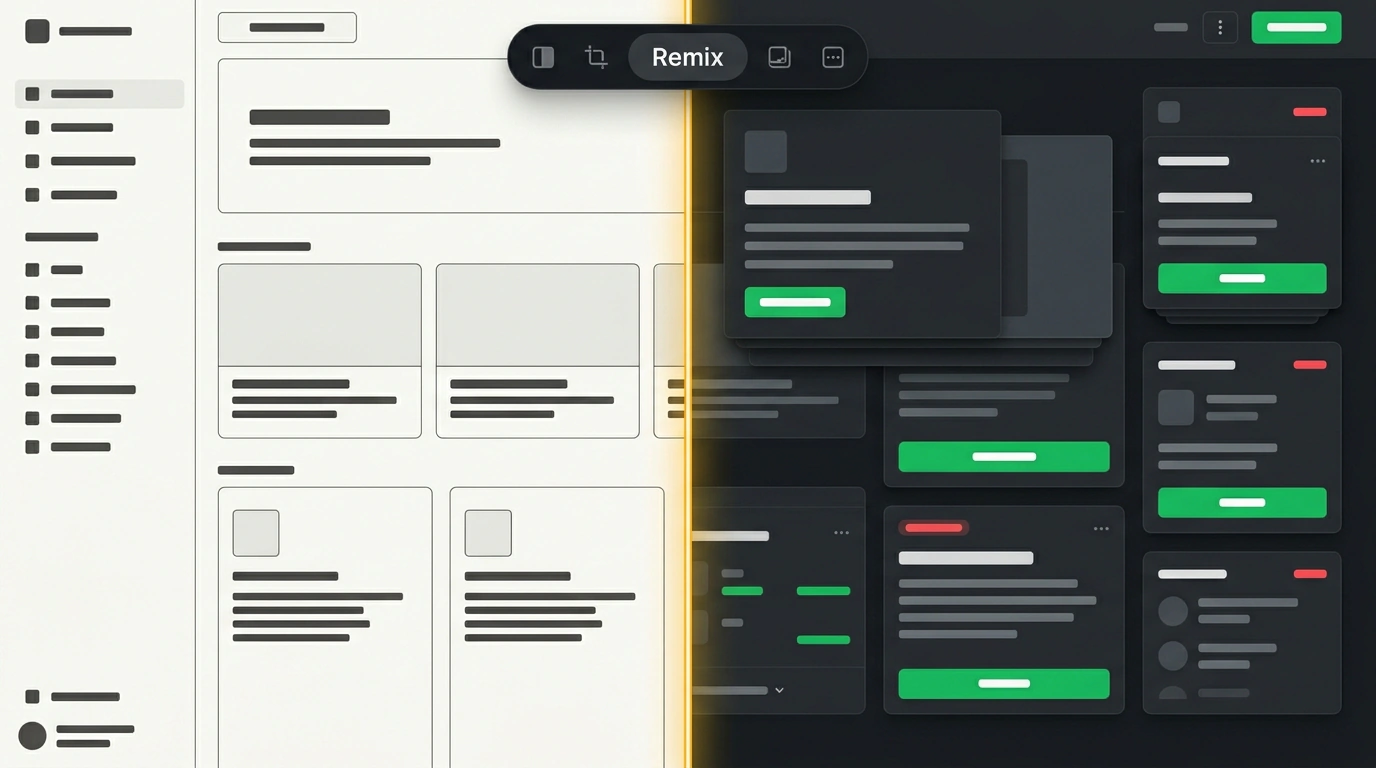
Hearing the name Website Remix from OpenAI, it is easy to picture a universal cloner: drop a link to any site on the web into chat and get a ready-made duplicate. Inside companies, the opposite prejudice thrives: a teammate's working page feels like a fragile monolith you shouldn't touch without a developer. Spot a great calculator or landing page—and you either dig through someone else's code by hand or edit the shared live project, risking breaking an active launch with one click.
On November 6, OpenAI removed both extremes by adding Remix to the ChatGPT Sites beta platform. It does not scan external domains; instead, it works with pages and lightweight apps built by your team inside your ChatGPT workspace. How does this conversational adaptation work without touching markup by hand, and how is it different from copying layouts?
A Safe Branch Instead of Live Editing
Inside ChatGPT Sites—opened via the Work tab or Work and Codex modes in the desktop app using the @Sites command (see details in our ChatGPT Work ecosystem breakdown)—a page bundles its element tree (DOM), meaning the internal skeleton of buttons and columns, along with styles, scripts, and forms. Previously, your only choices were building a site from scratch or turning on co-editing at the same URL. Shared mode works well for a unified task tracker, yet hurts experiments—like cooking spicy tom yum and bland broth in the same pot, while copying HTML by hand constantly breaks styles and grids.
Remix acts like a software fork: in under 30 seconds, it copies the skeleton, styling, and public copy into an isolated project with its own URL and chat. Suppose your team's designer built a light-themed English webinar landing page with a signup form, and as a marketer you need to test a B2B offer in dark navy with neon accents and launch a Spanish version. You open your teammate's site in the workspace, hit Remix, and ask in chat to restyle the theme to dark navy with neon buttons, rewrite the headline for B2B, or translate blocks into Spanish with local time zones in the form—keeping a checkpoint before publishing to a separate subdomain.
Instead of two days of back-and-forth with engineering, in three minutes you get an interactive prototype on its own URL for a parallel A/B test—comparing live visitor response between two versions of the page—while the designer's original landing page keeps collecting leads undisturbed. I smiled at OpenAI's joke in the announcement: your teammate made a great site, and naturally you have notes. Behind it sits a sharp observation: everyone freezes in front of a blank input box, whereas a live example immediately shows what to tweak for your audience.
The Flip Side of Autonomy: Data, Permissions, and Maintenance
Fast duplication carries real trade-offs too—I cross-checked OpenAI's help docs and Julian Goldie's release breakdown. A remix has no auto-sync: if tomorrow the designer fixes a validation bug on the main webinar landing page, your B2B and Spanish copies keep the old bug, turning into separate sites under manual upkeep. Edits consume Codex limits, which we covered in our overview of the ChatGPT and Codex merger, and Remix itself is rolling out to Business and Enterprise plans where admins govern access and publishing, though base Sites is also in Plus and Pro.
Moreover, code, databases, and files live separately—even rolling back code does not restore an old database. Like copying a coffee shop, Remix brings over the sign and dining room, while the safe with keys and the cash ledger stay with the original owner: API keys and accounts remain isolated, leads from different campaigns don't mix, and corporate connectors check each visitor's personal permissions. Before publishing, click through every form in preview, store keys strictly in site settings rather than chat, avoid handing editor rights with live database access to extra people, check licenses on third-party illustrations and fonts, and never upload protected health data.
The choice is simple: for a shared team tool, stay with colleagues in one project; for testing hypotheses and localization, hit Remix and budget five minutes to audit forms and permissions. Nobody enters this line of work to spend evenings chasing broken tags or waiting weeks in a queue just to swap an offer—by stripping away that busywork, the tool gives you back a clear head and real hours for ideas no algorithm can invent for you.