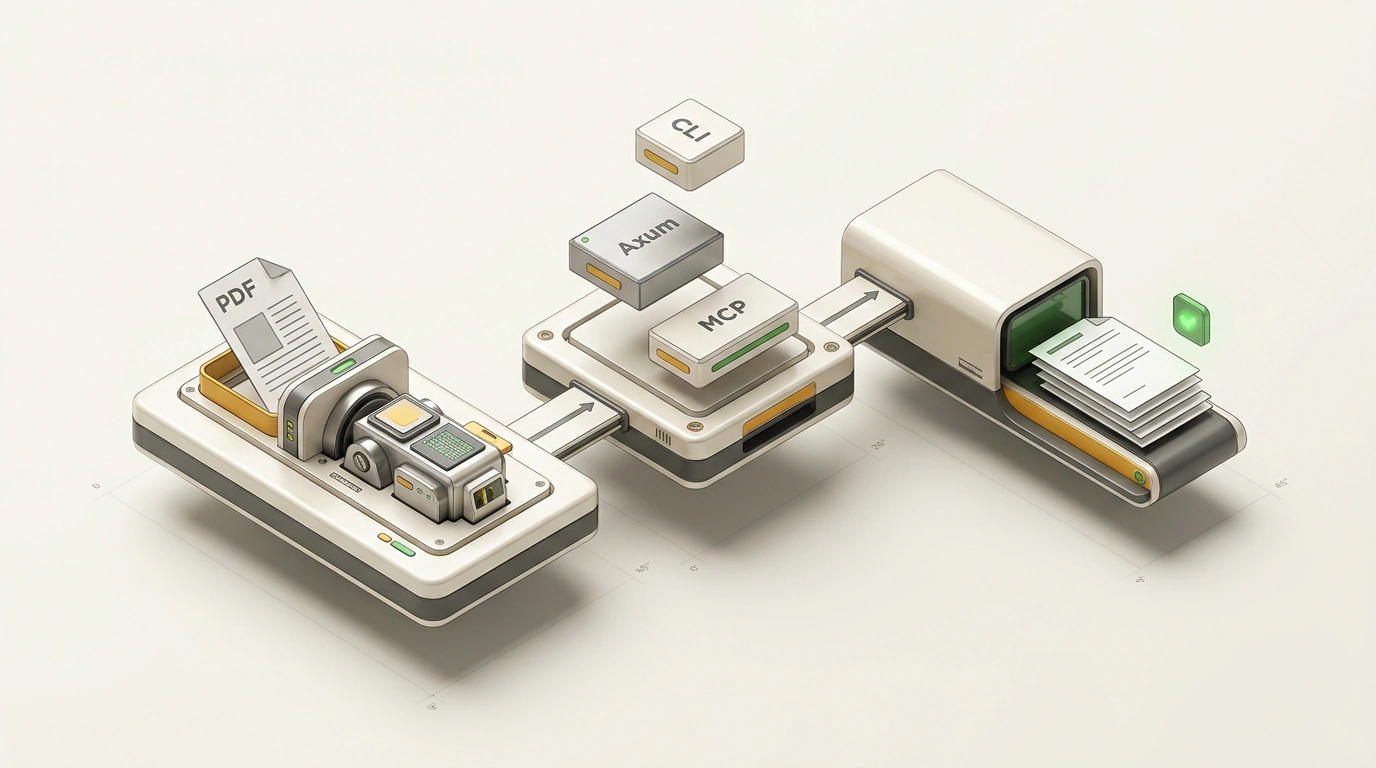
If you've ever had to set up server-side processing for incoming user PDFs, you probably remember that nagging feeling of vulnerability. The classic stack for working with documents took shape back in the nineties and two-thousands: under the hood of most web services, C and C++ utilities like Poppler, Ghostscript, or heavy ImageMagick pipelines are still doing the heavy lifting.
The problem is that the PDF format is monstrously complex, and parsers written decades ago regularly spring surprises in the form of buffer overflows, RAM leaks, and zero-day vulnerabilities when reading malformed files. The Java-world alternative—pairing Apache Tika with PDFBox—eliminates segfault crashes, but demands hundreds of megabytes of memory per process and suffers from painfully slow cold starts in serverless environments.
Indian developer Krushna Vardhan Reddy set out to rethink document manipulation around modern reliability requirements and released the open-source toolkit PaperPilot. Written entirely in Rust, the project positions itself as a safe, reactive replacement for legacy utilities, capable of running in the terminal, as a backend service, or as a tool for AI agents.
Core Architecture and Multi-Platform Surfaces
At the foundation of PaperPilot is strict memory safety guaranteed by the Rust compiler. For low-level work with the PDF object tree, the utility relies on the lopdf and pdf_oxide crates, completely ruling out uncontrolled crashes outside the sandbox.
What impressed me most is how cleanly the author separated the tool's execution surfaces:
- Console CLI (
paperpilot-cli): a single standalone binary with no external system dynamic libraries for automating batch jobs in CI/CD; - High-performance gateway (
paperpilot-gateway): a REST server built on the Axum framework, listening on port 7823. It exposes endpoints compatible with Apache Tika (/tika/text,/tika/json/md), while handling requests with under 5 milliseconds of latency; - MCP protocol server (
paperpilot-mcp): a ready-to-use bridge over standard input/output (stdio), allowing Claude Code, Cursor, and other coding assistants to autonomously inspect and modify documents; - WebAssembly module (
paperpilot-wasm): a build for direct execution in the browser, making it possible to build secure client-side viewers without sending confidential files to remote servers—extending the client-side PDF generation approach we explored earlier.
Practical Arsenal: From Merging to Safe Compression
In day-to-day tasks, PaperPilot v0.6 covers virtually all core scenarios: merging and splitting documents, selective page rotation, booklet imposition, and converting layouts into Markdown tables.
# Batch-merge contracts and appendices into a single resulting document
paperpilot merge --inputs contract_part1.pdf contract_part2.pdf appendices.pdf --output full_contract.pdf

# Optimize file size with FlateDecode stream compression and raster quality control
paperpilot compress --input scanned_archive.pdf --quality 75 --output compressed.pdf

# Selectively rotate the first and fourth pages by 90 degrees
paperpilot rotate --input blueprint.pdf --pages 1,4 --angle 90 --output corrected_blueprint.pdf
If you need to embed PaperPilot's functionality into your own Rust backend, the paperpilot-core library offers a straightforward, safe interface:
use paperpilot_core::{Document, Result};
use std::path::Path;

fn assemble_final_report() -> Result<()> {
    let main_doc = Document::open(Path::new("executive_summary.pdf"))?;
    let financial_doc = Document::open(Path::new("q4_financials.pdf"))?;

    let mut merged = Document::empty();
    merged.append(main_doc)?;
    merged.append(financial_doc)?;

    // Optimization: deduplicate identical font streams and compress resources
    merged.optimize()?;
    merged.save(Path::new("annual_report_final.pdf"))?;

    println!("Document assembly and compression completed successfully");
    Ok(())
}
The main trade-off to keep in mind: the built-in OCR module powered by PaddleOCR (rten) runs locally on the CPU. For a couple dozen pages its speed is more than enough, but when batch-recognizing hundreds of scanned volumes, parallel CPU load will be noticeable. Even so, as a lightweight Swiss Army knife for the backend, PaperPilot looks very compelling.