Every self-respecting platform has a custom assistant store today. Users have already seen hundreds of GPTs in OpenAI, an army of bots in Poe, and now they are watching the rapid growth of the GrokBot Studio catalog in Elon Musk's xAI ecosystem. As usual with the launch of such marketplaces, the feed is packed with loud slogans: "build a business in one click," "autonomous Senior-level marketer," "complete replacement for a web studio."
But let's be honest: how many of these assistants can actually make a working person's life easier, and how many were slapped together for hype in five minutes? I examined a large-scale practical test of 25 popular Grok bots that were put through tough work tasks across five categories: web development, analytics, marketing, content creation, and personal productivity. The results were sobering: out of two and a half dozen assistants, only four bots earned the highest score, while a good half turned out to be decorative noise.
Marketing showcase vs. harsh work reality
Each bot in the test was evaluated on two pragmatic criteria:
- Business Utility: does the bot solve a real problem for an entrepreneur or specialist, or does it just juggle smart-sounding terms?
- Output Excellence: does the bot deliver a finished result you can put straight to work, or do you have to spend another two hours rewriting code and redoing the structure afterward?
Based on the test results, a clear grading emerged:
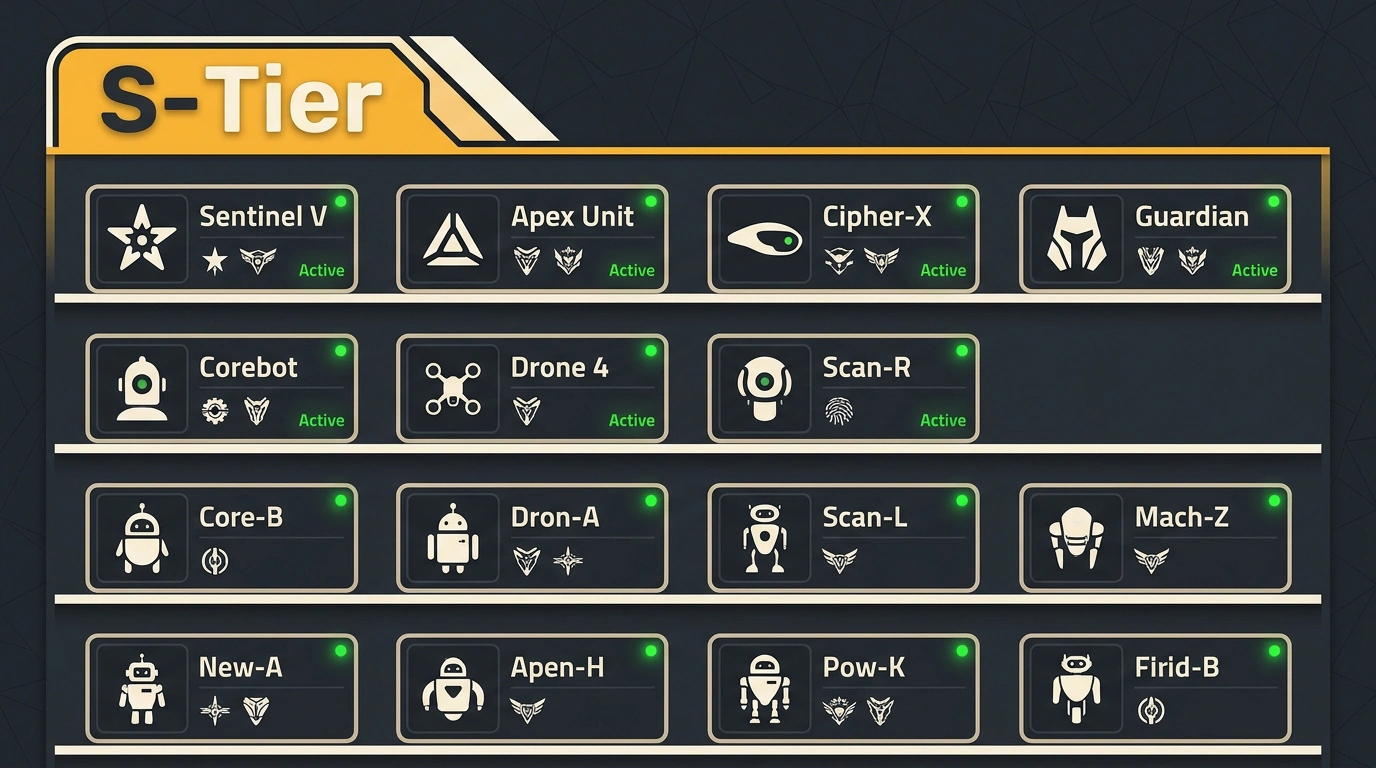
- S-Tier (16% — 4 bots): outstanding tools that genuinely pay for the subscription and save 10 to 25 hours of routine work per week.
- A-Tier (24% — 6 bots): strong applied assistants that require minimal human supervision.
- B-Tier (28% — 7 bots): solid mid-tier performers for initial brainstorming, suffering from mild boilerplate phrasing.
- C and D-Tier (32% — 8 bots): complete failure—either outright spam with novelty voices or hallucination generators.
The S-Tier major league: bots that truly replace manual labor
The top echelon was reached by assistants whose creators didn't just write a couple of sentences in the instructions field, but built in a strict self-verification architecture:
- Site Builder: the undisputed favorite among builders. You feed it a raw text description of a project, and in 45–65 seconds the bot assembles a completely ready, responsive single-page website in HTML5, Tailwind CSS, and JavaScript. And this isn't a wireframe of gray rectangles, but a live page with form validation, FAQ accordions, and a mobile menu.
- Creative Studio: an indispensable assistant for anyone running ads. Instead of a single dull banner, the bot generates a comprehensive package of 10–13 ad variations with detailed visual compositions. Its main feature is a built-in Self-Reflection loop: the bot analyzes its own generated code for color contrast and font readability against WCAG standards before showing it to the user.
- Marketing Factory: takes a global goal (for example, launching an online course on automation) and builds an end-to-end chain: from lead magnet structure to a sequence of warm-up emails and short-video scripts.
Solid craftsmen in A and B-Tier: useful under human supervision
The A-Tier category is home to narrowly specialized researchers. For example, the Sphinx bot excels at fact-checking, pulling verified figures and links to primary sources without making things up. And Semantic Engine breaks down competitors' semantic cores into logical query clusters in just a couple of minutes.
B-Tier bots also find use, though only as a copilot. If you ask them to write an article, they will produce a decent but predictable text in the style of a corporate blog. Their main value is curing blank-page syndrome, sketching out an outline, or coming up with 20 headline options from which a human picks the best two.
The C and D-Tier landfill and the anatomy of an ideal system prompt
On the lower floors of the tier list, however, gloom reigns. Bots with parody voices of Hollywood stars or grumpy relatives grab attention for the first three minutes, but are completely useless for actual work. They get confused by the simplest instructions, lose context, and regularly invent nonexistent links.
What is the secret behind why some bots run like clockwork while others are useless? Analysis showed that top assistants use multi-layered system meta-prompts ranging from 1,500 to 4,000 tokens in size.
If you're designing a custom assistant yourself in Grok or any other platform, here is a proven framework for a reliable prompt:
- Role context and invariants: clearly state who the agent is and in what format it must deliver the answer (for example, strictly one standalone file with no external local dependencies).
- Ban on placeholders: explicitly set a strict taboo on phrases like "Lorem Ipsum" or "Text will be added later." Every block must be meaningful.
- Preview protocol: force the model to check itself against a checklist before returning the answer (responsiveness, closed HTML tags, button accessibility).
The main trade-off of the Grok ecosystem today is the closed nature of ready-made solutions. The platform does not yet allow exporting other people's public bot system instructions to Git or fine-tuning them under the hood. But the direction is clear: the bots that win aren't the ones with the funniest avatars, but the ones whose architecture is engineered to solve a specific practical pain point.
