Inside the Kubernetes API Server: A Request's Journey from kubectl to etcd
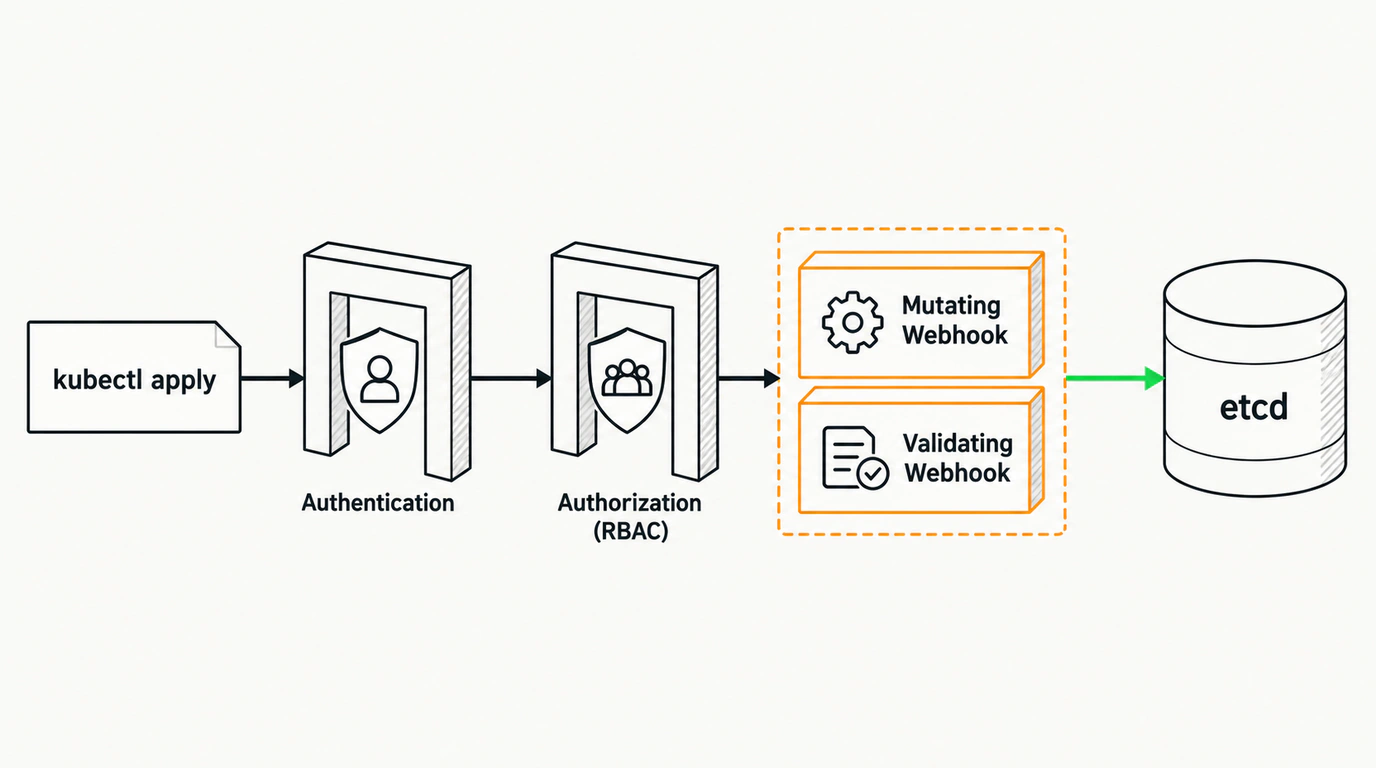
You've probably run kubectl apply plenty of times thinking, "Send the manifest, write it to the database, done." But under the hood, the Kubernetes API server runs a full-blown detective pipeline with five strict checkpoints.
First, the server figures out who you are (authentication), then decides whether you're allowed to touch that resource (authorization), before handing things off to mutating webhooks, OpenAPI schema validation, and strict security policy validators. Only if nobody vetoes it does the object get serialized and written to etcd.
I traced this entire path from the TLS handshake to the distributed store write, dug into AdmissionReview handler code, and figured out why a single hung webhook can bring an entire cluster to a halt.