The era of reactive chatbots patiently waiting for your prompt in a blank input box is winding down fast. Taking their place are proactive digital colleagues (AI Coworkers)—agents with long-term memory, calendar and email access, and the ability to pick up tasks on their own, track deadlines, and run background errands while you sleep. Today we're looking at three distinct poles of this new wave: Anthropic's closed cloud flagship, commercial ecosystems from Meta and xAI, and the independent open-source alternative Open Duet.
Claude Duet
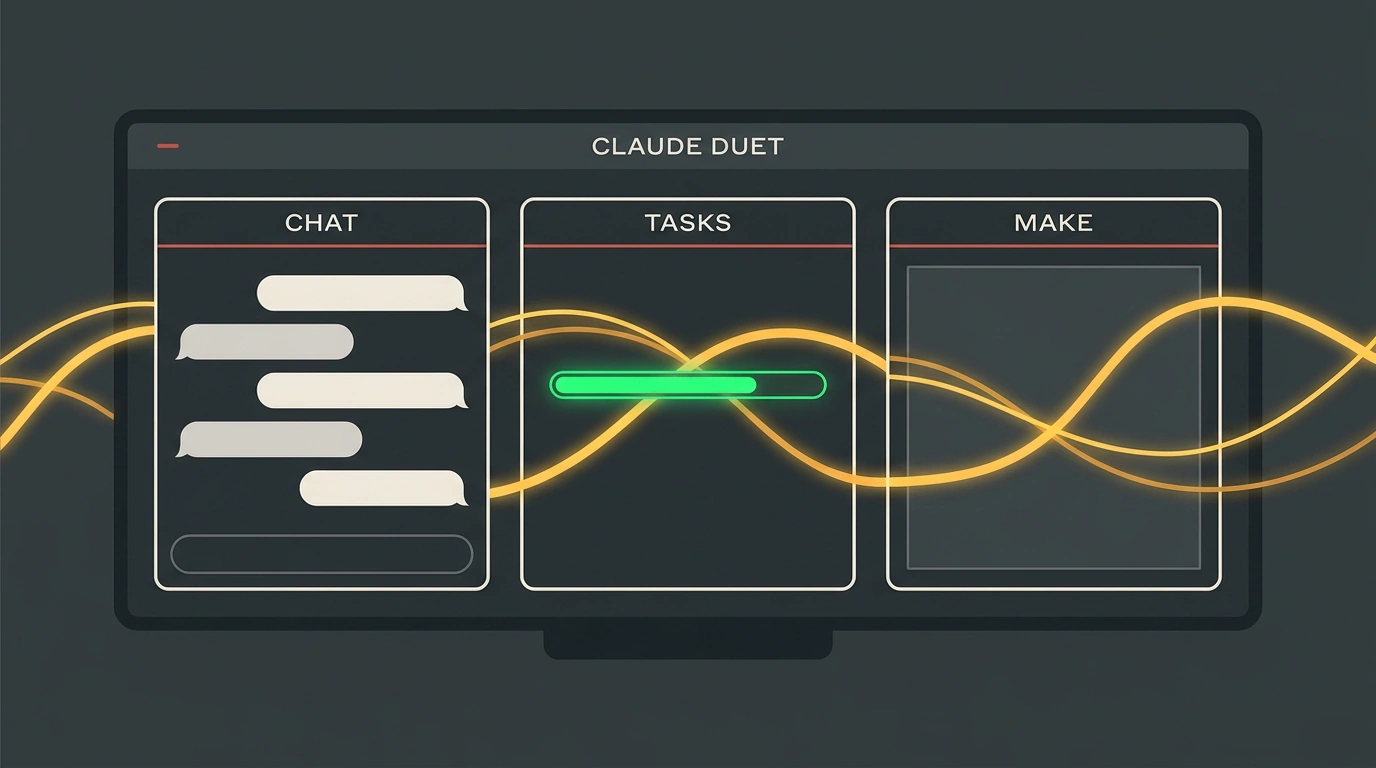
Anthropic's big fall release—Claude Duet—rethinks the entire workspace around three logical zones:
- Chat: the familiar conversation with flagship reasoning model Opus 5.5 for brainstorming and quick questions.
- Tasks: an autonomous task scheduler. You can hand off recurring chores here—like "every morning, check incoming invoices in email and reconcile the amounts against Google Sheets."
- Make: a dedicated environment for generating and versioning complex documents and interactive artifacts.
The real technical leap in Duet sits under the hood: the agent gets its own isolated virtual machine in the cloud (a cloud computer). It can launch a headless browser, log in, run shell commands in a terminal, and build a project without you babysitting every step. The main catches are a strict waitlist and access gated behind pricey Pro and Max plans tied tightly to Anthropic's servers.
The Ecosystem Battle
While Anthropic builds an all-purpose digital employee, other platforms are betting on narrow specialization and embedding themselves in the channels you already live in:
- Dots: takes over office Slack. The agent reads channel threads, finds open slots on colleagues' calendars, books Zoom calls, and posts concise recaps with action items the moment a meeting wraps.
- Grok Bot (xAI): leans into instant voice access and real-time news tracking. Dictate an assignment into your phone on the go, and the bot tracks keyword spikes across X/Twitter and sends back a structured brief.
- Meta Muse: a personal concierge for everyday life, handling trip planning, syncing family notes, and triggering external services through Apify.
Choosing between them comes down to one question: where does the center of gravity of your daily routine sit—in a company messenger, a social feed, or a personal organizer?
Open Duet
For anyone unwilling to hand confidential files and trade secrets to someone else's cloud, open-source contributors launched Open Duet—an open alternative built on the same virtual-coworker architecture.
Unlike closed platforms, Open Duet skips the waitlist and runs on your terms:
- Plug in any model: from local weights via Ollama and vLLM to cloud APIs through OpenRouter.
- Full privacy: your long-term knowledge base, chat logs, and working files stay on your local disk or inside your private network.
- No vendor lock-in or sudden bans: the agent runs specialized automation commands without risking an arbitrary account suspension.
| Parameter | Claude Duet | Meta Muse / Dots / Grok | Open Duet |
|---|---|---|---|
| Runtime environment | Dedicated Anthropic VM | Cloud SaaS services | Local Docker / host |
| Available models | Claude Opus 5.5 / Sonnet | Llama 3.3 / Grok / GPT-4o | Any open weights or commercial API |
| Data privacy | Vendor cloud | Vendor cloud | Full local control |
| Access terms | Waitlist, Pro/Max tiers | Paid plans / Freemium | Open source (MIT) |
We already saw the early steps of this shift when testing autonomous personal agents in the real world, where users were handing models credit cards and passports. The takeaway is straightforward: if you want an out-of-the-box tool and don't mind cloud hosting, Claude Duet or Dots will save you hours. But if your folders hold client NDAs or financial statements, running Open Duet in your own environment is the only sensible move.