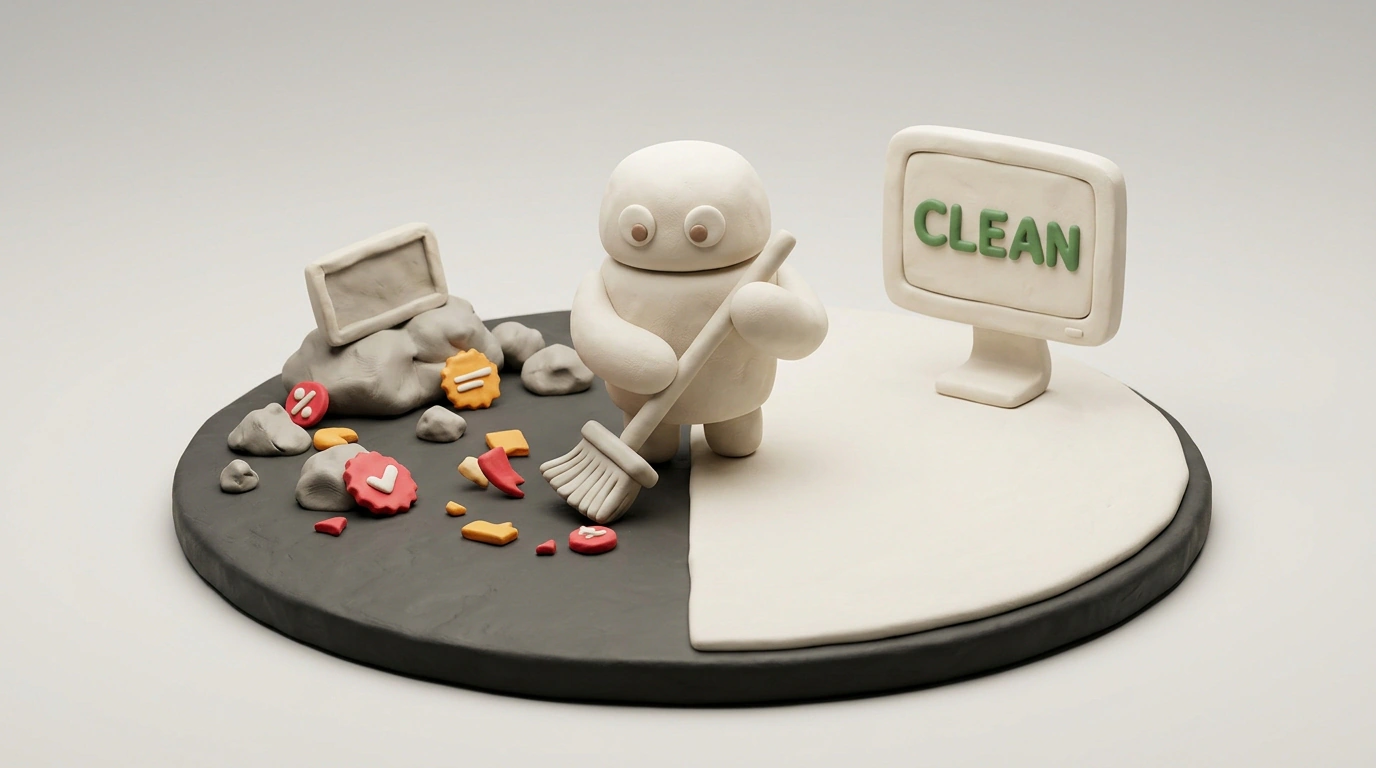
For most people, bumping into generative AI online these days triggers mild nausea. Open any news feed or professional network and you're met with an endless flood of synthetic junk—AI slop: watery articles, clickbait headlines, plastic faces on generated posters, and thousands of bots replying to each other in identical templates. It can feel like neural networks turned the internet into one giant landfill.
Engineer and researcher Riley Brown proposed flipping that destructive firepower 180 degrees. Instead of churning out more noise, you can turn AI into your personal digital janitor and a factory for Single-Purpose Micro-Software tailored to your exact habits.
Here are 7 practical workflows that win back your attention and trim bloated monthly subscriptions.
1. A Clean Smart TV Launcher Without Ad Banners
Modern Smart TVs greet you with loud promo banners, trailer autoplays, and pushy streaming upsells. With a lightweight coding model, you can spend a couple of evenings vibe-coding a minimalist Android TV launcher that opens only the media apps you actually use and keeps the home screen spotless.
2. Stripping Preinstalled Bloatware from Your Devices
Buying a new phone or tablet often means inheriting dozens of unremovable vendor apps. A simple AI assistant can help you draft an exact ADB (Android Debug Bridge) script to safely strip out background trackers and ad services without bricking your device.
3. Trimming the Fluff Out of Long Lectures
Instead of sitting through a two-hour rambling webinar, pair speech-to-text with a compact language model to slice out sponsor reads, awkward pauses, and small talk—leaving only the core takeaways and key arguments.
4. A Personal Semantic News Filter
Social media algorithms are engineered to spike your anxiety and hold your eyeballs on ads. Brown replaces algorithmic feeds with a custom filter bot: a script pulls fresh RSS headlines, scores them against your professional interests, and drops 90% of the hype noise. Only a couple of genuinely useful items make it to your private channel each day.
5. Replacing Heavy Apps with Lightweight Micro-Agents
Why clutter your phone's storage with a dozen separate booking apps, package trackers, and note tools? You can fold them into a single conversational micro-agent in Telegram wired to the right webhooks. You message the bot—"Check tracking status for parcel 9021"—and get a crisp answer without opening ad-heavy screens.
6. Filtering Corporate Verbosity
Incoming vendor emails and multi-page corporate reports often drown in performative politeness and bureaucratic filler. A sanitizer prompt strips the fluff, distilling a five-page document down to three bullets: what's broken, what they need from us, and when it's due.
7. Single-Purpose Micro-Software Instead of Bloated SaaS
Instead of paying $50 a month for Swiss-army-knife SaaS tools when 80% of their features collect dust, a coding model can spin up a compact local utility in Streamlit or FastHTML in 15 minutes—built for your exact job, whether that's a unit-economics calculator or a client statement sorter.
Diagram showing the shift from heavy SaaS to single-purpose micro-software: a compact utility built in 15 minutes instead of a $50/month subscription.
Every removed ad banner, canceled subscription, and de-fluffed report gives your attention back to deep work. Spending an hour setting up these filters pays dividends every single week.
We already looked at pushing back against mindless machine prose in our piece on clearing AI slop out of your writing. Riley Brown's core insight is refreshingly simple: AI is most valuable not when it writes generic fluff for you, but when it shields you from everyone else's digital noise.