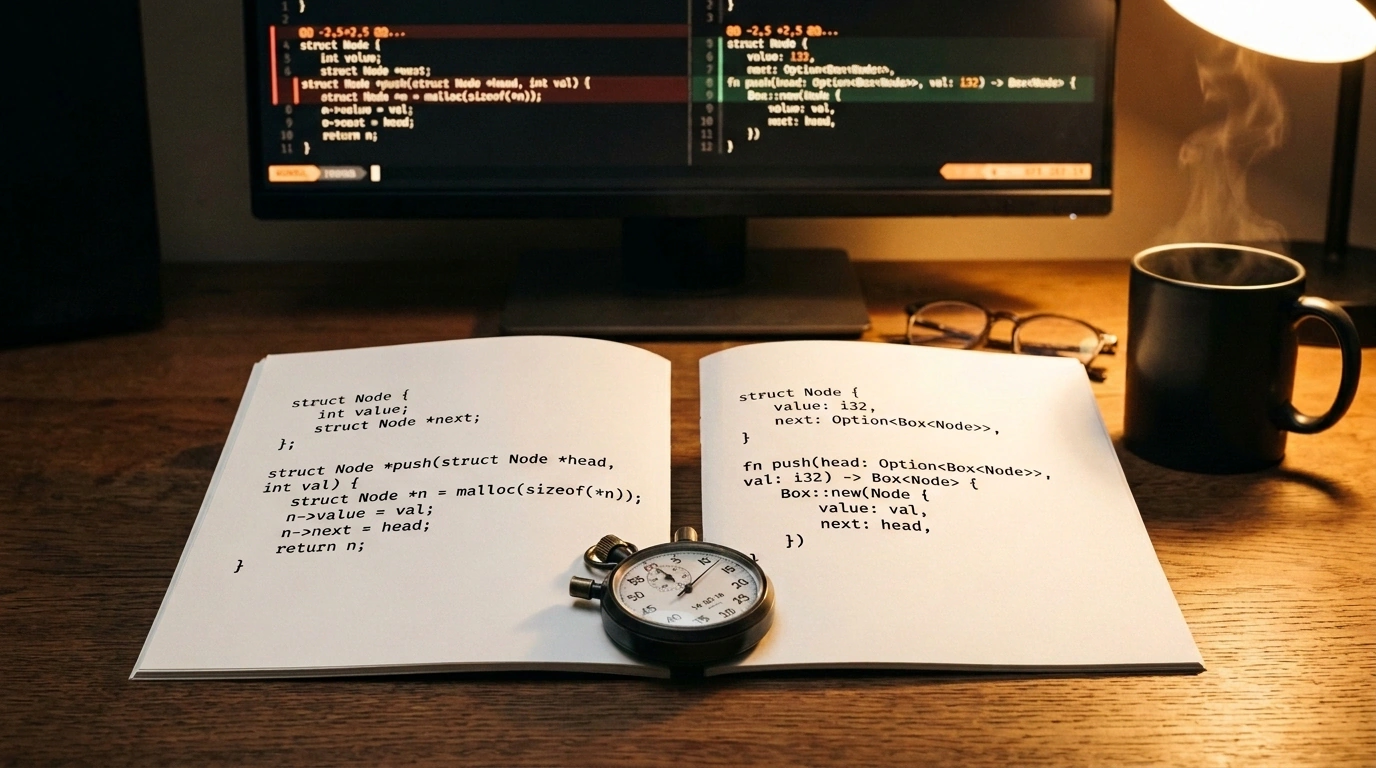
"In the time it took the agents to translate 185k lines of C into 340k lines of Rust (I counted), we landed well over 300 commits in the real curl, with just over 200 bugfixes that none of those rewrites have, and closed several vulnerabilities. Next month we'll fix another 200. Will these clones keep up with us?" That's how curl creator Daniel Stenberg weighed in on the wave of AI ports on November 17, 2026, with Simon Willison highlighting his post the next day.
For context, the curl tool and libcurl library are the workhorse of the internet, quietly moving data inside servers, phones, browsers, and car systems. In fall 2026, multiple teams pointed AI agents at this codebase to port it from C to Rust. It makes for a flashy demo, yet in real-world use the weakness shows up right away.
How agents rewrote curl and why the trick only works on a snapshot
Two notable Rust ports of curl appeared that fall: first urlx, pitched as a memory-safe rewrite from scratch, and in November a clone called curl, rewritten in Rust. The second project's authors said they spent $8,600 on AI agents, though there's no independent audit of that bill.
Growing from 185,000 lines of C to 340,000 lines of Rust doesn't bother Stenberg. What's more telling is why agents pulled it off in just over three weeks: models have trained on curl code for years, the docs are thorough, hundreds of open apps show real usage, and the repo holds thousands of ready-made tests. The old code acted as a complete spec, so agents just translated functions and looped until tests turned green.
That specific case reveals a broader rule. You can generate a port from existing tests in a couple of weeks, yet translation freezes the project on a single day like a photograph. While agents were porting yesterday's version, the real curl kept moving at roughly 11 commits—separate batches of changes—per day, pulling ahead by two hundred bugfixes before the clone even shipped.
"Won't Rust automatically close the biggest security holes?"
It's easy to argue back: C is notorious for memory bugs, while Rust catches those errors at compile time. Doesn't the move pay for itself in security alone?
Stenberg answers with 2026 numbers: out of 81 confirmed vulnerabilities found in curl through mid-November, only 14—or 17.3%—were memory bugs that Rust would likely have prevented. The other 67 flaws, or 82.7%, would still happen in Rust. They hide in program logic and network protocol edge cases where a compiler can't help.
That's what gives a mature open-source project its real strength: stable API and ABI compatibility rules so other software doesn't break on rebuilds or in compiled binaries, steady refactoring without tearing down the foundation, and a team triaging bug reports every day. Stenberg notes he hasn't spoken with the clone authors and doesn't know their plans—maybe they'll build a pipeline to port 11 commits a day, take their own path, or drop the project. Either way, translating syntax doesn't remove that daily maintenance.
How to judge "we rewrote it with AI in two weeks" stories
With these numbers in hand, it's easy to test bold claims about software rewritten by agents in a couple of weeks. Getting a working copy against existing tests is the easy part today; for users and teams, the real clock starts the day after release.
Before adopting a fresh AI clone in production, check its update pipeline first. The port's authors need either an automated pipeline pulling fresh patches from upstream or their own team ready to close hundreds of bugs a year. Otherwise, the clone stays a one-day demo that quickly fills up with old vulnerabilities.
The same applies when migrating your own mature system to a new language with AI. Moving to Rust will remove memory bugs, like the 17.3% share in curl, yet four-fifths of logic and protocol bugs stay with you. When picking a tool, what matters most is how fast a team fixes bugs and protects compatibility a year after launch—while the speed of generating version one is just a nice number for the announcement.