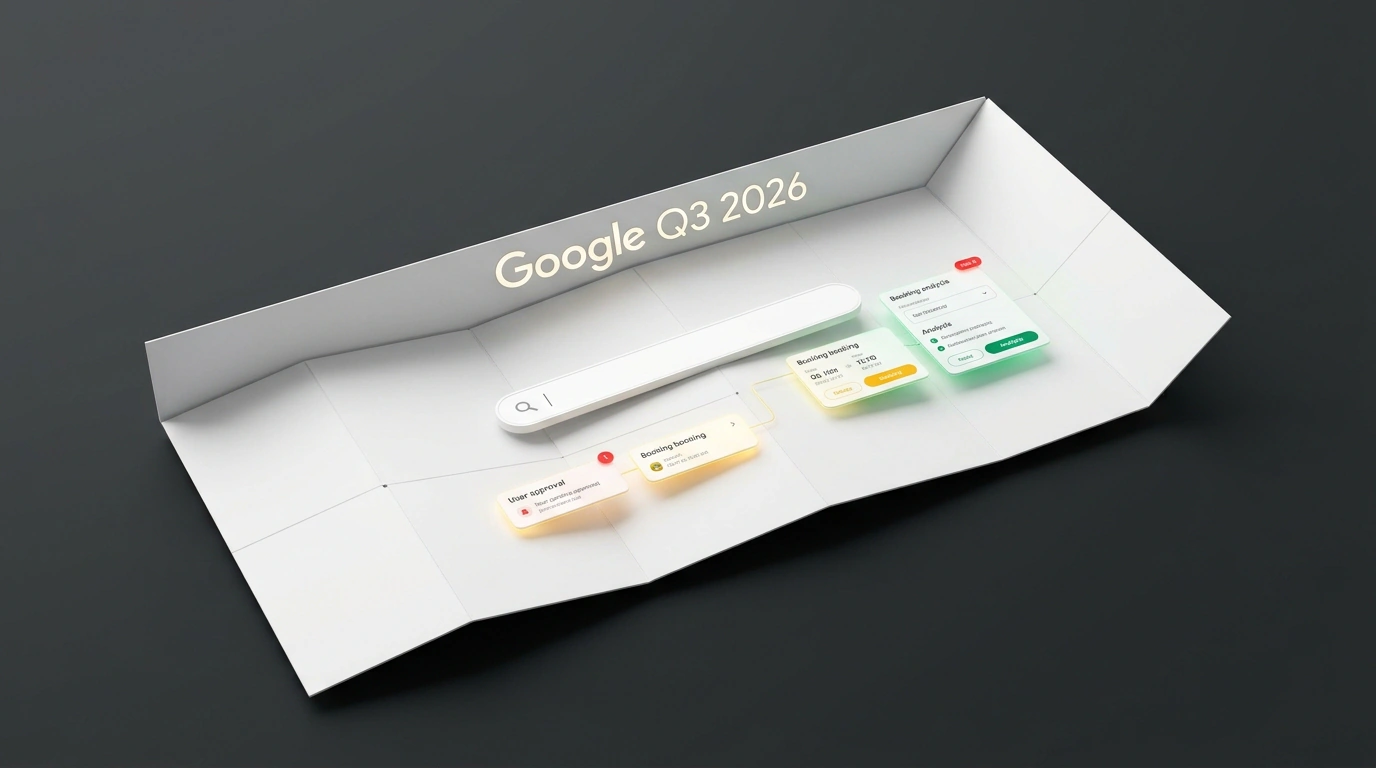
For a quarter of a century, Google Search's core architecture stood like bedrock in the digital economy. Everyone knew the rules: a user opened the search bar, typed two to four words ("buy train ticket," "coffee machine repair"), and the algorithm scanned an inverted index to serve up a classic results page—ten blue links plus Google Ads. An entire multi-billion-dollar SEO and search-advertising industry lived off that mechanic.
On Alphabet's Q3 2026 earnings call, though, company leadership made announcements that officially closed that chapter. Leading independent SEO analyst Marie Haynes broke down the executives' remarks, exposing a tectonic shift in how the global web works.
Let's look at what's actually happening inside Google Search and why site owners need to rethink their survival playbook right now.
Merging Search and Gemini: End of Separate Lives
The biggest policy statement came straight from Alphabet CEO Sundar Pichai. He stated plainly that the company no longer treats traditional search, AI Overviews boxes, and conversational AI Mode as separate competing interfaces.
They are merging completely into a single adaptive Agentic Search system.
The search bar is officially done being a simple keyword box. It has become a multimodal dialogue window. According to official earnings figures, average query length in AI Mode is already three times longer than classic search. People aren't typing clipped phrases like "Rome hotel center" anymore. They're writing full agent instructions: "Find a quiet boutique hotel in Rome near Termini Station, with rooms facing an inner courtyard, parking, and breakfast under 200 euros a night from Wednesday to Sunday, and check real-time availability."
And the search engine is expected to return a finished decision—not a list of aggregator links.
The Monetization Gap: Why Traffic Climbs While Clicks Fall
The second bombshell exposed a financial paradox that Google CBO Philipp Schindler had to walk Wall Street analysts through carefully.
On one hand, generative dialogue drove Google's fastest five-year growth rate in search query volume. People are searching way more often and digging much deeper. On the other hand, ad revenue growth started lagging noticeably behind that surge in activity—opening up what's called the Monetization Gap.
Any user can see why: Zero-Click Searches have reached their peak. When an AI answers your question completely right on the results page, there's zero reason to click ad banners or affiliate links. The legacy Cost Per Click (CPC) model has hit its ceiling.
Connected Apps: Buying and Booking Inside the Search Window
To plug that revenue gap, Google is betting heavily on Connected Apps—a fundamental shift transforming Search from a link directory into a transaction platform.
Here's how the flow works:
- Commercial providers—airlines, food delivery apps, restaurant booking services, and online stores—plug their APIs straight into Gemini's closed agentic loop.
- When a user asks to order pizza or book theater tickets, checkout completes right inside the search interface in one click via Google Pay.
- The user never even visits the merchant's website, and Google takes a flat commission per completed transaction (Cost Per Action, CPA).
Recursive Optimization and the Future of Content Sites
The call also highlighted Recursive Self-Improvement (RSI): specialized Gemini architectures are already generating synthetic datasets to automatically calibrate and retrain search ranking models. The search algorithm optimizes itself faster than human engineering teams can ship updates.
What does all of this mean for publishers and content sites? The reality is blunt: the era of aggregator sites making money by rewriting other people's news and harvesting referral clicks is over. The search agent reads their facts and hands the user a clean answer, leaving zero traffic for the source site.
Only two kinds of players survive:
- Creators of unique primary experience (proprietary research, original reporting, closed datasets) that an AI can't synthesize on its own;
- Services with transactional infrastructure ready to plug into the Connected Apps ecosystem.
The search giant is building a closed digital loop—and the new rules are written by API depth, not keywords.
