When a static analyzer crashes mid-CI run at 2 a.m. with a cryptic stack trace, it's easy to blame gnarly TypeScript types or a broken third-party package. Sometimes, though, the culprit is far more mundane: the linter itself tripped over an edge-case ECMAScript syntax construct that a rule author overlooked.
In late October, the ESLint team shipped ESLint v10.14.0, a minor release focused squarely on parser stability and squashing sneaky bugs in autofix behavior.
A Dangerous Autofix in object-shorthand
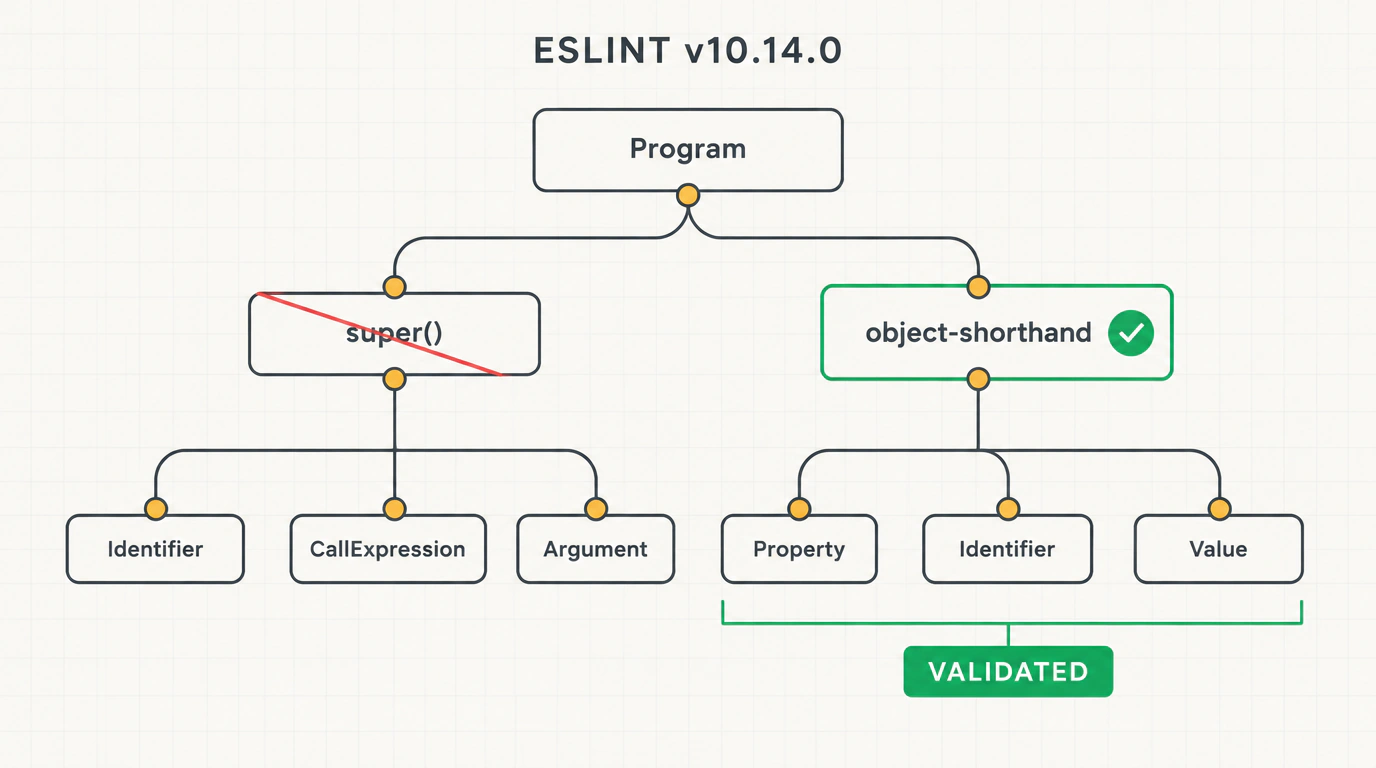
The headline bugfix in this release targets the object-shorthand rule (commit cb2b9d4, PR #21323). In JavaScript, object methods carry a special prototype binding that lets them call parent methods via super. When a developer wrote a classic object method, the linter with autofix enabled would try to rewrite it into a shorthand arrow property:
// Before the fix in ESLint v10.14.0:
// object-shorthand autofix could turn a valid method:
const childComponent = {
  render() {
    return super.render();
  }
};

// ...into this syntactically invalid construct:
const brokenComponent = {
  render: () => {
    // Runtime error: SyntaxError: super keyword unexpected here
    return super.render();
  }
};
Arrow functions have no this context or super binding of their own, so that "helpful" autofix quietly broke runtime execution. In 10.14.0, the analyzer now checks for super references before transforming the AST.
Auto-Accessors, Descriptors, and Security
The second critical fix landed in no-invalid-this (commit 6194939, PR #21442). With class decorators and auto-accessors (accessor foo;) entering real codebases, the linter parser was crashing whenever it hit class fields without an explicit initializer. Auto-accessor syntax now parses cleanly.
On top of that, func-name-matching now accurately reads function names passed inside object property descriptors (Object.defineProperty with value, get, and set), and the minimum minimatch dependency was bumped to 10.2.6 to close a potential path-handling vulnerability.
Here's how these rules look in a modern flat eslint.config.js:
import js from "@eslint/js";

export default [
  js.configs.recommended,
  {
    files: ["**/*.js", "**/*.mjs"],
    rules: {
      "object-shorthand": ["error", "always", { avoidQuotes: true }],
      "func-name-matching": ["error", "always"],
      "no-invalid-this": "error",
      "yoda": ["error", "never"]
    }
  }
];
If you're keeping an eye on how tooling and frameworks like Preact 11 are evolving, you already know how much clean builds and zero false-positive linter warnings speed up CI pipelines.
The update is fully backward-compatible across the v10.x line—just run npm install eslint@10.14.0 --save-dev or pnpm update eslint to pull it in.