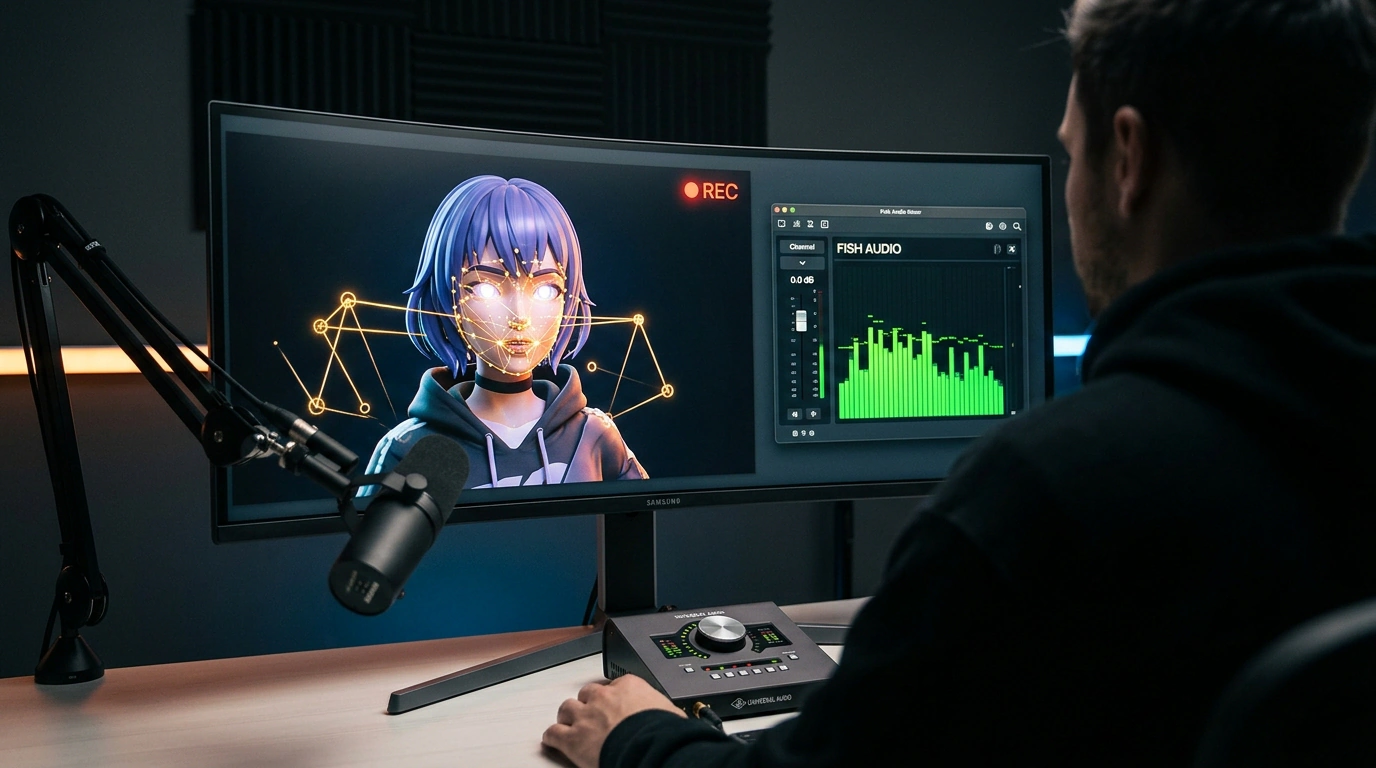
If you've ever tried launching an educational YouTube channel or recording lessons for an online course, you already know where most creators stall out. It isn't the script, and it isn't a lack of expertise. The real bottleneck is classic studio production.
You have to buy a decent camera, dial in three-point lighting, fight mic noise, put on powder so your forehead doesn't shine under softboxes, and spend hours re-recording takes every time you trip over a technical term. Add natural camera shyness, and producing a single twenty-minute lesson eats up multiple weekends in a row.
The viral content world figured out a workaround years ago: Faceless Channels. Where that used to mean dull slideshows narrated by a robotic online text-to-speech voice, today's stack sits on a completely different level. Automation practitioner Nick Saraev laid out a complete production pipeline for educational videos using virtual characters (AI VTubers) and neural voice cloning.
Let's walk through the architecture of this content factory that lets a solo instructor ship dozens of polished lessons a week.
Fish Audio Voice Core: Natural Pauses and Emotional Tags
The fatal flaw of older speech synthesizers was lifeless cadence. A flat mechanical drone puts viewers to sleep inside two minutes, and YouTube's algorithm buries retention-killing videos fast.
This modern pipeline runs on Fish Audio as its voice engine. What makes it click?
- Zero-shot voice cloning. All it takes to capture a human expert's timbre is a clean 15-second audio clip with no background music.
- Natural breathing and pacing. The model natively handles sighs, realistic hesitations, rising inflection on questions, and emphasis on key terms.
- Batch API generation. The instructor writes the script in Markdown, hits run, and gets crystal-clear studio-grade audio in a couple of minutes.
Visual Avatars: Live2D vs. 3D Models in VRoid Studio
A digital character steps in as the lecturer, taking one of two visual routes depending on your brand style:
- 2D illustrations (Live2D paired with VTube Studio). Great for anime aesthetics or stylized company mascots. An artist draws the character in layers, and VTube Studio animates its expressions and movement.
- 3D avatars (VRoid Studio). A completely free editor where you can build a 3D lecturer in a business suit, customize hair and eye color in a couple of hours, and export a standard VRM model file into Warudo or Unity.
Audio-Reactive Lip Sync via Virtual Cable: Mouth Moves to the Voice
Here's the clever technical trick. In normal streaming, a creator sits in front of a webcam while software tracks their facial expressions. The whole point of this pipeline, though, is full automation with zero humans on camera.
So how do you get an illustrated avatar to move its mouth in tight sync with synthetic speech? You route audio through a virtual audio gateway (VB-Audio Cable). Fish Audio's output goes into a virtual audio device, which VTube Studio or Warudo listens to as its microphone input.
An audio-reactive lip-sync plugin analyzes speech amplitude and frequency spectrum in real time. When it hears open vowels like "ah" or "oh," the avatar's mouth opens wider; on "ee" and "eh" sounds, it stretches into a slight smile; during pauses between sentences, the character gently closes its mouth and blinks.
The final step is compositing the character on a transparent background in OBS Studio over lecture slides or a live code screencast.
Production cost per hour of finished video drops by 10x: no camera crew, no editors, no studio rent—and the expert shares their knowledge while keeping their personal life completely private.